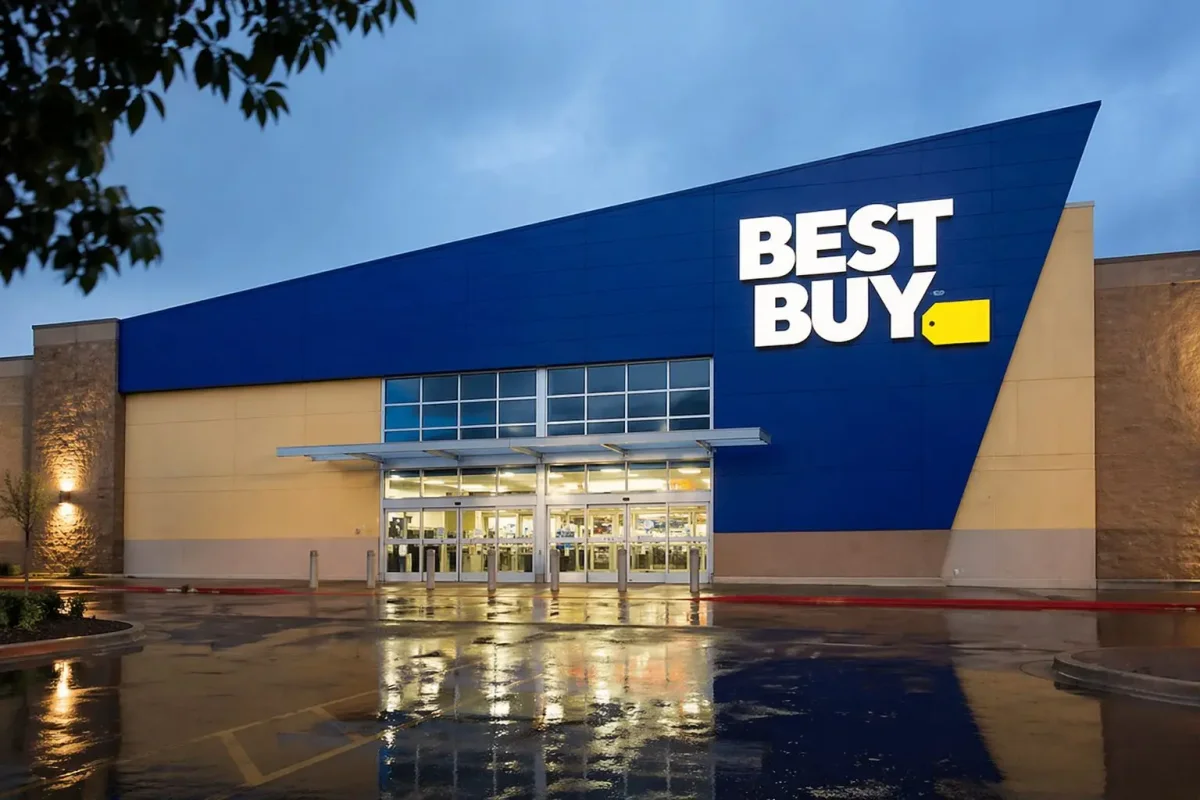
Electronics retail giant Best Buy has initiated a significant leadership transition, announcing that Chief Executive Officer Corie Barry will step down from her role effective October 31. The company's board has named Jason Bonfig, a veteran executive who currently serves as chief customer, product and fulfillment officer, as her successor. Bonfig will assume the CEO position and join the board on November 1.
Leadership Change Amid Market Headwinds
The executive shuffle comes as Best Buy grapples with a prolonged period of tepid sales growth, a stark contrast to the pandemic-driven demand surge it experienced in prior years. The retailer has been navigating a challenging environment where consumers have grown more cautious about discretionary spending, particularly on big-ticket technology items. This shift was evident in the company's most recent quarterly results, where comparable sales declined 0.8% in the fourth quarter, dragged down by weak demand for home theater equipment and major appliances.
Strategic Continuity with an Internal Successor
In selecting Bonfig, the board opted for continuity over a dramatic strategic overhaul. Bonfig is a company insider with a tenure dating back to 1999, when he started as an inventory analyst. His current responsibilities encompass a wide range of critical operations, including merchandising, e-commerce, marketing, supply chain logistics, Best Buy Canada, and the company's advertising division, Best Buy Ads. He also spearheaded the launch of the U.S. online marketplace for third-party sellers.
Chairman David Kenny expressed confidence in the decision, stating Bonfig is "the right leader to accelerate the business, with urgency and innovative ideas." Outgoing CEO Barry endorsed her successor, pointing to his "right vision" to drive the company's strategy forward. Barry will remain with Best Buy in a strategic advisory capacity for a six-month period following her departure from the CEO role and board.
Financial Context and Forward Outlook
The leadership transition follows a fiscal 2026 in which Best Buy reported revenue of $41.7 billion. Looking ahead, the company has provided guidance for fiscal 2027, projecting revenue in a range of $41.2 billion to $42.1 billion. It anticipates adjusted earnings per share between $6.30 and $6.60. Management has communicated to investors that it expects comparable sales for the fiscal year to be flat to slightly down, forecasting a range between a 1% decline and a 1% increase.
Analysts note that while the company faces headwinds, newer business segments like Best Buy Ads and the marketplace have provided a buffer to profitability. CFRA Research analyst Ana Garcia characterized the recent quarter as showing both "operational resilience" and "mounting headwinds" as the company moves into the new fiscal year.
Navigating a Complex Macro Landscape
Bonfig will inherit a set of familiar challenges. In recent commentary, Barry highlighted issues such as higher demand for memory components, which creates both cost pressures and sporadic supply constraints. The company has maintained a cautious outlook, citing ongoing macroeconomic uncertainty and anticipating a difficult backdrop for consumer spending throughout the year. A sustained pullback in consumer purchases of non-essential goods could further delay a hoped-for rebound in performance.
The broader retail sector has seen similar executive movements, with companies like Walmart also reshuffling leadership ranks recently. Best Buy's announcement had a muted immediate impact on its stock, with shares edging down approximately 0.5% in pre-market trading ahead of Thursday's opening bell. The retailer, which employs over 80,000 people across North America, will be counting on Bonfig's deep institutional knowledge to steer through the current market turbulence and capitalize on emerging trends, including the integration of AI into consumer electronics.