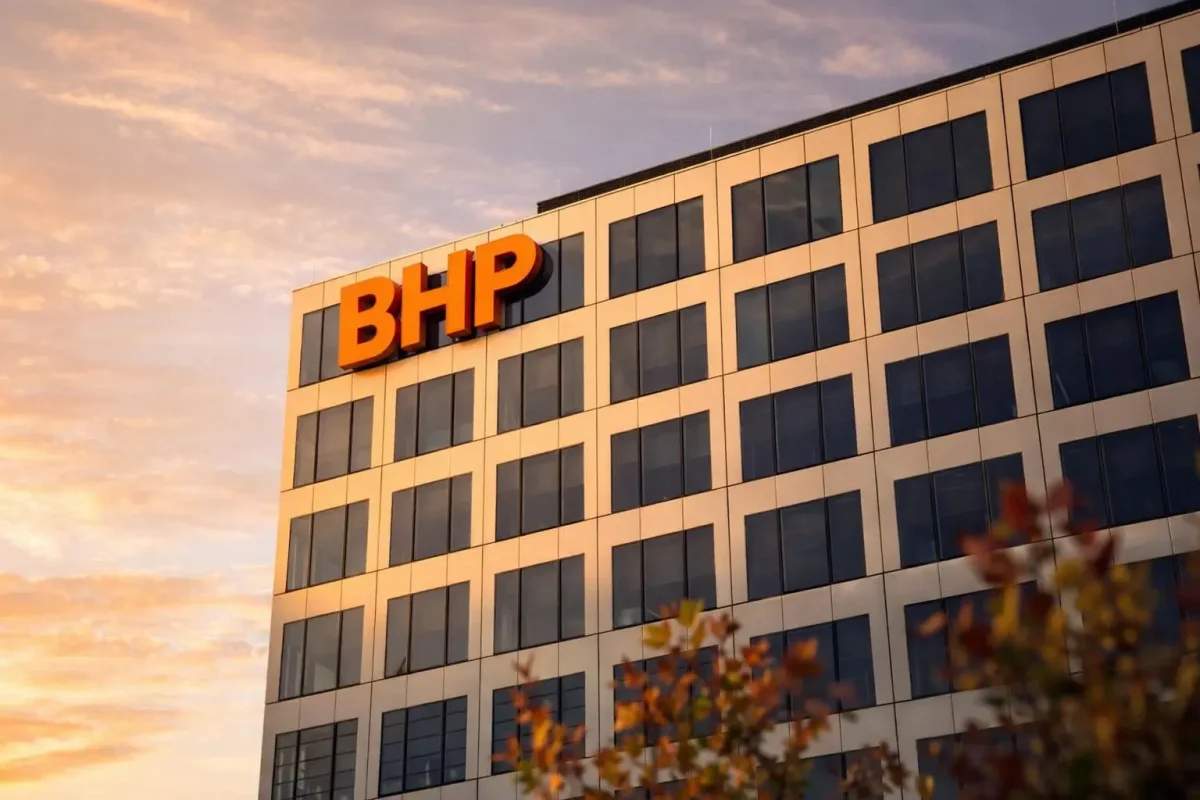
Shares of BHP Group Ltd climbed to a fresh 52-week high during Monday's trading session, closing at A$59.25 for a gain of 1.4%. The advance positions the global mining leader at its highest level in a year, driven largely by investor focus on an imminent dividend deadline.
Dividend Countdown Underway
Attention is now squarely on the ex-dividend date, which is set for March 5 on both the Australian Securities Exchange and the London Stock Exchange, with the New York listing following on March 6. Investors purchasing shares after these dates will not be entitled to the upcoming interim distribution. The company has declared an interim dividend of 73 U.S. cents per share, scheduled for payment on March 26. This payout is fully franked, providing Australian shareholders with valuable tax credits.
In a regulatory update issued Monday, BHP provided further clarity on the dividend's mechanics. The company established the South African rand to U.S. dollar conversion rate at 15.92875 for the interim payment. Additional exchange rates for the Australian dollar, British pound, and New Zealand dollar are expected to be announced on or around March 9. This date also marks the deadline for the Dividend Reinvestment Plan (DRP).
Market Mechanics and Trader Considerations
The approach of the ex-dividend date introduces specific dynamics for market participants. Historically, a stock's price typically adjusts downward by approximately the value of the dividend on the ex-date, a mechanical correction that occurs irrespective of broader company fundamentals. This pattern can present challenges for short-term traders but is a standard feature of dividend-investing timelines.
Sector Performance Diverges
While BHP rallied, its major mining peers exhibited a split performance, underscoring the varied sentiment within the materials sector. Rio Tinto Ltd advanced 1.3% to finish at A$169.44. In contrast, Fortescue Metals Group Ltd moved against the trend, declining 3.0% to close at A$20.50. This divergence highlights how company-specific factors and investor positioning can lead to disparate outcomes even among closely related industry giants.
Iron Ore Market Under Pressure
The foundational commodity for these Pilbara-focused miners faced headwinds as the new week began. The benchmark iron ore price for April delivery on the Singapore Exchange retreated to $98.2 per metric ton. Analysts point to elevated inventory levels at steel mills as a primary factor dampening immediate demand for new feedstock. Guiqiu Zhuo, an analyst at Jinrui Futures, noted that high stockpiles have reduced the urgency for mills to restock, applying downward pressure on prices.
Broader commodity markets also exhibited volatility, influenced by geopolitical tensions. Oil prices moved sharply higher as conflicts in the Middle East intensified, a development that can swiftly alter risk sentiment and trigger moves across the entire resource sector. Such macro events add an additional layer of uncertainty for mining shares, which are often sensitive to shifts in global growth expectations and currency fluctuations.
Strategic Context and Investor Outlook
BHP's strength near its 52-week high, juxtaposed with a softening iron ore price, presents an interesting narrative for investors. It suggests that near-term capital return events, like the dividend, are currently outweighing concerns about the commodity's spot price. The company's robust balance sheet and commitment to shareholder returns continue to attract income-focused investors in a volatile macroeconomic environment.
The coming days will be critical for market observers. The confirmation of remaining currency conversion rates on March 9 will finalize the dividend details for a global shareholder base. Meanwhile, the performance of iron ore will remain a key fundamental driver for the sector's earnings trajectory beyond the current dividend cycle. Investors will be watching to see if BHP can sustain its momentum post the ex-dividend adjustment and how its strategy navigates the balance between returning capital and investing for future production.