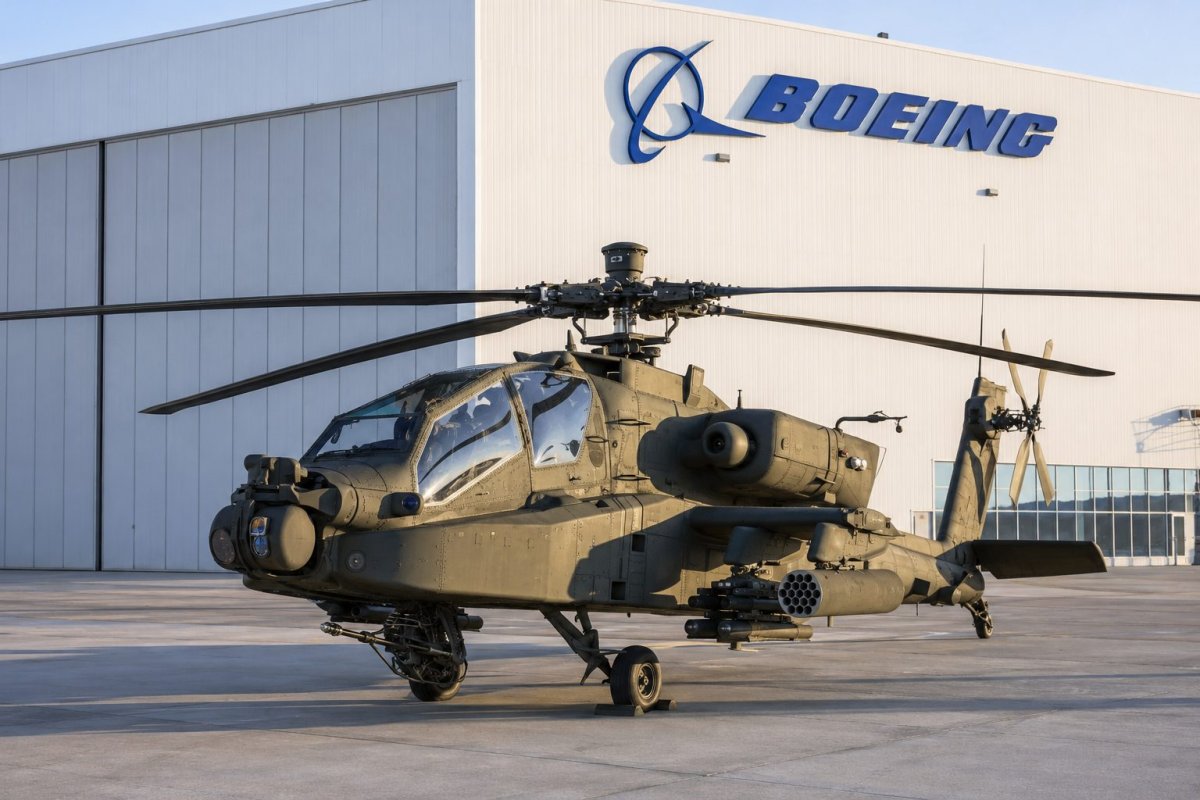
Boeing Co. (NYSE: BA) shares edged lower in premarket trading on Monday, August 17, 2026, as investors weighed the company's latest Apache helicopter contracts against persistent margin challenges in its defense unit. The stock slipped 0.2% to $231.23, following a Friday close at $231.67, after renewed scrutiny of the AH-64 Apache program emerged.
Apache Contracts: A Closer Look
Confirmed Apache contracts account for approximately $7.43 billion, representing 8.7% of Boeing Defense, Space & Security's $85 billion order backlog. However, this figure amounts to just 1.0% of Boeing's overall $715 billion record backlog, highlighting the program's relatively modest contribution to the company's total portfolio.
The most prominent awards include a $2.728 billion support contract from December, extending through 2030, and a production contract valued near $4.7 billion issued in November. The latter includes international buyers, with Poland set to receive 96 helicopters, deliveries beginning in 2028. Once completed, Poland will become the largest Apache operator outside the United States.
Contract Details
- Support contract (until 2030): $2.728B, 3.2% of defense backlog
- Production contract (new aircraft and gear): Nearly $4.7B, 5.5% of defense backlog
- Total: About $7.43B, 8.7% of defense backlog
The support contract is a firm-fixed-price agreement, with tasks and funding assigned via separate orders, meaning the total ceiling amount is not recognized as immediate revenue. This structure adds complexity to backlog conversion, a key challenge for the defense segment.
Defense Segment: Growth Without Profitability
Boeing's defense revenue increased 13% to $7.48 billion in the June quarter, but the segment posted an operating loss of $15 million, swinging from a profit of $110 million in the same period last year. The operating margin fell to -0.2%, down from 1.7% a year earlier.
The company attributed the loss partly to $280 million in charges on the VC-25B program, which exceeded 50% of the Apache support contract's average annual value of about $546 million. This underscores the volatility of fixed-price development programs, where cost overruns can quickly erode profitability.
Financial Health and Cash Flow
Despite the defense setback, Boeing reported positive free cash flow of $631 million for the quarter, reversing a $200 million outflow in the year-ago period. However, first-half free cash flow remained negative at $823 million, indicating the recovery is still in progress. Consolidated debt stood at $45.9 billion, down from $47.2 billion in the first quarter.
Chief Executive Kelly Ortberg stated that operations had become "more stable" and that important certification efforts were proceeding as scheduled, but acknowledged "more work ahead" for the second half. The combination of comments aligns with the Apache data: demand is visible, but successful execution continues to drive value.
Wall Street Sentiment and Valuation
Analysts remain bullish on Boeing, with 17 of 18 rating the stock a buy and one a hold. The consensus price target is $274.67, implying an upside of approximately 18.6% from Friday's close. Notable targets include Goldman Sachs' $277, Jefferies' $295, and RBC Capital's $265, while Morgan Stanley holds a more cautious $250.
However, the stock is still 9.1% below its 52-week high of $254.35. Trading at nearly 92 times trailing earnings, Boeing's valuation leaves little room for additional program charges. The market is pricing in a robust recovery, but any further cost overruns could pressure the shares.
Risks and Outlook
Government awards may experience slow funding or be affected by budget changes. Fixed-price contracts also carry the risk of extra costs if expenses increase. Certification delays in commercial projects, supplier challenges, and Boeing's $45.9 billion debt are currently more significant short-term factors than a single helicopter program.
The Apache franchise extends contract length and diversifies the customer mix, but it does not resolve the valuation question. Investors require defense margins to return to positive before the backlog is fully recognized in earnings. Until then, Boeing's stock may remain under pressure, even as its defense pipeline grows.