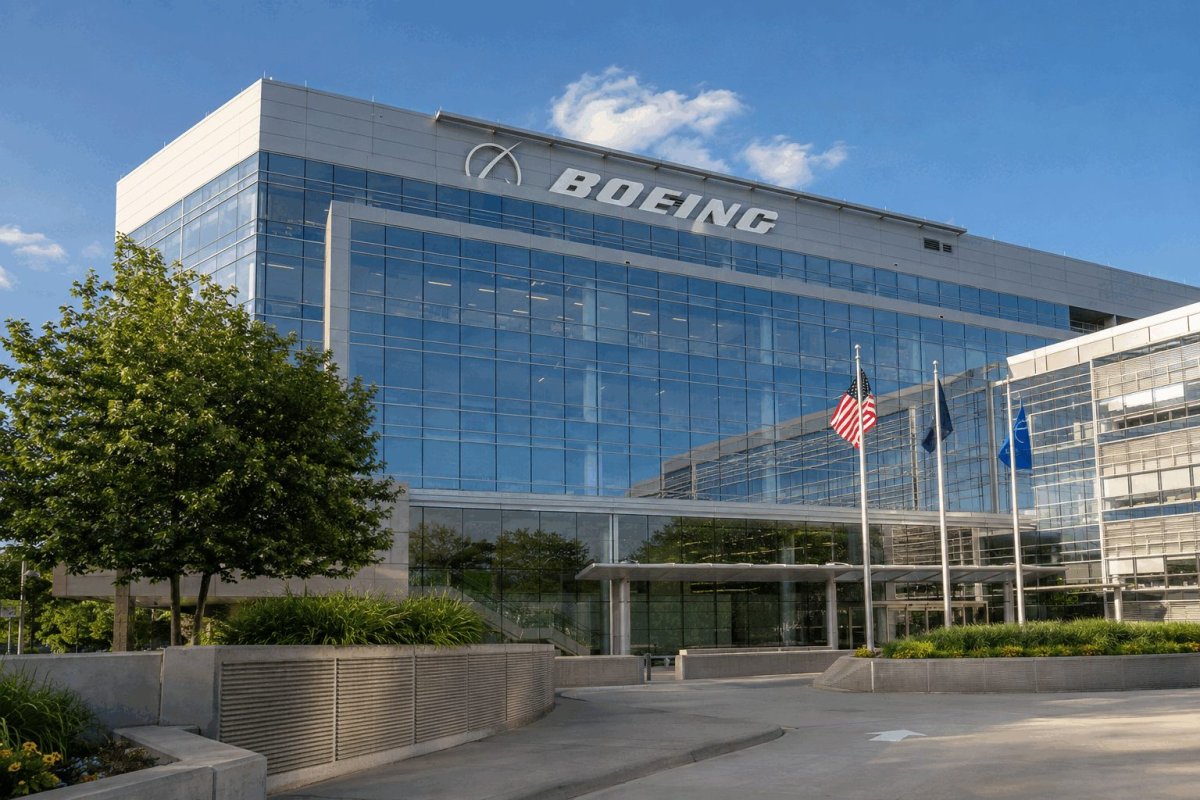
Boeing Co. (NYSE: BA) shares have declined 4.7% over the past eight trading sessions, with the stock closing Wednesday at $222.20, down 0.4% on the day. The slide comes as the aerospace giant contends with heightened regulatory scrutiny and a fresh documentary that revisits whistleblower allegations.
The stock's decline from its August 11 close of $233.24 represents a loss of $11.04 per share, erasing roughly $8.7 billion in market value based on approximately 790 million shares outstanding. The drop has been steady, with the stock slipping 4.4% by August 18 and a further 0.4% the following day.
Investor sentiment has been dampened by the release of "Freefall: A Reckoning for Boeing," a documentary by Rory Kennedy that began streaming Wednesday. The film examines past whistleblower accusations and Boeing's safety culture. Boeing has responded by stating that several claims in the film are inaccurate or have already been addressed.
The documentary's timing is particularly sensitive as Boeing ramps up aircraft production to convert its record backlog into cash flow. Any additional regulatory hurdles or negative publicity could impede that progress, analysts say.
Delivery Gap Widens
Boeing delivered 53 commercial jets in July, up five from the same month last year but down 17% from June's 64 deliveries. In contrast, Airbus delivered 67 aircraft in July, surpassing Boeing by 14 units. Boeing's July total was 20.9% lower than Airbus's, highlighting the ongoing production gap.
The 737 MAX remains the backbone of Boeing's delivery schedule, with 39 MAX jets delivered in July, representing 73.6% of the month's total. This reliance on a single program underscores the importance of the MAX's successful ramp-up.
Regulatory Progress
On the regulatory front, Boeing has made some headway. The Federal Aviation Administration (FAA) certified the 737 MAX 7 on August 3 and restored Boeing's authority to issue airworthiness certificates for all MAX and 787 models, following an eight-month quality review. However, FAA inspectors remain on site to oversee operations.
The company's Q2 2026 results showed revenue of $24.56 billion, up 8% year-over-year, and free cash flow turned positive at $631 million, compared to a negative $200 million a year earlier. The total backlog reached an all-time high of $715 billion, though cash and investments of $20.0 billion remained well below the $45.9 billion in debt.
CEO Kelly Ortberg said operations had improved in stability and that key certification programs were on schedule, while acknowledging more work remains in the second half of the year.
Analyst Optimism vs. Risks
Wall Street remains cautiously optimistic. Recent analyst recommendations include Argus with a Buy rating and $265 price target (19.3% upside), Tigress Financial with a Buy and $305 target (37.3% upside), BNP Paribas Exane with an Outperform and $300 target, JPMorgan with an Overweight and $290 target, and RBC Capital Markets with an Outperform and $265 target. The implied upside ranges from 19% to 37% from Wednesday's close.
However, risks remain. New whistleblower testimony, adverse court rulings, or stricter FAA actions could delay production. The company's debt load, which exceeds cash and investments by $25.9 billion, limits financial flexibility.
August delivery figures will be a key test. If deliveries rebound above July's 53, it would signal that production is improving. A shortfall would suggest that safety oversight and production execution remain closely linked, potentially prolonging the stock's recent weakness.