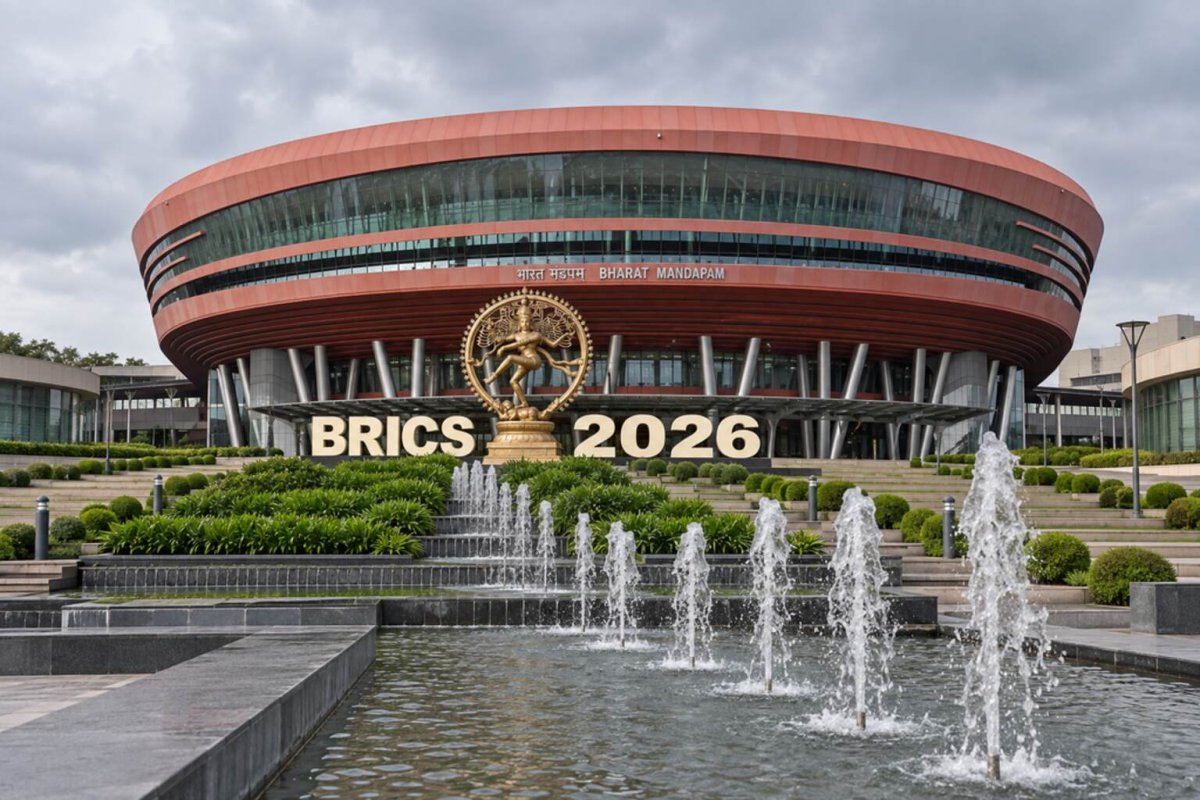
At the recent New Delhi summit, BRICS leaders issued a joint declaration that takes a firm stance against unilateral tariffs and calls for the restoration of the World Trade Organization's (WTO) appellate system. However, the summit fell short of delivering any concrete trade agreements, a common currency, or a functional cross-border payment network, leaving investors to interpret the outcome as more of a policy signal than a catalyst for immediate market changes.
Declaration Highlights
The summit, held on September 12 and 13, saw the unanimous adoption of a 140-point New Delhi Declaration. The trade language is robust: it criticizes tariffs and non-tariff measures that violate WTO rules, stating they disrupt supply chains and exacerbate economic inequalities. Yet, when it comes to implementation, the language is notably cautious.
WTO Reform: A Concrete Demand
The most specific trade-related request is the immediate restoration of the WTO's binding, two-tier dispute settlement mechanism and the appointment of Appellate Body members. This would provide exporters with a final forum to challenge tariffs and other trade restrictions. However, BRICS cannot achieve this alone; it requires agreement from the broader WTO membership, including countries outside the bloc.
Payment Task Force: Work in Progress
The declaration also mentions ongoing work by the BRICS Payment Task Force on interoperable payment and messaging channels. It discusses settlements and investments in local currencies, but explicitly respects national priorities and acknowledges that there is no single approach for all members. Notably, no technical standards, participating banks, launch dates, settlement volumes, or loss-allocation mechanisms were published.
This falls well short of a common currency. While it may eventually lead to cheaper bilateral settlement corridors—especially for countries where dollar access is costly or sanctions complicate payments—the declaration does not create a new reserve asset. For currency markets, this distinction is crucial: studying interoperability is not the same as providing a liquid, convertible alternative to the dollar.
Market Reaction: Divergence, Not Unity
Market movements on Wednesday were mixed, reflecting the lack of a unified BRICS trade bloc. The iShares MSCI Emerging Markets ETF (EEM) rose about 0.8% to $66.31, while the iShares MSCI India ETF (INDA) gained roughly 0.4% to $47.80. In contrast, the iShares China Large-Cap ETF (FXI) fell about 0.8% to $34.14. These moves cannot be directly attributed to the summit, but their divergence serves as a reminder that BRICS members are not a single equity trade.
Each member country has different inflation paths, currency exposures, commodity dependencies, and relationships with the United States. A joint objection to tariffs does not erase these differences, nor does it reverse any existing tariffs.
What This Means for Investors
The declaration's strongest argument is that coordination often begins with technical work rather than a dramatic launch. A functioning payment corridor or a restored WTO appeals process could lower transaction costs and reduce policy uncertainty over time. However, neither outcome is directly investable until specific dates, institutions, and rules are established.
Going forward, investors should watch for concrete developments: named payment corridors, participating financial institutions, published settlement volumes, actual changes in members' tariff schedules, or a WTO agreement on Appellate Body appointments. Until one of these materializes, the New Delhi declaration raises political pressure but does not create a new BRICS market instrument.