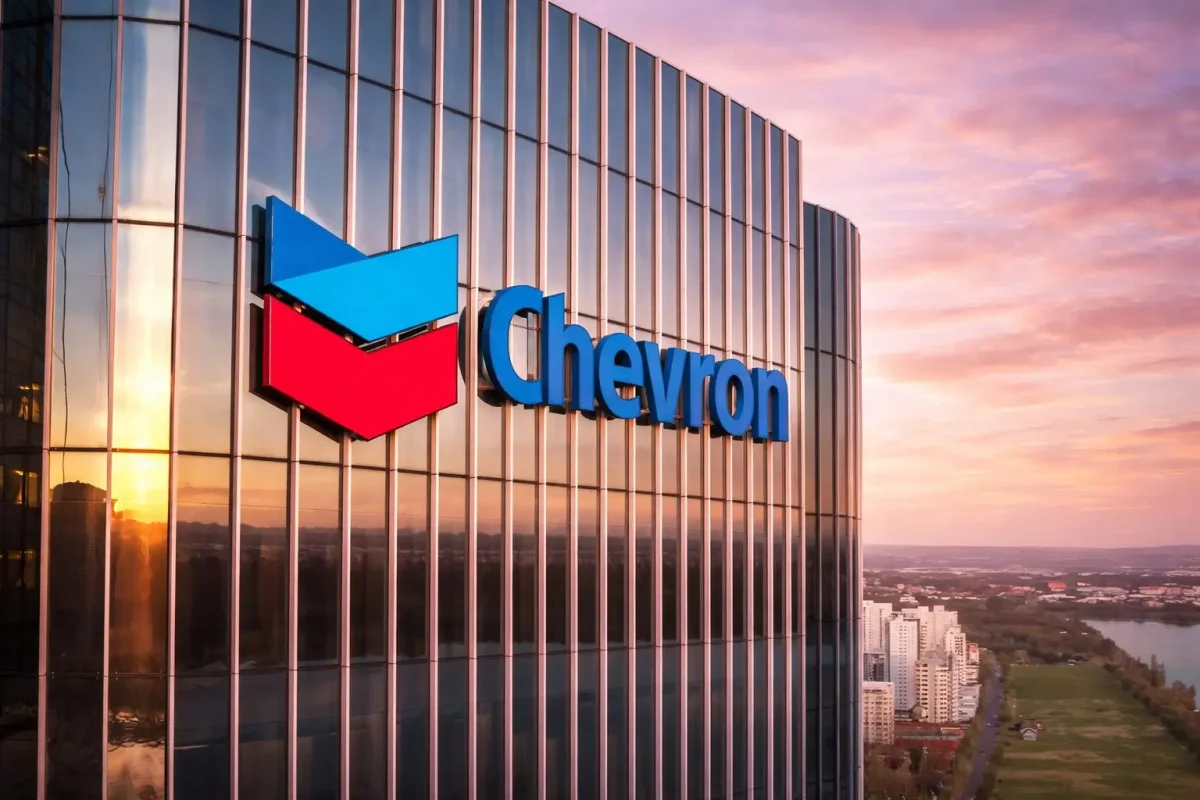
Shares of Chevron Corporation advanced in Monday's premarket session, approaching the $200 threshold, as escalating geopolitical tensions involving Iran sent crude oil prices sharply higher. The price surge reflects heightened market anxiety over potential supply disruptions in a critical global transit corridor.
Oil Market Volatility Intensifies
Brent crude futures, the international benchmark, reached their highest level since January 2025 before paring some gains. The rally was primarily driven by fears of conflict after Tehran issued warnings to commercial vessels, prompting several tanker owners, oil majors, and trading firms to temporarily suspend shipments of crude oil, refined fuels, and liquefied natural gas through the Strait of Hormuz. This strategic waterway handles more than one-fifth of global oil flows, making it a perennial flashpoint that can rapidly translate geopolitical risk into price spikes.
Analysts noted the market may be underestimating the potential for a prolonged supply shock. Helima Croft of RBC Capital Markets highlighted commentary from regional leaders pointing to the threat of oil exceeding $100 per barrel, describing it as a "clear and present danger." Similarly, Barclays' energy team suggested Brent crude "could hit $100" as trading resumed following the weekend developments.
Energy Sector Rides the Wave
The surge in oil prices provided a broad lift to the energy sector at the market open. Alongside Chevron, industry peers including Exxon Mobil, ConocoPhillips, and Occidental Petroleum all traded higher as investors sought exposure to companies most sensitive to rising commodity prices. The move represents more than a typical market fluctuation; it is fundamentally fueled by tangible supply risk.
The 0 Debate: Commodity Price vs. Company Strength
Chevron's approach to the $200 per share level has reignited a longstanding debate among investors: Is the stock movement purely a reflection of higher oil prices, or does it underscore Chevron's underlying financial resilience and cash-generating ability?
In a February 27 analysis for Nasdaq, The Motley Fool's Daniel Foelber identified $200 as a key level to monitor. He emphasized Chevron's competitive advantages, including its low production costs, consistent dividend history, and robust free cash flow generation—the surplus cash remaining after capital expenditures—particularly as oil prices climb. Foelber referenced management commentary from Chevron's recent earnings call, noting the company's estimated Brent crude break-even price is approximately $50 per barrel to cover both dividends and capital spending.
A Stark Divergence in Analyst Valuations
Despite the bullish price action, analyst assessments of Chevron's intrinsic value vary dramatically, illustrating the high sensitivity of energy stock models to underlying assumptions.
On February 26, The Acquirer's Multiple, a publication focused on value investing, presented a much more conservative outlook. Using a discounted cash flow model—a method that projects future cash flows and discounts them to present value—the site estimated Chevron's intrinsic value at roughly $126 per share. With the stock trading above that level, the analysis concluded it offered a negative "margin of safety" for value-oriented investors.
In stark contrast, a February 22 report from TIKR placed Chevron's valuation target near $233 per share. The analysis suggested the company's next phase of growth will depend on production increases, disciplined cost control, and stable refining margins. The report quoted Chevron CEO Mike Wirth, who stated the company is "bigger, stronger and more resilient than ever," and highlighted a strategic plan targeting $3 billion to $4 billion in structural cost savings by the end of 2026.
This creates a valuation spread from approximately $126 to $233—a gap of over $100 per share. For integrated oil majors, commodity price forecasts are paramount. Minor adjustments to long-term oil price decks, discount rates, or operational cost outlooks can swiftly alter a model's conclusion from "overvalued" to "undervalued."
Risks and the Path Forward
The current rally remains fragile and could reverse quickly if the underlying supply concerns ease. A resolution to shipping disruptions, successful diplomatic de-escalation, or a smaller-than-expected impact on actual supply could cause the risk premium embedded in crude prices to evaporate, pulling energy stocks like Chevron lower. With Chevron shares hovering near historic highs, the margin for error is thin, especially as discussions intensify over whether the stock price is outpacing the company's actual cash flow generation.
The coming days will be critical for investors weighing the transient effects of geopolitical risk against Chevron's long-term fundamental value proposition.