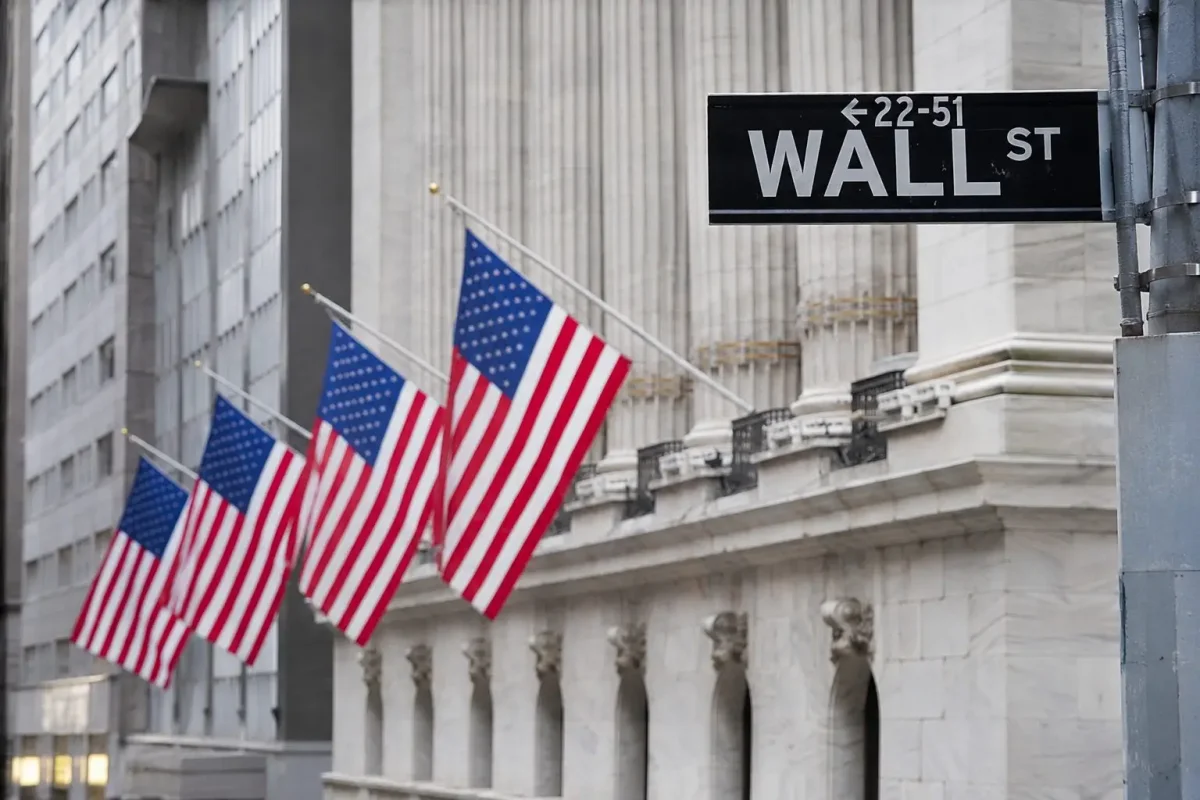
Wall Street extended its record-breaking rally on Friday, with the S&P 500, Dow Jones Industrial Average, and Nasdaq Composite all reaching new intraday highs late in the morning session. The gains were fueled by a surge in Dell Technologies following an upbeat outlook tied to artificial intelligence, which lifted a broad swath of hardware stocks. However, fresh inflation data and cautious comments from the Federal Reserve added a note of caution to the market's risk-on mood.
As of 11:03 a.m. ET, the S&P 500 was up 0.15% at 7,574.93, the Dow rose 0.46% to 50,901.91, and the Nasdaq edged 0.06% higher to 26,933.85, according to LSEG data. All three benchmarks had set new intraday records earlier in the session. The S&P 500 is on track for its ninth consecutive weekly gain, a feat not seen since December 2023, as investors continue to embrace risk assets amid AI enthusiasm and easing geopolitical tensions.
Dell was the standout performer, with shares surging 33% after the company reported AI server revenue of $16.1 billion for the quarter—surpassing its PC sales of $14.6 billion. The company raised its fiscal 2027 AI server revenue target to approximately $60 billion, up from $50 billion, and boosted its full-year revenue outlook to a range of $165 billion to $169 billion, compared with the prior forecast of $138 billion to $142 billion. The guidance sparked a rally in other hardware stocks tied to data-center spending, including Super Micro Computer and Hewlett Packard Enterprise, as traders bet on continued AI infrastructure investment.
Despite the upbeat tone in tech-related names, broader market participation was uneven. Nine of the 11 major S&P 500 sectors traded lower earlier in the session, with communications services lagging as Alphabet shares declined. Retail stocks also struggled: Gap fell after slashing its annual sales forecast, and American Eagle Outfitters slipped as the retailer maintained its outlook for flat comparable sales.
Macroeconomic data added to the mixed picture. The Bureau of Economic Analysis reported that the personal consumption expenditures (PCE) price index rose 0.4% from March and 3.8% year-over-year in April, above the Fed's 2% target. Core PCE, which excludes food and energy, increased 3.3% annually. At the same time, the first estimate of first-quarter real GDP growth was revised down to a 1.6% annual rate from the initial 2.0% reading, with fourth-quarter growth at 0.5%.
Federal Reserve Vice Chair for Supervision Michelle Bowman cautioned that it is too early to assess the economic impact of the Iran conflict, warning that prolonged disruptions could exacerbate inflation. She noted that a larger energy shock could alter her views on monetary policy risks. Oil prices remained elevated, with Brent crude trading at $92.10 a barrel as U.S. and Iranian negotiators worked on a ceasefire extension, though prices are still well above late February levels.
Market strategists pointed to a confluence of factors supporting the rally. Bob Savage, head of markets macro strategy at BNY, told Reuters that markets are ending May with a risk-on bias, citing AI enthusiasm, cheaper oil, and hopes that U.S.-Iran tensions will not escalate. However, some analysts warn that optimism about a swift resolution in the Middle East may be premature, with supply disruptions potentially lasting several months.
The 10-year Treasury yield held steady around 4.45% as investors weighed inflation risks against AI-driven growth optimism. Markets continue to lean on strong earnings from AI-related companies and lower energy prices to offset inflationary pressures, but the rally remains vulnerable to negative headlines on energy, inflation, or Fed policy.