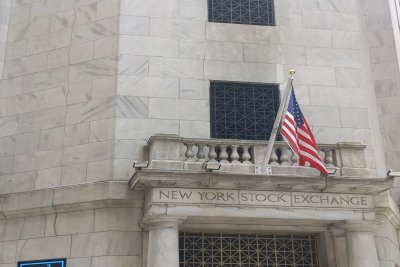
The Dow Jones Industrial Average recovered from steeper declines Monday but remained in negative territory by midday, as financial markets grappled with a significant surge in oil prices driven by escalating conflict in the Middle East. As of 12:25 p.m. Eastern Time, the blue-chip index was down 0.14%, trading at 48,907.26.
Oil Spike Reignites Inflation Concerns
The primary focus for investors shifted squarely to inflation risks, with crude oil prices catapulting more than 5% higher. This abrupt increase is expected to quickly translate into higher costs for gasoline and freight shipping, threatening to stall recent progress in cooling consumer price pressures. The development also casts doubt on the anticipated timeline for interest rate cuts from the Federal Reserve.
The market's sensitivity hinges on potential disruptions to global oil supply, particularly near the critical Strait of Hormuz—a maritime chokepoint for nearly 20% of the world's seaborne oil. Analysts warn that a prolonged conflict could push Brent crude prices toward $100 per barrel, potentially adding 0.6 to 0.7 percentage points to global inflation.
Early Session Volatility and Analyst Views
Trading opened with notable weakness, with the Dow shedding 355.68 points, or 0.73%, early in the session. The Cboe Volatility Index (VIX), a key gauge of market fear, climbed to 21.96. While some strategists noted the market's initial resilience, others cautioned about deeper potential losses. Wells Fargo's Ohsung Kwon suggested the S&P 500 could retreat to the 6,000 level if crude oil sustains a break above $100 a barrel.
Price-weighted index mechanics amplified the Dow's early stumble. Shares of Sherwin-Williams and 3M were significant drags, jointly subtracting approximately 112 points from the index at the open. In the Dow, a $1 move in any single component stock equates to roughly a 6.16-point shift in the index.
Economic Data Points to Persistent Cost Pressures
Inflationary signals were also evident in the latest economic data. The Institute for Supply Management's manufacturing Purchasing Managers' Index (PMI) for February eased to 52.4, indicating continued expansion but at a slower pace. However, the report highlighted a concerning surge in factory input prices, which hit their highest level in three and a half years. Survey respondents cited increased tariffs and more expensive energy as key drivers.
Markets continued to assess the broader implications of the Iran conflict, including potential disruptions to global shipping and travel. The geopolitical reaction has been described by some economists as "relatively moderate" so far, but others anticipate further market downside in the coming days as the situation develops.
Major M&A Activity Amid Market Turmoil
In a significant deal announced separately from the day's geopolitical headlines, a consortium led by BlackRock's Global Infrastructure Partners, in partnership with EQT, agreed to acquire energy infrastructure company AES for $33.4 billion, including assumed debt. The all-cash offer values AES at $15 per share, with the transaction expected to close in late 2026 or early 2027. Analysts framed the deal's strategic rationale as providing AES with improved access to capital for future investment.
Market Outlook and Key Data Ahead
Some market observers believe the current risk-off sentiment may be short-lived. Ed Yardeni of Yardeni Research suggested that any selloff could potentially reverse into a rally, especially if oil prices retreat following a resolution of the conflict.
Looking beyond geopolitics, traders are preparing for a slate of key economic indicators and corporate earnings for clearer directional signals. The February U.S. employment report is a primary focus, with consensus estimates pointing to the creation of 60,000 new jobs. Upcoming retail sales figures and earnings reports from companies including Broadcom, Best Buy, and Target will also be scrutinized.
The next major scheduled event is the release of the February U.S. jobs report this Friday at 8:30 a.m. ET, followed by the Consumer Price Index (CPI) for February on March 11. The trajectory of oil prices in the lead-up to these reports could significantly influence expectations for future monetary policy moves.