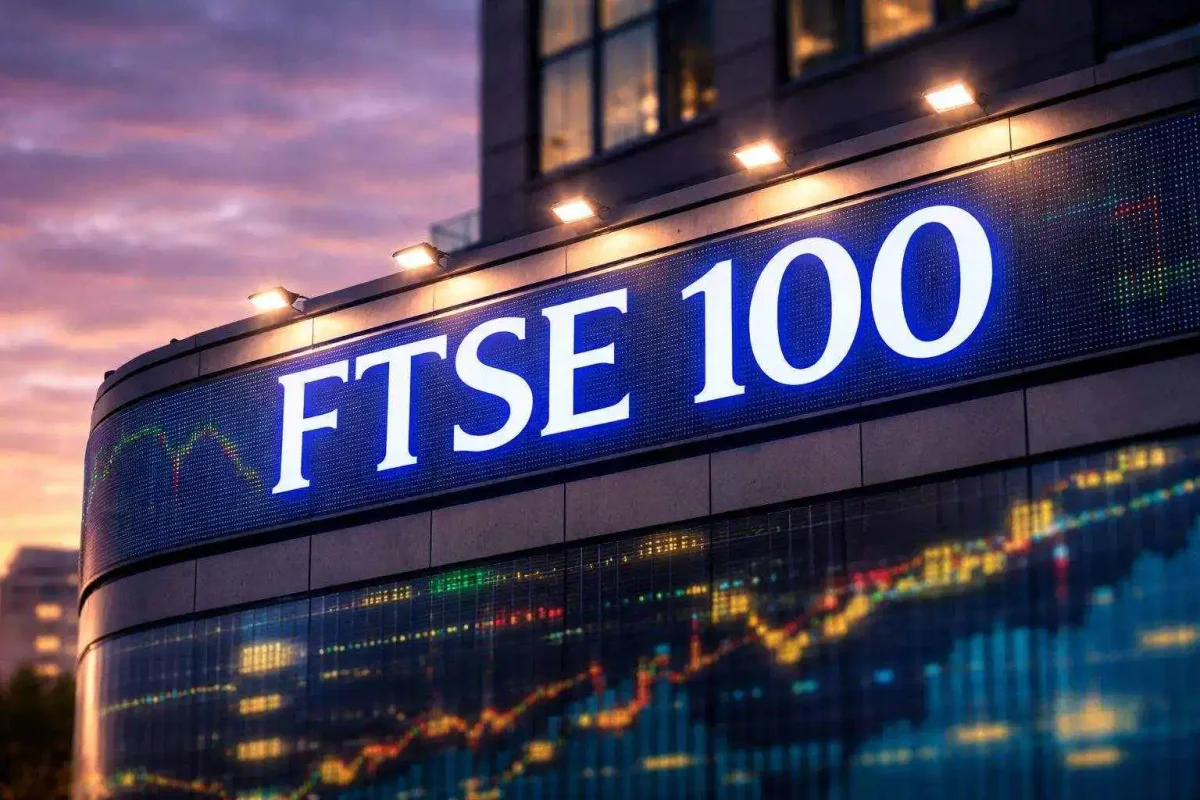
London's equity markets experienced a severe sell-off on Tuesday, with the benchmark FTSE 100 index closing down 296 points, or 2.8%, at 10,484.13. This marked the sharpest single-day percentage drop for the blue-chip index in nearly a year. The domestically focused FTSE 250 fared even worse, sliding 3.1% as investors rapidly recalibrated their outlook for the UK economy and monetary policy.
Energy Prices and Geopolitics Fuel Market Anxiety
The primary catalyst for the downturn was a sharp rally in global oil and gas prices, exacerbated by escalating tensions in the Middle East. This surge in energy costs reignited fears of persistent inflation, directly challenging the market's recent optimism about potential interest rate cuts from the Bank of England. Traders significantly scaled back bets on a reduction in borrowing costs at the central bank's upcoming March 19 meeting, with many now viewing the persistence of price pressures as a key obstacle to monetary easing.
"Set against a backdrop of rapidly rising energy prices, there will undoubtedly be plenty of scrutiny over how higher oil and gas prices could spark a fresh bout of inflation," said Joshua Mahony, chief market analyst at Scope Markets. The sentiment was echoed by Dan Coatsworth, head of markets at AJ Bell, who noted, "If the issues persist, then the market will start to worry about new inflationary pressures and that could lower expectations for near-term interest rate cuts."
Sector Performance: Banks and Travel Hit Hardest
The shift in rate expectations weighed most heavily on interest-rate-sensitive sectors. Financial stocks bore the brunt of the selling pressure, with major lenders including HSBC, Barclays, and Lloyds all recording significant declines. The travel and leisure sector also faced a dual threat: rising jet fuel costs compounded by operational disruptions linked to the Middle East conflict. International Consolidated Airlines Group (IAG) was among the notable fallers.
In a contrasting move, medical technology firm Smith & Nephew advanced after Barclays raised its price target on the stock. The defensive nature of the healthcare sector provided some insulation, while oil giants and defense-related companies managed to hold up relatively better amid the broader market rout.
Bond Yields Rise as Investors Seek Compensation
The risk-off sentiment extended to the fixed-income market, where UK government bond yields moved higher. This price action indicates investors were demanding greater returns for holding sovereign debt, reflecting concerns about inflation and a potentially more hawkish stance from the Bank of England. Since bond prices and yields move inversely, the rise in yields signified a sell-off in the bond market, aligning with the equity downturn.
Broader Economic and Political Context
The market slump occurred against a complex domestic backdrop. Investors were also digesting the UK government's Spring Statement, where Chancellor Rachel Reeves asserted she had "restored economic stability." However, the Office for Budget Responsibility concurrently warned of weaker growth ahead, noting that inflation and public finances face heightened risks from global uncertainties.
The FTSE 250's underperformance highlighted particular concern for the UK's domestic economic outlook. This mid-cap index, which has a heavier reliance on the UK consumer and economy compared to the multinational FTSE 100, fell more sharply as traders priced in risks to household spending and broader growth from potential stagflationary pressures.
Market Implications and Forward Look
The day's events underscore the market's acute sensitivity to inflation data and geopolitical developments. Analysts warn that higher fuel and power bills could cascade into transport, food, and services costs, potentially keeping consumer price inflation elevated even as economic demand cools—a scenario that would likely keep central bankers in a cautious, data-dependent mode.
Market reversals based on headlines are not uncommon, and a de-escalation in the Middle East or a retreat in energy prices could quickly see traders repricing rate-cut expectations, potentially offering relief to the hardest-hit sectors. For now, the focus remains firmly on energy price trajectories, incoming economic data, and the Bank of England's pivotal decision later this month.