European equity markets faced headwinds at the start of the new trading week, with futures pointing lower as a sharp spike in crude oil prices reignited concerns over inflation and economic stability. The trigger was renewed geopolitical friction in the Middle East, following reported military strikes by U.S. and Israeli forces on Iranian interests.
Commodity Shock on Supply Fears
The immediate market reaction was most pronounced in the energy complex. Brent crude, the international benchmark, surged 6.4% to trade at $77.57 per barrel. Analysts quickly drew parallels to historical supply disruptions. Rystad Energy highlighted a potential "effective halt" in traffic through the critical Strait of Hormuz, while Wood Mackenzie pointed to the 1970s oil embargo as a "nearest historical analogue." This abrupt move higher poses a direct challenge to the prevailing market narrative centered on cooling inflation and impending central bank rate cuts.
In response, equity futures retreated. Contracts for London's FTSE 100 index fell 0.6% ahead of the open. The EuroSTOXX 50 and Germany's DAX futures also traded in negative territory, signaling a broad risk-off shift at the European session's outset.
FTSE 100's Historic Run Meets a New Challenge
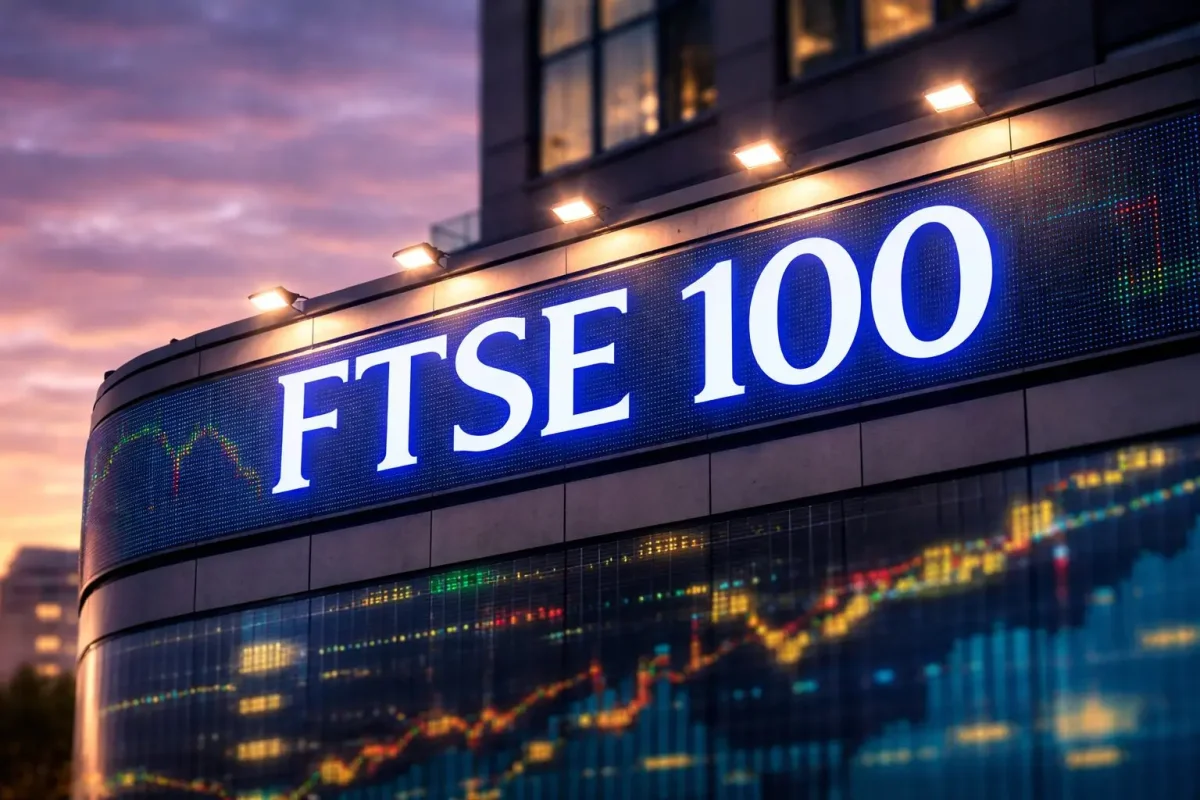
The commodity-driven pressure tests a remarkable period of strength for UK equities. The FTSE 100 concluded February at a record closing high of 10,910.55, marking its third consecutive record finish. The index rallied 6.7% over the month, its most significant monthly advance in over three years, and secured its eighth straight monthly gain—the longest such streak in more than a decade. Year-to-date, the index is up nearly 9.9%.
This rally has been characterized by a distinct sector rotation. Investors have favored so-called "Halo" or "heavy-asset" stocks—companies with tangible infrastructure and low obsolescence risk perceived as resilient to technological disruption. Sectors like mining, energy, and utilities have led the charge, outpacing banks and domestic-focused shares. As one strategist noted, money is moving toward assets you "still need on Monday morning," reflecting a pivot away from expensive growth stocks.
Corporate Catalysts: Buybacks and Earnings Power
Individual corporate stories provided significant fuel for the February rally. Engineering giant Rolls-Royce Holdings saw its shares soar approximately 6% to a record 1,383 pence after reporting a 40% jump in annual profit. The company further buoyed sentiment by unveiling an ambitious share buyback program worth between £7 billion and £9 billion, scheduled for 2026-2028, alongside lifted financial forecasts driven by recovering airline travel and data-center demand.
In a separate major capital return announcement, the London Stock Exchange Group (LSEG) launched its largest-ever buyback, a £3 billion program, sending its shares up over 9% on the day. The exchange operator's CEO emphasized the unique value of its data, calling it "verging on impossible" for artificial intelligence to replicate.
Other notable movers included HSBC, which jumped 7.9% after raising a key profitability target, and Schroders, which rallied on takeover approach speculation. However, the rally wasn't universal. Barclays faced pressure over credit exposure concerns, Diageo sank on a profit warning, and Aston Martin announced significant job cuts.
Market Crosscurrents: Inflation Threat vs. Sector Lift
The market now confronts a familiar dilemma. While elevated oil prices directly benefit the heavyweight energy and mining sectors within indices like the FTSE 100, they also threaten to re-accelerate inflation. This could force central banks, including the Bank of England, to maintain tighter monetary policy for longer, increasing borrowing costs and pressuring economic growth. Sectors with high fuel consumption or sensitivity to consumer spending would be particularly vulnerable.
For months, the FTSE 100 has demonstrated an ability to overlook negative headlines, driven by robust corporate actions and strategic sector rotations. The trading action on Monday and throughout the coming week will reveal whether this resilience can withstand the dual pressures of a geopolitical-driven oil shock and the persistent "higher for longer" interest rate fears it invokes. The balance between the index's commodity-linked strengths and its broader macroeconomic sensitivities will be key.