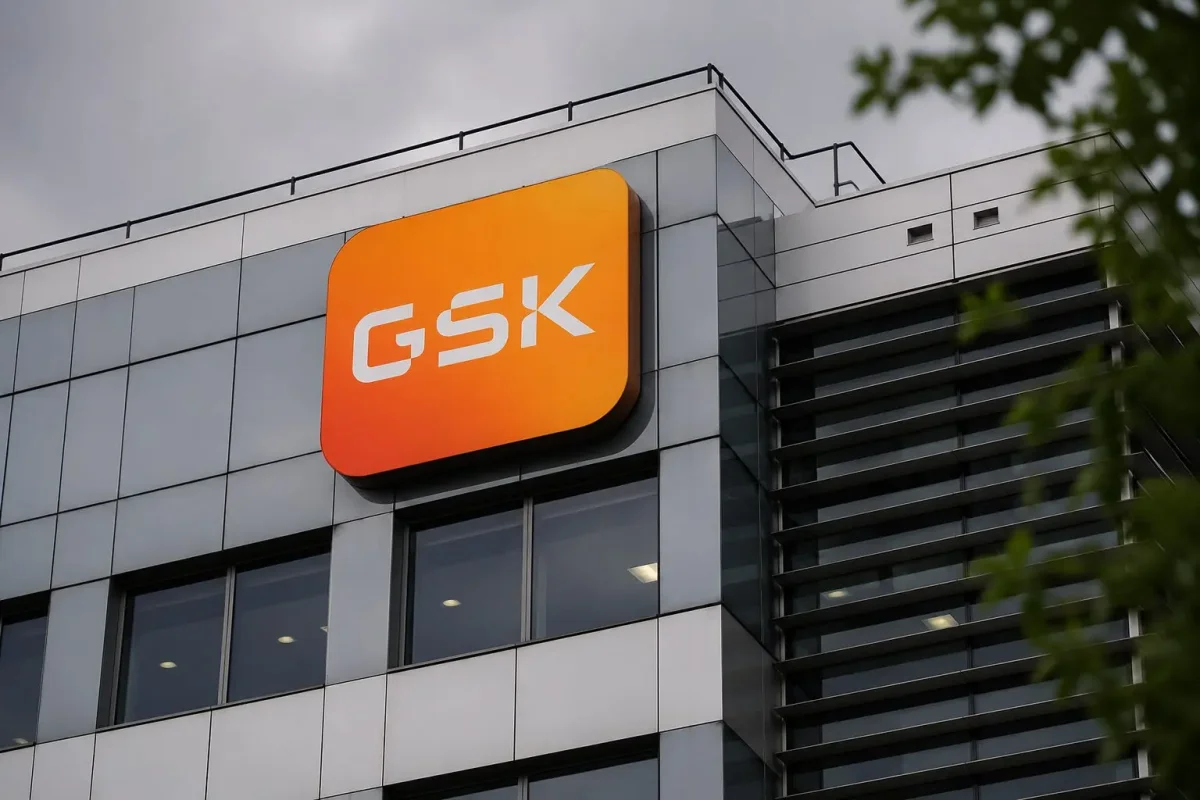
GSK plc is set to present a comprehensive strategy update on Tuesday, July 28, as it confronts a significant gap between current consensus sales projections and its own ambitious target. According to the company's own compiled consensus, analysts expect 2031 revenue of approximately £36.37 billion, while management's objective stands at more than £40 billion. This £3.63 billion shortfall represents roughly 9.1% of the minimum target, a gap that persists even as the company anticipates strong growth in its oncology portfolio.
Market performance and stock reaction
Shares of GSK closed at 1,919.5 pence on Friday, up 0.7% on the day. Over the course of the week, the stock posted a modest gain of about 0.2%. Despite these gains, the shares remain 15.9% below their 52-week peak, reflecting ongoing investor caution ahead of the strategy event.
Detailed revenue breakdown
Data derived from GSK's July 17 broker consensus reveals the following projections: total group turnover is expected to rise from £33.84 billion in 2026 to £36.37 billion in 2031, an increase of £2.53 billion, or 7.5%. Oncology sales are forecast to surge from £2.48 billion to £6.02 billion, a gain of £3.54 billion, or 142.6%. However, this growth is partially offset by a steep decline in Dolutegravir-based HIV regimens, which are projected to fall from £5.69 billion to £1.01 billion, a drop of £4.68 billion, or 82.3%. General Medicines are also expected to decline from £9.60 billion to £7.64 billion, a decrease of £1.95 billion, or 20.4%.
The net effect is that oncology revenue gains alone do not compensate for the loss from the Dolutegravir patent expiry, leaving a significant gap to the £40 billion target.
Impact of discontinued programs
The consensus figures also include £430 million in projected 2031 sales from camlipixant, a chronic-cough treatment that GSK discontinued development on as of the survey's effective date. If that line were removed entirely, modeled sales would fall to approximately £35.94 billion, widening the target deficit to £4.06 billion, or 10.2%. It is important to note that this does not represent a forecast; GSK is still evaluating camlipixant for use in irritable bowel syndrome. Jefferies analyst Michael Leuchten described camlipixant as "nice to have but not a must-have" for GSK's revenue trajectory, adding that the market has not yet fully factored in the impact of recent acquisitions.
Regulatory wins and pipeline updates
On a positive note, GSK received an early boost this week when the FDA approved its first lung-cancer drug, Jideytro, on Wednesday, ahead of the scheduled September 18 target. In the approval dataset, 44% of 117 patients showed a response, and 69% of those responders continued to respond at 12 months. Chief Scientific Officer Tony Wood stated that the approval aligns with GSK's strategy of acquiring assets with "validated targets." Jideytro was obtained via the $10.6 billion Nuvalent deal. According to GSK, pharmacies are expected to have stock available within weeks.
Upcoming earnings and strategy catalysts
Financial forecasts for Tuesday's results are more subdued. Analysts predict quarterly revenue of £8.24 billion, with core operating profit estimated at £2.68 billion and core EPS projected at 47.1 pence. Based on reported figures for Q2 2025, these projections indicate a 3.2% increase in sales, while core profit and EPS are forecast to climb about 1% to 2%. The portfolio update is therefore seen as the more significant catalyst for shares.
GSK is scheduled to release its results at 12:00 BST on July 28, with an investor presentation at 14:00 BST. CEO Luke Miels needs to demonstrate which assets have the potential to outperform present projections. Patience among UK pharma investors is wearing thin, especially after AstraZeneca (LON:AZN) shares fell 10% this year following a significant trial failure, which redirected focus from earnings to the strength of its drug pipeline.
Risks and outlook
Key risks for GSK include the potential for additional setbacks in clinical trials, delays in product launches, currency fluctuations, and slow regulatory approvals, all of which could widen the valuation gap. The upcoming week hinges on a single figure: Miels requires at least £3.63 billion in credible, risk-adjusted sales surpassing the forecasts for the 2031 models as of today.