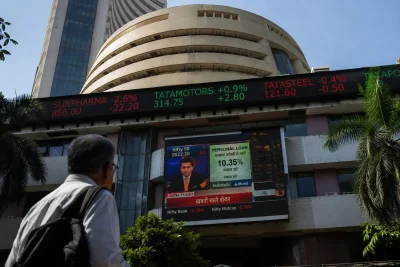
Indian equity markets faced sustained selling pressure on Thursday, with key benchmarks extending their decline amid a toxic mix of soaring crude oil prices and a sharply weakening domestic currency. The Nifty 50 index was down 0.53% to 23,739.30 by mid-afternoon, while the Sensex had fallen 1% earlier in the session to 76,129.95, continuing a selloff that began on Wednesday.
Oil Price Shock Threatens Macro Stability
The primary catalyst for the market weakness was Brent crude oil pushing back above the psychologically significant $100 per barrel mark. This development carries severe implications for India, which imports nearly 90% of its crude requirements. Rating agency ICRA warned in a research note that if oil averages $100 for a full year, India's current account deficit could balloon to 1.9%-2.2% of GDP, a stark increase from a previously projected 0.7%-0.8%.
Brokerage Elara Securities estimated that federal spending could rise by 3.6 trillion rupees (approximately $39 billion) under a $100 oil scenario. Concurrently, research from the State Bank of India suggested that sustained high prices could drag economic growth down to 6.6% and push inflation up to 4.1% in the coming financial year.
Currency and Broader Market Weakness
Compounding the equity market's troubles, the Indian rupee depreciated 0.3% to a historic low of 92.3575 against the U.S. dollar. Currency traders are closely monitoring the Reserve Bank of India for potential intervention around the 92.30-92.35 level, according to commentary from IFA Global.
The selloff was broad-based. At one point during morning trade, 14 of the 16 major sectoral indices were in negative territory. Small-cap and mid-cap indices fell roughly 1.5% each, while financials, banks, and state-run lenders all declined around 1.2%. Heavyweight stocks like HDFC Bank, ICICI Bank, and Reliance Industries were significant drags on the indexes.
External Headwinds Add to Gloom
External factors provided no respite. The U.S. initiated Section 301 unfair-trade investigations into 16 major partners, including India, a move that could result in new tariffs by summer. Regional markets also fell, with MSCI's broadest index of Asia-Pacific shares excluding Japan dropping 1.5%, Japan's Nikkei losing 1.4%, and Hong Kong's Hang Seng declining 1.2%.
Analysts expressed concern over the banking sector's exposure. Jefferies analysts, led by Prakhar Sharma, noted that the ongoing Middle East conflict could place banks at risk of higher credit costs, while non-bank lenders might face pressure on margins and growth.
Potential Stabilizing Factors and Outlook
Market participants are looking for potential stabilizing forces. India has stated its readiness to support the International Energy Agency's planned release of 400 million barrels from strategic reserves. Furthermore, reports suggested Iran might allow India-flagged tankers passage through the critical Strait of Hormuz, though this was denied by an Iranian source. Any tangible easing in oil supply or shipping costs could help steady investor sentiment.
However, the near-term outlook remains cautious. "Volatility will likely persist as crude prices swing sharply," said Sunny Agrawal, head of fundamental equity research at SBICAPS Securities. He added that stability would only return with "clearer direction on the war and energy prices." Since the onset of recent geopolitical tensions, the benchmark indices have shed approximately 5% of their value, with Thursday's trade reinforcing India's status as one of Asia's most exposed major oil importers.