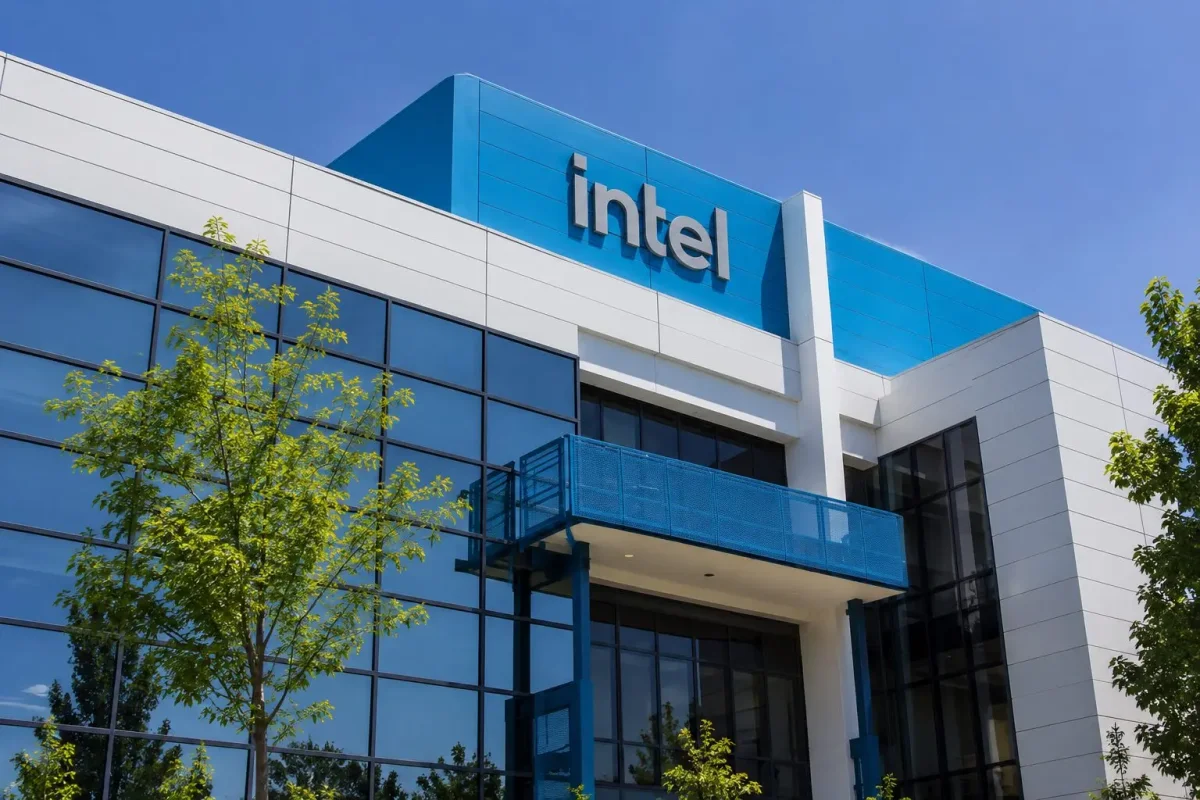
Intel Corporation (INTC) shares edged higher in premarket trading Wednesday, reaching $124.90 by 08:51 EDT, building on Tuesday's 3.1% gain that closed the stock at $123.52. The modest uptick comes amid a broader rally in semiconductor stocks, with the Philadelphia Semiconductor Index hitting a record high on Tuesday, surging 5.5% as investors piled into chip names on sustained artificial intelligence demand.
However, not all Wall Street firms are buying into the Intel recovery story just yet. Northland Capital Markets downgraded the stock to Market Perform from Outperform, warning that even bullish 2027 earnings forecasts may not justify the current valuation. Analyst Gus Richard noted that even if Intel's data-center unit jumps 40% in 2027, shares would trade at roughly 38 times Northland's earnings estimate of $3.20 per share, a steep multiple that suggests the turnaround is already priced in.
Despite the downgrade, Intel's CEO Lip-Bu Tan is making a high-profile trip to Taiwan this week, where he is expected to hold meetings with Taiwan Semiconductor Manufacturing Co. (TSM) management ahead of his keynote speech at COMPUTEX on June 2. Intel confirmed Tan's keynote but declined to comment on his specific schedule or meetings. The visit underscores Intel's strategic push to strengthen ties with TSMC, the world's leading advanced chipmaker, even as Intel pursues its own foundry ambitions.
The broader market backdrop remains favorable for chip stocks. The S&P 500 and Nasdaq closed at all-time highs Tuesday, driven by a tech surge that Chris Zaccarelli, chief investment officer at Northlight Asset Management, described as “reminiscent of the boom” seen in the late 1990s. The Philadelphia Semiconductor Index's record performance reflects investor optimism that AI-driven demand will continue to fuel growth for semiconductor companies across the board.
Intel's recent earnings have provided some ammunition for bulls. The chipmaker reported first-quarter revenue of $13.6 billion in April, a 7% year-over-year increase, and guided second-quarter revenue in the range of $13.8 billion to $14.8 billion. Its Data Center and AI unit posted a 22% revenue jump to $5.1 billion, while Intel Foundry revenue rose 16% to $5.4 billion. CEO Tan noted that demand for Xeon server CPUs remained ahead of supply, and CFO Dave Zinsner cited “unprecedented demand for silicon.”
Nevertheless, profitability remains a significant challenge. Intel reported a first-quarter net loss of $3.7 billion, underscoring the heavy investments required to turn around its manufacturing operations and build a competitive foundry business. The company's 18A manufacturing process is a key milestone, but scaling it to customer-ready levels will take time and capital.
Northland's downgrade also highlighted a broader risk: hyperscalers—the largest cloud companies that build massive AI data centers—may cut infrastructure spending in 2027 if cash becomes tight. Such a slowdown could dampen demand for Intel's data-center chips, which are central to its AI recovery story. SemiAnalysis President Doug O’Loughlin summed up the challenge: “TSMC is the real bottleneck,” a comment that reflects both Intel's opportunity and the gap it still needs to close.
For now, Intel shares remain priced as a bet on AI and manufacturing recovery, not a completed turnaround. Wednesday's open will test whether buyers are willing to keep chasing that risk after the recent rally, especially with a downgrade from a key analyst tempering enthusiasm.