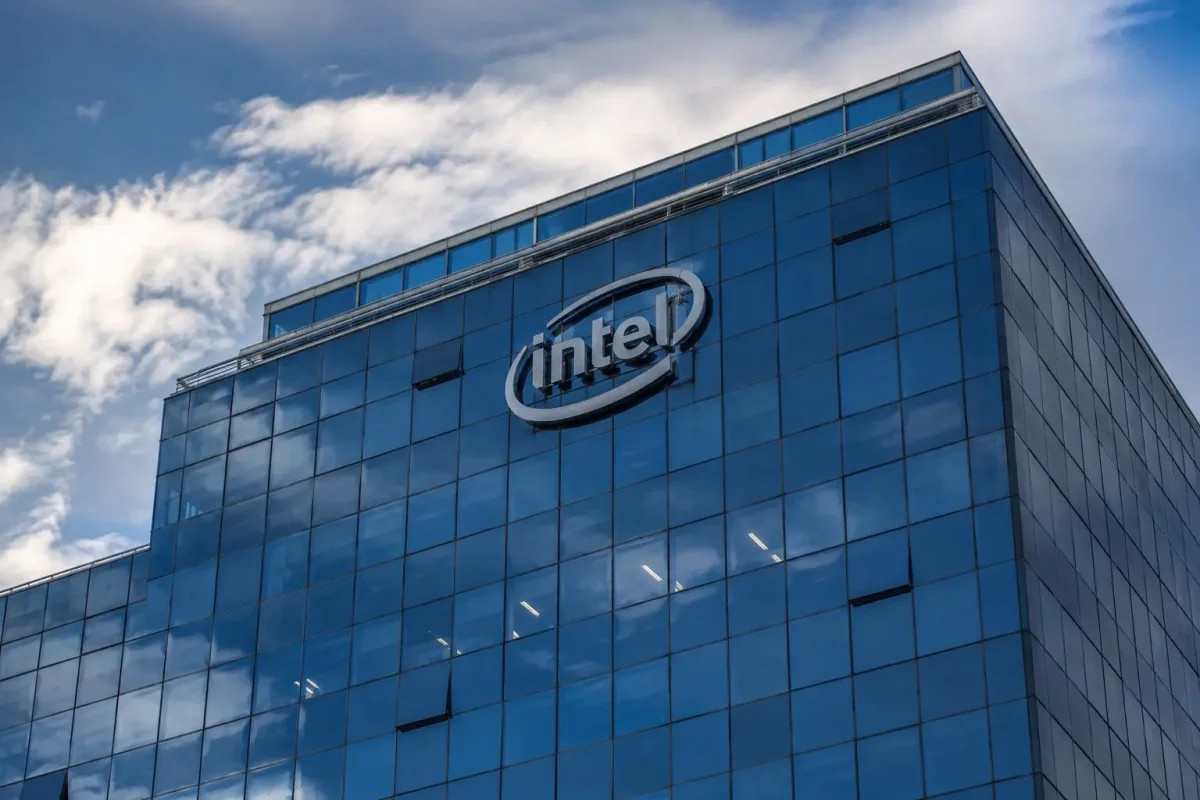
Intel Corporation (INTC) experienced a pullback on Tuesday, with shares closing 2.1% lower at $107.92. The decline followed a dramatic 11.2% surge in the previous session, which was triggered by an unconfirmed report that Alphabet Inc.'s (GOOGL) Google had placed a significant order for Intel's artificial intelligence chips. The stock traded in a wide range during the session, reaching a high of $114.00 and a low of $99.46.
The reported order, which was initially published by The Information and cited by Reuters, involves over 3 million tensor processing units (TPUs) for delivery in 2028. TPUs are specialized chips designed to accelerate AI workloads, and a deal of this magnitude would represent a major validation of Intel's foundry business, which manufactures chips for other companies. However, Reuters stated it was unable to independently verify the report, and Intel declined to comment. Neither Alphabet nor Nvidia (NVDA), which is also reportedly evaluating Intel's technology for a future processor, responded to requests for comment.
Foundry Ambitions and Market Context
Intel's foundry unit is a central part of the company's turnaround strategy, aiming to compete with industry leader Taiwan Semiconductor Manufacturing Co. (TSM). The potential Google order, if confirmed, would signal that Intel is beginning to attract high-profile external customers, a critical step for the foundry's long-term viability. Jacob Bourne, a tech analyst at eMarketer, noted that the report suggests "AI's biggest players are racing to diversify" their supply chains away from TSMC. Gil Luria of D.A. Davidson added that backing Intel also means supporting "U.S.-based manufacturing," linking the move to broader geopolitical considerations in Washington.
Adding to the positive narrative, Cadence Design Systems (CDNS) and Intel Foundry announced an expanded collaboration on Intel's upcoming 14A manufacturing process. The partnership focuses on design technology co-optimization (DTCO) and the development of production-ready process design kits (PDKs), which are essential for chipmakers to begin fabrication. Cadence CEO Anirudh Devgan called the expanded tie-up a "major milestone for both companies," while Intel Foundry chief Naga Chandrasekaran highlighted the deal as evidence of Intel's progress on its technology roadmap and customer ecosystem.
Broader Market Headwinds
Despite the positive company-specific news, Intel shares faced headwinds from a broader tech selloff. The S&P 500 slipped 0.26% on Tuesday, while the tech-heavy Nasdaq Composite lost 0.97%, as earlier gains in the sector faded. The Philadelphia Semiconductor Index gave up 1.9% after trading higher earlier in the day. Nvidia, a key bellwether for the AI chip market, ended the day down 0.2%.
Michael O'Rourke, chief market strategist at JonesTrading, described some of the day's selling as a "momentum unwind," as investors took profits following a strong AI-driven rally. The broader market is also awaiting Wednesday's U.S. inflation data, which could influence interest rate expectations and, consequently, valuations for high-growth chipmakers.
Risks and Outlook
For Intel, the risks are clear. If the Google order is delayed, proves smaller than anticipated, or fails to generate profitable foundry revenue, the stock could lose a key catalyst. Moreover, the absence of an order from Nvidia, which Reuters confirmed is still evaluating Intel's technology but has not yet committed, underscores the uncertainty surrounding Intel's foundry ambitions.
Wednesday's trading session is expected to be a critical test for Intel shares. Investors must decide whether Tuesday's decline represents routine profit-taking after a sharp rally or a sign that the stock has run ahead of the actual revenue potential from its foundry business. With the broader market also on edge ahead of inflation data, the near-term direction for Intel shares remains highly uncertain.