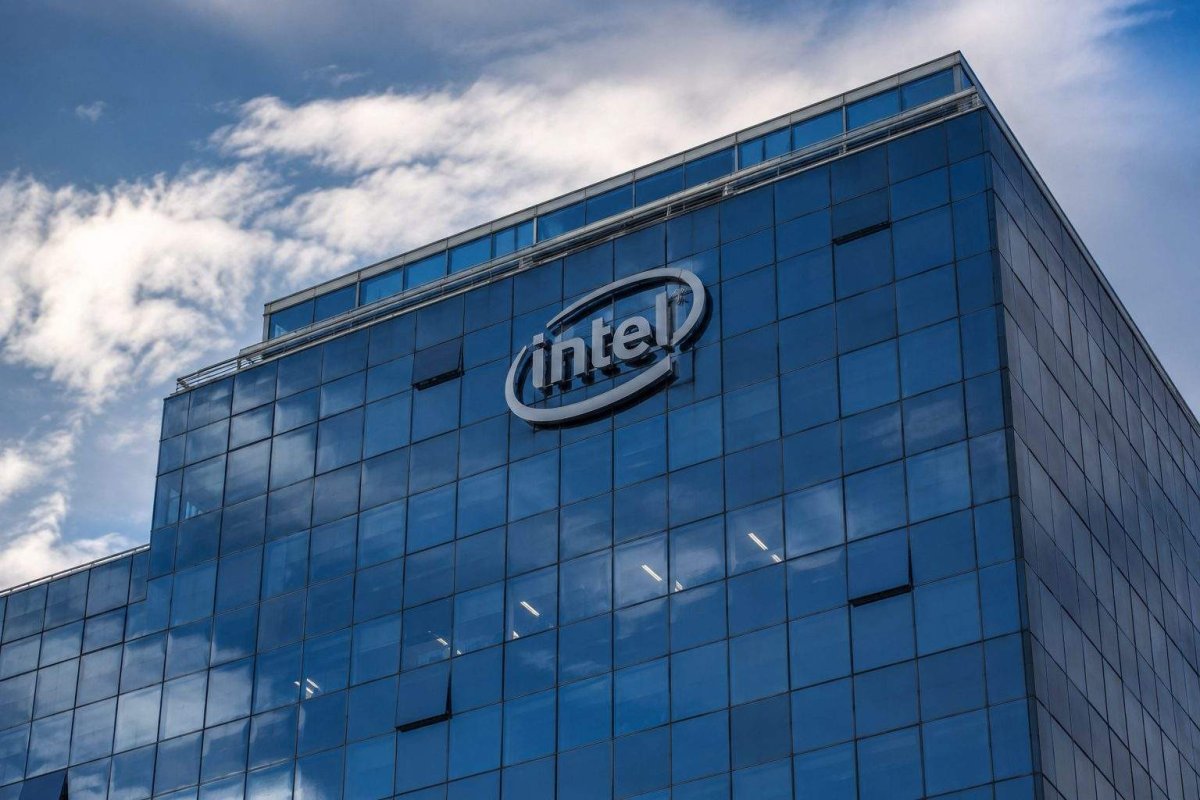
Intel Corp. (NASDAQ: INTC) shares rallied sharply on Friday, closing at $124.57, a gain of 6.5%, significantly outperforming the broader market. The Nasdaq Composite rose 0.3% and the S&P 500 gained 0.5% on the same day. The surge extended a recent upward move driven by renewed optimism about the company's foundry business and its potential role in the artificial intelligence supply chain.
Bank of America Upgrade Fuels Momentum
The latest leg higher followed a major sentiment shift on Wall Street. Bank of America double-upgraded Intel to Buy from Underperform and raised its price target to $135 from $96. The analyst cited growing confidence in Intel's ability to win manufacturing customers and benefit from AI server demand. This upgrade is significant because it provides institutional support to a rally that some investors had viewed as stretched. Intel had already been one of the strongest large-cap technology performers this year before Friday's advance.
AI Foundry Story Gains Traction
At the heart of the bullish narrative is Intel's foundry business. Reuters reported earlier this week that Alphabet's Google had placed an order for Intel to manufacture more than 3 million tensor processing units (TPUs) — Google's custom AI chips — in 2028. Additionally, Nvidia was reportedly evaluating Intel technology but had not yet placed an order. Intel declined to comment on the report, and Reuters noted it could not independently verify the information. Nevertheless, the news has been seen as evidence that major AI players are looking to diversify chip supply beyond Taiwan Semiconductor Manufacturing Co. (TSMC).
Financial Performance and Guidance
Intel's Q1 results showed revenue rising 7% year-over-year to $13.6 billion, with Data Center and AI revenue up 22% to $5.1 billion. Intel Foundry revenue rose 16% to $5.4 billion. However, the company reported a GAAP loss of $0.73 per share, while non-GAAP EPS came in at $0.29. CEO Lip-Bu Tan stated that AI is "significantly increasing the need for Intel's CPUs and wafer and advanced packaging offerings," positioning Intel as both a chip designer and a manufacturing beneficiary. For Q2, Intel forecasts revenue of $13.8 billion to $14.8 billion and non-GAAP EPS of $0.20.
Bull Case vs. Bear Case
The bull case rests on Intel becoming a scarce U.S.-based alternative for advanced AI chip production, with strong demand for server CPUs. If reported customer interest from Google, Nvidia, or Apple materializes into confirmed orders, Intel could improve foundry utilization, gain credibility against TSMC, and support a higher earnings trajectory. The bear case, however, focuses on valuation and execution risk. Google Finance shows a Hold consensus from 39 analysts, with only 11 Buy ratings, 26 Holds, and 2 Sells. The average 12-month price target of $90.82 sits well below Friday's close. With negative EPS and a beta of 2.21, Intel's high volatility signals that reversals could be sharp if AI enthusiasm fades or foundry orders fail to materialize.
Key Catalysts Ahead
Investors' next major catalyst is Intel's Q2 earnings update, expected on July 23 after the market close, according to Wall Street Horizon. Any company-confirmed foundry customer announcement before then would likely be an even more powerful stock-moving event. Given Friday's valuation already assumes Intel can convert AI-related interest into revenue and margin improvement, the stock leaves little room for disappointment. While the bull case has become more credible, the steep rally and unconfirmed customer reports suggest Intel remains a high-risk, high-reward proposition.