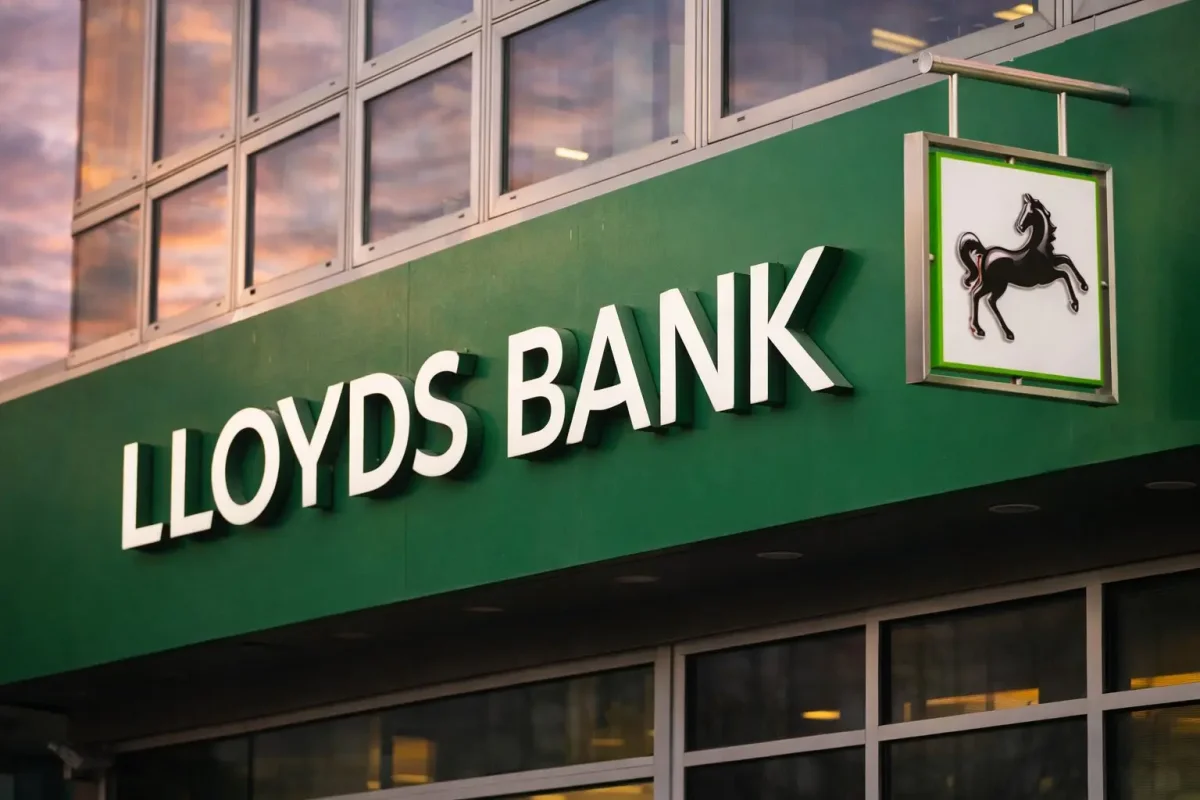
Shares of Lloyds Banking Group fell sharply in London trading on Monday, shedding roughly 3.3% to trade around 99.1 pence. The decline was part of a broader sell-off across the European banking sector, driven primarily by a significant surge in global oil prices following fresh geopolitical tensions in the Middle East.
Oil Shock Rattles Financial Markets
The immediate catalyst was a disruption to shipping in the Strait of Hormuz, a critical maritime chokepoint for crude oil shipments. Brent crude futures soared as much as 13% during the session, before paring gains to trade up approximately 9.5% near $79.78 per barrel. This sharp move higher reignited market concerns over persistent inflationary pressures and potential impacts on global economic growth.
Analysts noted the situation's sensitivity. Barclays energy researchers suggested that ongoing instability could force oil to trade at a sustained premium of 10% to 25%, even without a full closure of the strait. The price spike transmits immediate worries through financial markets, complicating the outlook for central banks, including the Bank of England.
Bank of England Decision Looms Large
The timing of the oil price surge is particularly delicate for UK financial institutions, with the Bank of England's Monetary Policy Committee set to announce its next interest rate decision on March 19. Investors are now reassessing the likelihood and timing of future rate cuts, as higher energy costs could prolong inflationary pressures and constrain the central bank's ability to ease policy.
For banks like Lloyds, the environment presents a dual-edged sword. While a "higher-for-longer" interest rate scenario can support net interest margins, a protracted rally in oil prices poses significant risks. The primary concern is that elevated fuel costs will squeeze household budgets, dampen consumer spending, and potentially lead to an increase in loan defaults, especially if economic growth slows.
Market Reaction and Trading Dynamics
The FTSE 350 Banks Index reflected the sector-wide pressure, tumbling 3.6% during the session. In a stark contrast, shares in the energy and defense sectors rallied on the same geopolitical headlines, highlighting a sharp rotation in market sentiment toward perceived beneficiaries of the conflict.
Lloyds shares traded between 98.6 pence and 101.7 pence on high volume, with roughly 25 million shares changing hands. Market participants reported that selling pressure was evident early in the trading day. The stock's movement also comes ahead of key corporate dates for the bank, including an ex-dividend date of April 9 and the release of its first-quarter interim management statement scheduled for April 29.
Analyst Perspectives on the Shock
Market observers characterized the event as a significant but contained geopolitical shock. "Financial markets are acknowledging the seriousness of the conflict," said Priyanka Sachdeva, a senior market analyst at Phillip Nova. "However, the price action is also signaling that, for now, this is being treated as a geopolitical event rather than a trigger for a broader systemic crisis."
The immediate focus for traders is split between monitoring developments in the Middle East and oil shipping lanes, and parsing clues from the Bank of England ahead of its policy meeting. The central bank's communication will be scrutinized for any shift in tone regarding the inflation outlook in light of the new energy price dynamics.
The sell-off in Lloyds and its peers underscores the vulnerability of retail-focused banks to macroeconomic shifts. With its heavy exposure to the UK domestic economy, Lloyds is particularly sensitive to changes in consumer health and interest rate expectations. The coming weeks will be critical in determining whether this oil-driven market tremor evolves into a more sustained headwind for the banking sector.