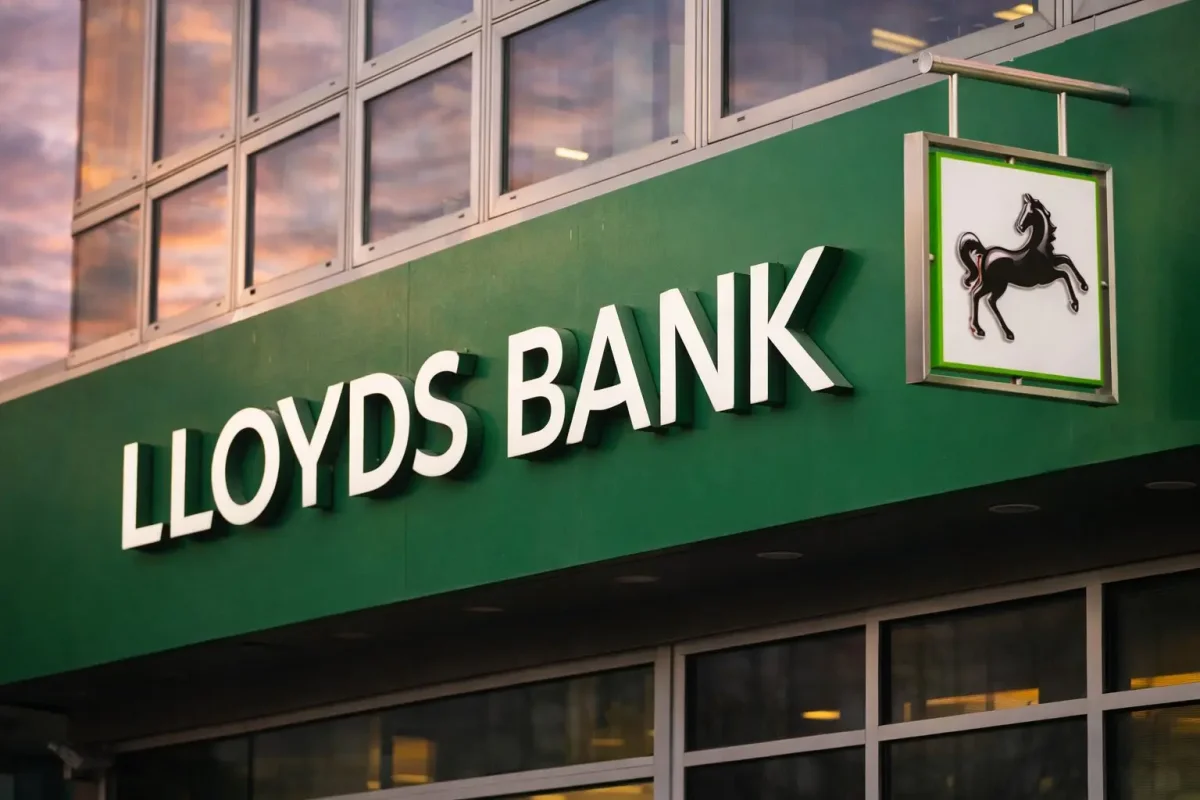
Shares of Lloyds Banking Group fell sharply in London trading on Monday, shedding roughly 3.3% to trade near 99.1 pence. The decline was part of a broader sell-off in European banking equities, triggered by a significant surge in global oil prices following fresh geopolitical tensions in the Middle East.
Oil Shock Rattles Financial Markets
The immediate catalyst was a disruption to shipping in the Strait of Hormuz, a critical maritime chokepoint for crude oil shipments. Brent crude futures, the international benchmark, skyrocketed as much as 13% during the session. Prices later pared gains but remained up approximately 9.5% at around $79.78 per barrel. This sharp increase has reignited concerns over persistent inflationary pressures and potential delays to central bank interest rate cuts.
Analysts noted the market's cautious stance. "Investors are acknowledging the severity of the regional conflict but are currently treating it as a geopolitical shock rather than a systemic financial crisis," commented a senior market analyst. However, Barclays energy analysts warned that prolonged instability could force oil to trade at a sustained premium of 10% to 25%, even without a full blockade of the vital strait.
Implications for UK Banks and the Economy
For UK-focused lenders like Lloyds, the oil price surge presents a dual-edged sword. On one hand, a "higher-for-longer" interest rate environment, which the Bank of England may now be compelled to maintain, can support bank net interest margins. On the other hand, sharply higher energy costs act as a tax on consumers, squeezing household budgets and potentially slowing economic growth. This raises the risk of rising loan defaults, particularly for banks heavily exposed to the domestic retail sector.
The Bank of England's next monetary policy decision, due on March 19, has therefore taken on heightened significance. Policymakers must now weigh stubborn inflation driven by energy costs against the risk of undermining a fragile economy. This uncertainty is a key driver behind the weakness in bank stocks.
During the session, Lloyds shares traded between 98.6 pence and 101.7 pence, with trading volume reaching about 25 million shares, indicating elevated investor activity. Sellers were dominant early in the trading day.
Sector Performance and Forward Calendar
The European bank stock index fell 3.6%, mirroring the pressure on broader equity markets. In a stark contrast, shares in the energy and defense sectors rallied on the same geopolitical headlines, highlighting a sharp sector rotation.
Looking ahead, Lloyds' near-term corporate calendar includes an ex-dividend date set for April 9, followed by the release of its first-quarter interim management statement on April 29. For now, traders are splitting their focus between unfolding events in the Middle East, oil supply routes, and central bank policy signals.
The market reaction underscores the delicate balance for financial institutions caught between geopolitical shocks and shifting monetary policy expectations. The outcome of the Bank of England's meeting later this month will be crucial in determining the near-term direction for UK banking stocks.