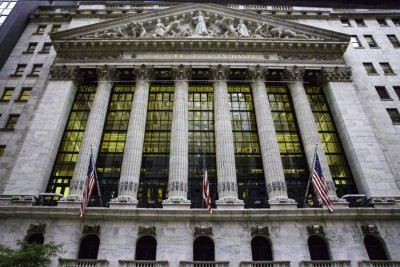
Global financial markets opened for trading on Wednesday, March 4, 2026, initiating a new session under a watchful eye from investors worldwide. The opening bell followed the standard commencement of live market coverage at 12:00 AM Eastern Standard Time. As of the latest update at 1:00 AM EST, early trading activity was underway across major equity, fixed-income, and commodity exchanges.
Session Context and Broader Market Landscape
The trading day arrives amid a backdrop of lingering questions about the trajectory of monetary policy and global economic growth. Market participants are parsing recent comments from central bank officials and corporate earnings reports for clues about the health of various sectors. The opening hours typically see lighter volume but can set a tone for the day, especially with scheduled catalysts on the horizon.
Investor sentiment in the pre-market and early hours is often influenced by overnight developments in Asian and European markets, which have already concluded their sessions by the time U.S. exchanges open. Currency fluctuations, particularly in major pairs like the euro-dollar and dollar-yen, also provide an early read on risk appetite. Commodity prices, including key benchmarks for crude oil and industrial metals, contribute to the inflationary outlook that continues to dominate policy discussions.
Anticipated Catalysts and Data Points
The economic calendar for March 4, 2026, is expected to feature several high-impact releases. Traders will be scrutinizing data on jobless claims, manufacturing activity, and service sector performance for the world's largest economies. Additionally, scheduled speeches from members of the Federal Reserve and the European Central Bank could introduce volatility, as markets remain hypersensitive to any nuance regarding future interest rate decisions.
Corporate news flow also picks up during this period, with several major companies from the technology (XLK) and financial (XLF) sectors slated to provide business updates. Earnings season may be in a lull, but guidance revisions and merger announcements can still drive significant single-stock movement. The performance of mega-cap stocks like Apple (AAPL), Microsoft (MSFT), and Amazon (AMZN) will be particularly influential for the major indices.
In the commodities complex, traders are monitoring the price of gold (GLD) as a traditional safe-haven asset, while oil (USO) prices react to geopolitical developments and inventory data. The bond market will offer its own signal, with movements in the yield curve—especially the spread between two-year and ten-year Treasury notes—closely watched for recessionary signals.
Technical and Sentiment Analysis
From a technical perspective, chartists are observing key support and resistance levels for the S&P 500, Nasdaq Composite, and Dow Jones Industrial Average. A sustained break above or below these levels in the early going could trigger algorithmic trading and influence the session's trend. Market breadth, measured by advancing versus declining issues, will also be a critical gauge of underlying strength or weakness.
Sentiment indicators, such as the CBOE Volatility Index (VIX), provide a measure of expected near-term turbulence. A subdued open in the VIX often coincides with calm, range-bound trading, while a spike can foreshadow a more volatile session. Options market activity in the first hour can also reveal where professional traders are placing their bets for the week ahead.
As the session progresses past the initial hour, volume is expected to increase, providing more conviction behind price moves. The market's reaction to the opening levels will form the basis for analyst commentary and trading strategies throughout the day. All eyes remain on the interplay between macroeconomic data and corporate fundamentals as the primary drivers of asset prices for March 4, 2026.