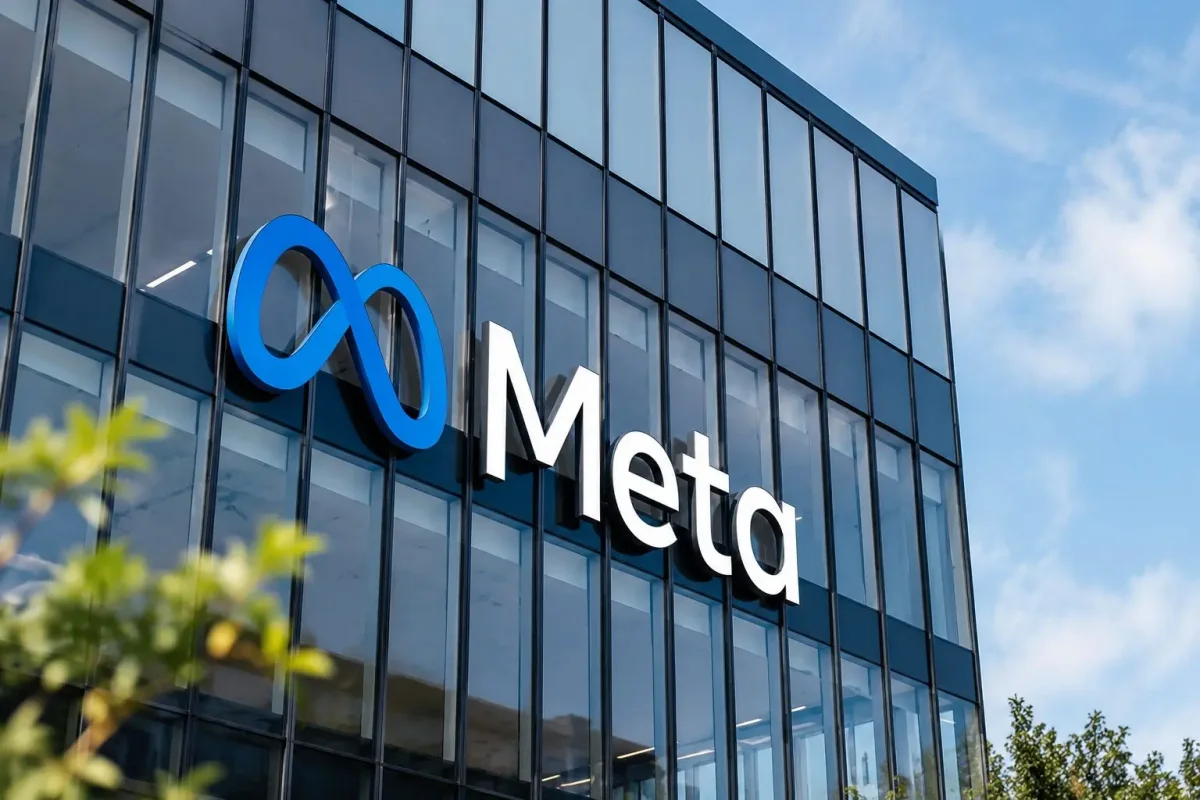
Meta Platforms Inc. (NASDAQ: META) shares edged higher in premarket trading on Thursday, recovering some ground after a sharp sell-off the previous session. The stock had closed at $567.58 on Wednesday, down 5.4%, trimming the company's market capitalization to roughly $1.46 trillion. Early premarket quotes placed the stock near $575, though light trading volumes suggest the rebound may be tentative ahead of the regular session.
The decline came amid fresh concerns over the Facebook parent's artificial intelligence strategy, including the departure of a key executive. Reuters reported Wednesday that Emily Dalton Smith, a Meta executive overseeing product work for the company's internal AI tools, is leaving the organization. Her team had developed Metamate, Meta's enterprise AI assistant, which she described as the “starting point for all kinds of work.” The exit comes roughly two months after Meta announced Dalton Smith would lead the AI-for-work restructuring effort, part of a broader reorganization that includes a 10% workforce reduction and reassignment of many employees to new roles.
This latest departure follows a turbulent period for Meta. CEO Mark Zuckerberg recently acknowledged to employees that the company had “made mistakes” in transitioning to an AI-focused workforce, as reported by Reuters last week. Separately, Wired noted that Chief Technology Officer Andrew Bosworth described the launch of the new AI division as “atrocious” and stressed the need to rebuild trust and improve communication within the organization.
Wall Street's broader tone was more upbeat on Thursday. Nasdaq 100 futures rose 1.49% by 7:06 a.m. ET, while S&P 500 and Dow futures also gained, supported by lower oil prices and optimism around a potential U.S.-Iran deal that offset concerns about a more hawkish Federal Reserve. The session also coincides with “triple witching”—the quarterly expiration of stock index futures and options—which can amplify volume and volatility. Markets will be closed Friday for the Juneteenth holiday, pushing some derivatives expiry activity into Thursday's trading.
Meta's capital expenditure plans remain a significant overhang. The company raised its 2026 capital expenditure forecast to a range of $125 billion to $145 billion in April, covering costs for data centers, servers, and chips. In the first quarter, Meta reported revenue of $56.31 billion, up 33% year-over-year, with ad impressions rising 19% and average ad prices increasing 12%. Zuckerberg noted at the time that the company had “strong momentum across our apps.”
Analysts remain divided on the outlook. Matt Britzman, an equity analyst at Hargreaves Lansdown, said the elevated capital spending had “spooked investors” but argued the reaction might be overdone if the increase is merely due to cost inflation rather than a fundamental shift in strategy. Gil Luria, an analyst at D.A. Davidson, was more cautious, stating that the results “failed to impress investors,” particularly compared to stronger numbers from Google parent Alphabet Inc. (NASDAQ: GOOGL).
The core challenge for Meta is balancing its dominant ad business with massive AI investments. While the company continues to generate substantial advertising revenue, investor focus has shifted from margin recovery to whether AI infrastructure spending will yield adequate returns. Alphabet is widely seen as Meta's closest peer in combining ads and AI, while Nvidia Corp. (NASDAQ: NVDA), whose chips power much of the AI push, remains a key supplier whose share movements often influence the broader trade.
There are also legal risks. Source New Mexico reported Wednesday that state prosecutors have asked a judge to order Meta to pay $953 million into a fund for youth mental health and public education, following a previous jury verdict against the company.
As Thursday's session unfolds, Meta will need to sustain its premarket bounce amid options-related volatility and the impending long weekend. The fundamental question for investors is not whether Meta can grow its ad business, but whether the company can convert its massive AI investments into steady cash flow before costs escalate further.