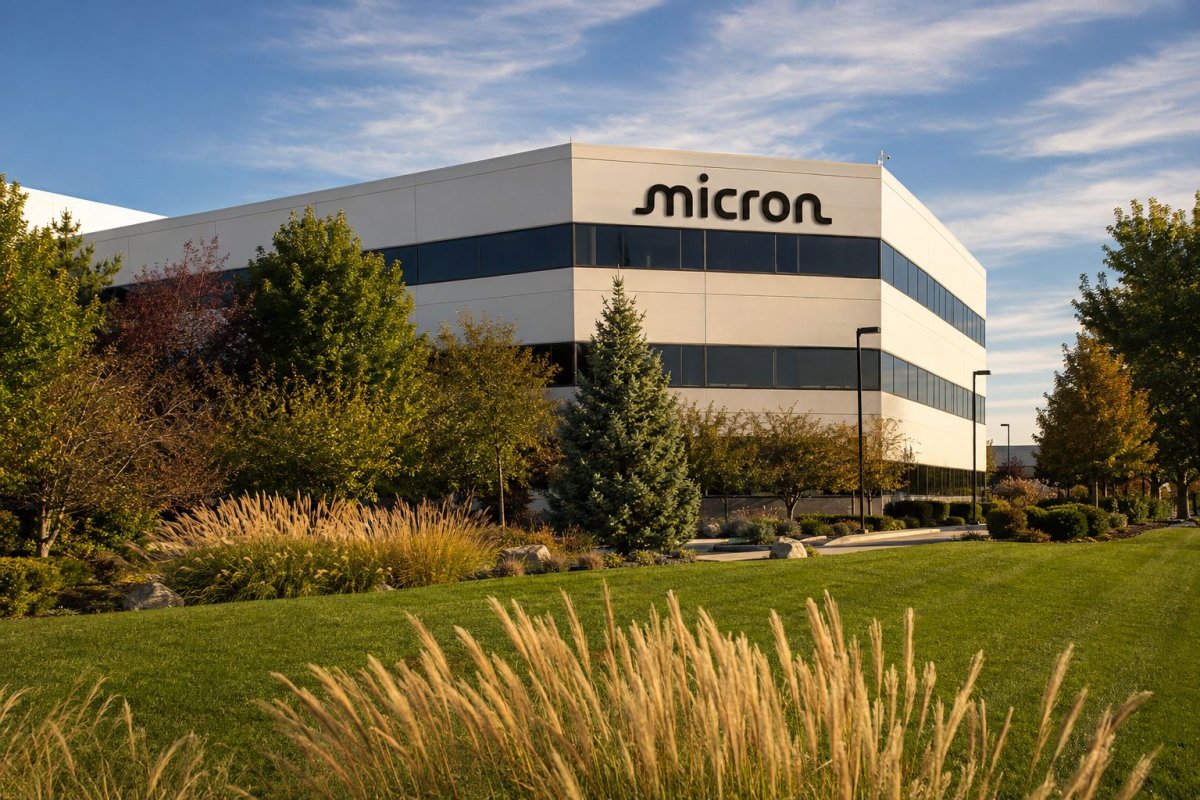
Micron Technology (NASDAQ:MU) saw its shares climb 2.1% to $956.74 on Thursday after the company unveiled plans to invest $10 billion over the next decade in a new research laboratory in Boise, Idaho. The announcement, made on August 20, 2026, underscores the memory chip maker's commitment to advancing its technology amid surging demand driven by artificial intelligence workloads.
The ten-year budget for the facility represents roughly 55% of Micron's adjusted free cash flow from its most recent fiscal quarter, which came in at $18.3 billion. If spread evenly, the annual cost would be about $1 billion, or 5.5% of that quarter's free cash flow. This illustrates that the investment is well within the company's financial capacity, especially given its recent record-breaking performance.
Record Fiscal Quarter
Micron's fiscal third quarter, which ended May 28, 2026, was described by CEO Sanjay Mehrotra as a "record" quarter. Revenue surged to $41.46 billion, up from $23.86 billion in the previous quarter and a mere $9.30 billion in the same period last year. GAAP gross margin expanded to 84.6%, and diluted earnings per share came in at $24.67, compared to $12.07 in Q2 and $1.68 a year earlier. Operating cash flow reached $25.39 billion.
The company's outlook for the fourth quarter is even more robust, with projected revenue of $50 billion (plus or minus $1 billion) and gross margin around 86%. This strong performance is largely attributed to a steep rise in memory prices and increased demand for AI-related hardware.
Strategic Expansion
The Boise laboratory is part of a broader national expansion. In July, Micron increased its projected U.S. investment to over $250 billion by 2035, with a goal of producing 40% of its DRAM domestically. The new facility will focus on advanced memory and computing technologies, complementing the company's existing manufacturing footprint.
Micron has already begun shipping HBM4 (High Bandwidth Memory) for a major customer's platform and has sent samples to additional clients. HBM4E is slated for volume production in 2027, marking commercial milestones that the Boise lab is expected to accelerate.
Market Context and Analyst Views
Despite Thursday's gain, Micron's stock remains 23.8% below its 52-week high of $1,255.00, reflecting investor caution about potential volatility in memory markets. The consensus among analysts is overwhelmingly bullish, with 29 out of 30 rating the stock a "Buy" and an average price target of $1,568.39, implying a 63.9% upside. Recent reaffirmations include UBS (target $1,625), Bank of America Securities ($1,550), and Mizuho ($1,375).
Competition from South Korean giants Samsung and SK hynix remains intense, and the new laboratory will not contribute to wafer production in the near term. Its success hinges on accelerating process upgrades and product launches, which could be affected by memory price declines, reduced AI infrastructure spending, or construction delays.
Financial Flexibility
The funding requirement is relatively modest given Micron's current cash generation. The full lab budget is covered 1.83 times by the latest quarter's adjusted free cash flow. Net capital outlay for the fiscal third quarter was $7.1 billion, indicating that ongoing expansion remains the primary cash allocation. Investors are not expected to finance the lab before it turns profitable, as Micron is reinvesting its windfall from the AI-driven memory boom.
However, the ten-year timeline introduces risks related to technology shifts and policy changes. The bigger challenge for Micron is whether it can translate its strong cash flow into a lasting competitive edge through the next memory market cycle.