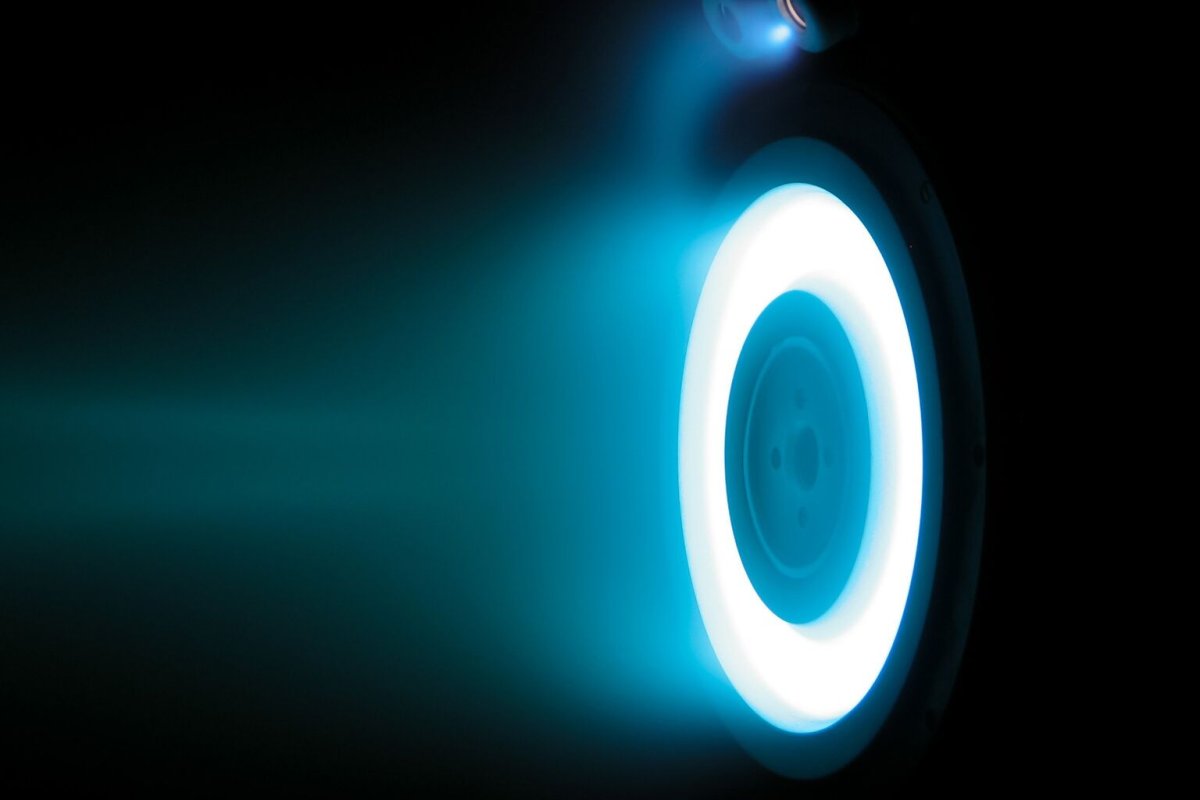
NASA's Psyche spacecraft, en route to the metal-rich asteroid 16 Psyche, is set to operate its ion thrusters at nearly 90% duty cycle during the remaining interplanetary cruise, according to an agency update on October 22. The ambitious plan, which began after the successful Mars gravity assist on September 28, aims to maximize thrust while managing the spacecraft's dwindling power supply as it journeys farther from the Sun.
The mission's navigation lead, Don Han, confirmed that the thrusters will be active almost continuously, with the sustained phase now underway. However, the power available to the spacecraft will gradually decrease as solar radiation weakens with distance. Engineers project that the spacecraft will enjoy roughly three more months of full-power operation before throttling down to approximately half power, a transition expected around January 2027.
This power reduction is a critical factor in mission planning. The summer 2029 rendezvous with the asteroid depends not only on the total thrusting time but also on the power available during each burn. As power declines, the thrust efficiency changes, requiring careful trajectory adjustments. The mission design allocates about 0.5 kilometers per second of velocity change for statistical maneuvers, angular momentum management, and missed thrust events, all within a total post-launch propulsion requirement of 6.5 kilometers per second.
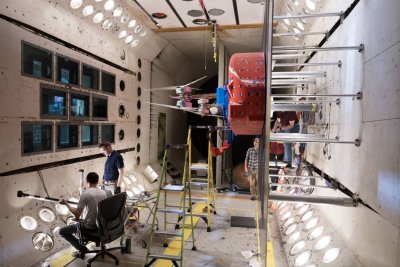
One of the most significant challenges identified by engineers is the torque generated by the ion plume. A 2025 spacecraft engineering paper, published by Oh et al. on October 14, reported measured twisting forces from Psyche's ion plume reaching approximately 0.83 to 0.86 millinewton-meters at full discharge power. This is roughly 15 times the peak torque reported for NASA's Dawn spacecraft, which used similar ion propulsion. Dawn's largest measurement was about 0.055 millinewton-meters, yielding a ratio of 15.1 to 15.6.
Managing this torque is essential for maintaining spacecraft pointing. Psyche stores angular momentum in reaction wheels, but when the wheels approach saturation, the spacecraft must reorient and fire a different thruster to unload that momentum. This process interrupts the main thrusting sequence, reducing the effective duty cycle. The engineering paper indicates that each unloading maneuver takes about 40 minutes, and during early mission phases, these interruptions could occur as often as every seven hours.
For trajectory planners, missed thrust is a finite resource. The mission design study specifies tolerance for up to 14 days of unplanned coasting per year, along with a single 12-day interruption during cruise and approach. These are design requirements, not current margin estimates, but they highlight the tight operational constraints. Monthly trajectory redesigns are planned to manage and release margins, as a missed burn can force changes in later navigation choices due to future power availability.
Ion propulsion has a proven track record in space. The European Space Agency's SMART-1 mission accumulated nearly 5,000 operating hours and demonstrated variable-power operation, paving the way for Psyche's extended interplanetary cruise. However, Psyche's long-duration operation with similar pointing makes torque accumulation a more significant operational concern than in previous missions.
The risk factors are clear: hardware faults or weaker-than-expected solar output could consume thrusting margins and threaten the arrival schedule. The historic torque measurements establish a control problem, but they do not directly measure today's remaining schedule reserve. Engineers are closely monitoring both power and torque to ensure the spacecraft remains on track for its 2029 encounter with the asteroid, which could provide unprecedented insights into planetary cores.