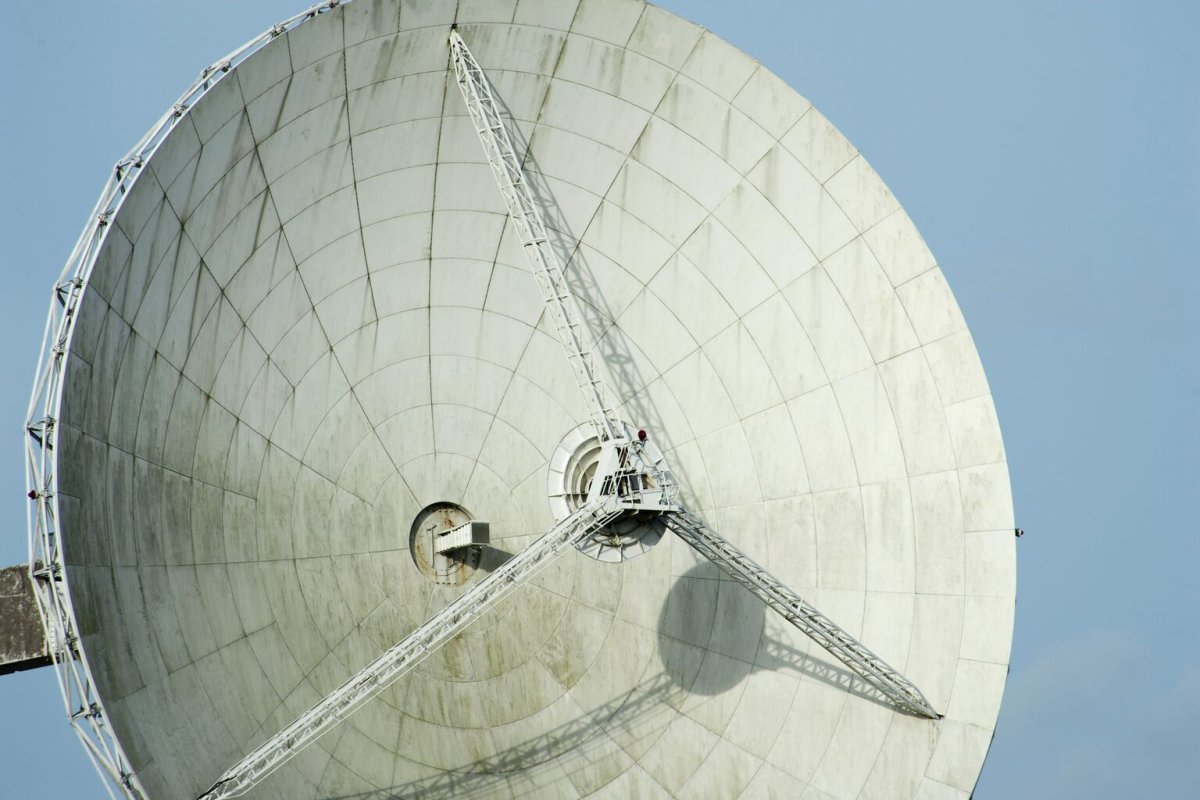
Britain's telecommunications regulator, Ofcom, has commenced accepting applications for urban satellite gateway licenses operating in the Q/V-band spectrum, a move that brings high-throughput connectivity closer to key data infrastructure. The application window opened on October 23, 2026, and covers areas representing approximately 6% of the United Kingdom's landmass.
Spectrum Allocation Disparity
Under the new framework, urban gateway sites will be authorized to use 3 GHz of downlink spectrum within the 37.5–40.5 GHz range. In contrast, rural gateway locations receive 5 GHz of downlink bandwidth, spanning 37.5–42.5 GHz. This results in a 40% reduction in authorized bandwidth for urban installations compared to their rural counterparts.
The distinction is critical for operators planning network expansion. While the authorized bandwidth directly influences capacity, actual customer speeds will depend on the broader network architecture, including satellite links, ground infrastructure, and backhaul connectivity.
Strategic Benefits for Urban Gateways
The primary advantage of urban siting is proximity to fiber-optic backhaul and data centers. Stakeholders have indicated to Ofcom that such locations can shorten backhaul routes and reduce latency, though the regulator's statement does not provide quantified latency improvements.
Technical Specifications and Licensing
Ofcom's updated license templates differentiate between geostationary (GSO) and non-geostationary (NGSO) satellite systems. GSO gateways are allocated 5 GHz of uplink spectrum across 47.2–50.2 GHz and 50.4–52.4 GHz. NGSO gateways, however, are limited to 4 GHz, with the second uplink range capped at 51.4 GHz.
Interference management also varies between the two classes. Urban NGSO antennas must maintain a minimum elevation of 20 degrees above horizontal, while GSO gateways require only 15 degrees. Ofcom retained the higher threshold for NGSO to preserve future fixed-link sharing opportunities.
Coordination and Approval Process
Two spectrum slices—39.5–40.5 GHz and 50.4–51.4 GHz—require coordination with the Ministry of Defence. Applications will be processed on a first-come, first-served basis, and existing gateway sites may request license variations to align with the new rules.
The missing urban downlink segment (40.5–42.5 GHz) remains accessible through separate Local Access applications. Ofcom anticipates that agreements with existing mobile licensees will facilitate this process, though availability will depend on specific locations.
Broader Regulatory Context
In a related development, Ofcom has expanded Ku- and Ka-band uplink authorizations for ships and aircraft, with updated licenses expected in early 2027. These mobile terminals connect onboard networks to satellites, while gateways link satellite systems to terrestrial infrastructure. Independent telecoms publication ISPreview reported both decisions on October 23, highlighting potential benefits in capacity and network resilience.
Technical Challenges and Research
The engineering hurdles extend beyond spectrum allocation. The European Space Agency's Alphasat Q/V-band program has investigated how weather conditions attenuate signal strength at these frequencies. Reliable links require mitigation of atmospheric losses, and adaptation techniques are being explored to address fading.
Implementation Timeline
Ofcom has also proposed adding Heathrow to airports requiring coordination under Earth Station Network licenses. The regulator's license-variation notice sets a December 14, 2026, deadline for representations, with a decision expected in January 2027.
Risks remain, including coexistence with existing users, defence coordination, and the need for robust engineering margins to counter weather-sensitive Q/V links. The early-2027 terminal timetable is an implementation expectation rather than a firm commitment.