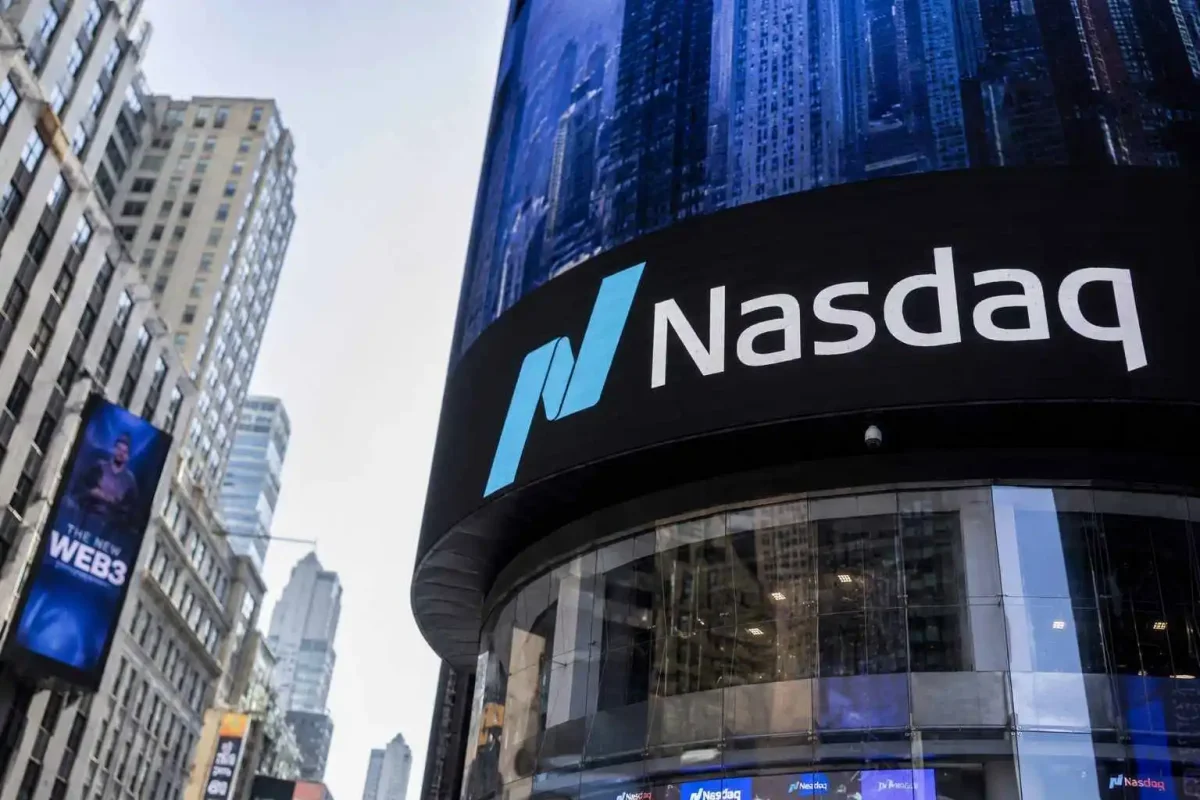
NEW YORK, July 25, 2026 – Options markets are currently pricing a technology shock rather than a broad market panic, as the gap between Nasdaq-100 and S&P 500 implied volatility widens to a significant 53%. The Nasdaq-100 Volatility Index (VXN) closed Friday at 28.39, while the Cboe Volatility Index (VIX) settled at 18.58. This disparity underscores a concentrated fear in growth and tech stocks, leaving broad-market indices relatively calm.
The divergence alters the economics of option income strategies. For the Nasdaq-100, a rough one-standard-deviation monthly range is ±8.2%, compared to ±5.4% for the S&P 500. This means sellers of Nasdaq call options receive richer premiums, but they also accept greater rebound risk. The spread between VXN and VIX stood at 9.81 volatility points on Friday, with a ratio of 1.53, indicating that Nasdaq call-writing remains more richly priced than broad-index overwriting.
Market performance last week reinforced the split. The Nasdaq Composite fell 2.0%, while the S&P 500 declined only 0.6%. On Friday alone, the Nasdaq dropped 0.64%, whereas the S&P 500 edged up 0.05%. Breadth on the Nasdaq was weak: 2,718 stocks fell versus 2,174 that rose, and new lows outnumbered new highs by 205 to 78.
The primary pressure point is AI spending. Investors are increasingly questioning when massive capital outlays by major technology companies will translate into profits. Peter Andersen, CEO of Andersen Capital Management, noted, “The fear of missing out is becoming more like a fear of massive overbuilding.” This sentiment is driving the volatility premium in tech-heavy indices.
In contrast, India’s market exhibited a different stress profile. India VIX climbed 4.08% to 14.03 on Friday, as the Nifty 50 lost 2.33% for the week—its worst slide in four months. The Sensex dropped 2.7%. Bank losses amplified the move, with HDFC Bank (NSE: HDFCBANK) falling 9.4% and Axis Bank (NSE: AXISBANK) losing 7.6%. However, India’s implied monthly range remained near 4.1%, roughly half of Nasdaq’s.
Gold offered no clear panic signal. A preliminary Chennai retail quote for 24-karat gold stood at ₹14,729 per gram, up just ₹1 on Friday, but ₹383 higher than July 20. Globally, spot gold added 0.1% to $4,052.78, while August futures settled 0.5% higher at $4,070.80. Independent metals trader Tai Wong commented, “A Fed clearly on hold next week would help,” highlighting the counterweight of higher yields to haven demand.
The week ahead carries two major tests. The Federal Reserve is expected to hold interest rates steady at its Wednesday meeting, but late Friday futures priced a 38% chance of a quarter-point increase, adding to uncertainty. Additionally, earnings from Microsoft (MSFT), Meta Platforms (META), Amazon.com (AMZN), and Apple (AAPL) are due, along with reports from about one-third of S&P 500 companies. Aggregate second-quarter earnings were tracking 26.5% growth through Wednesday, setting a high bar.
For investors weighing option income, relative pricing matters more than the headline VIX. Nasdaq structures offer more premium against a denser event calendar, while broad S&P calls pay less but cap less event-driven upside. The spread is compensation, not free yield. Risks include a surprise rate increase, an oil shock, or weak AI payback that could exceed current options pricing. Covered calls would lag during a fast technology rebound, and the volatility gap can close abruptly.