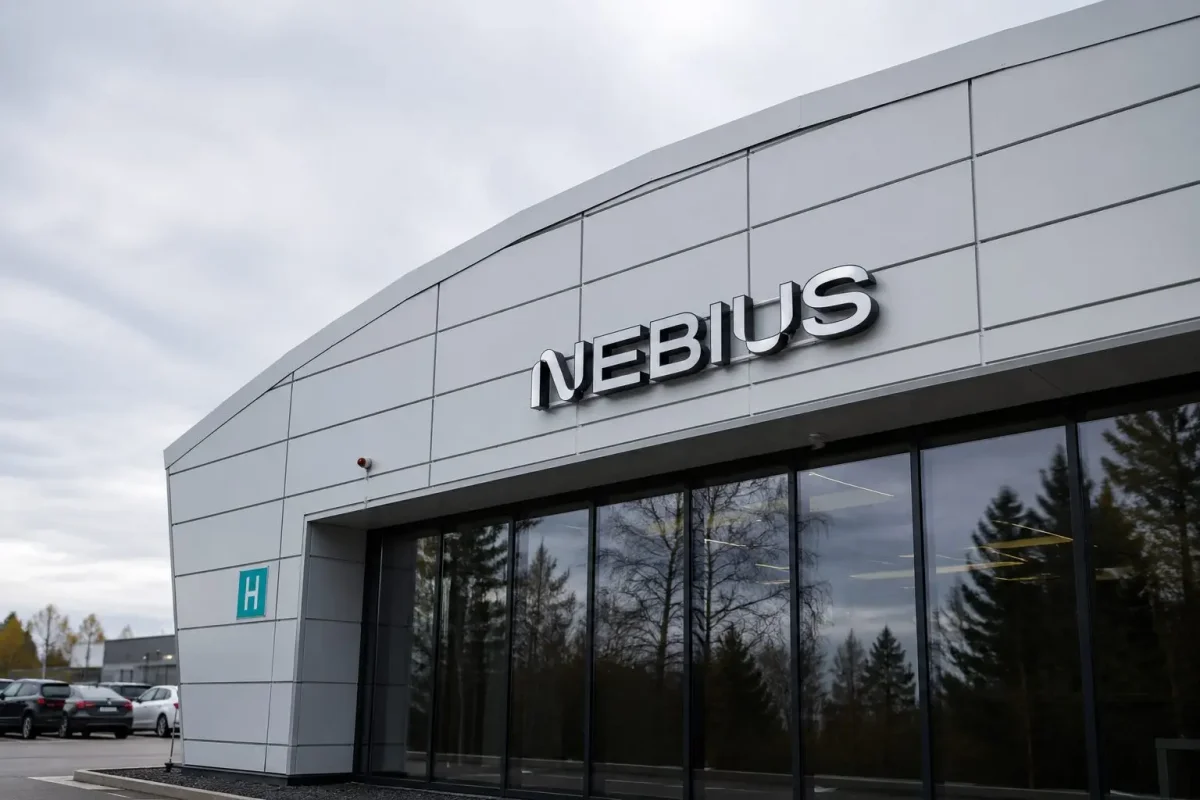
Nebius Group (NASDAQ:NBIS) experienced a sharp reversal on Friday, with shares plummeting 15.0% to close at $187.77. The decline wiped out $33.20 in value, representing 96.8% of the $34.30 gain recorded on Tuesday. Despite the dramatic pullback, the stock managed a 5.7% weekly advance.
The round trip highlights the extreme volatility that continues to define Nebius as a high-beta play on AI infrastructure spending. Even a strategic endorsement from Nvidia (NASDAQ:NVDA) failed to stabilize the stock, as market participants reassessed the sustainability of the rally.
Market Context
While Nebius posted a weekly gain, the broader Nasdaq Composite fell 2.1% over the same period. The divergence underscores the speculative nature of AI-linked equities, which have been subject to wild swings amid shifting sentiment around capital expenditure and execution risk.
Other AI infrastructure operators also suffered losses. CoreWeave (NASDAQ:CRWV) dropped 11.4% on Friday, bringing its weekly change to -1.8%. IREN (NASDAQ:IREN) fell 8.7% but still managed a 10.3% weekly gain. Nvidia, the sector bellwether, declined just 0.9% on Friday and posted a 2.0% weekly advance, highlighting a divergence between established players and newer entrants.
Nvidia's Stake and Its Impact
On Monday, Nvidia disclosed a 9.3% beneficial interest in Nebius, comprising 22.3 million shares primarily held as a pre-funded warrant. The warrant is not exercisable until September 11, and the underlying shares are restricted from sale before that date. The Tuesday surge of 18.8% came in response to the filing, but Friday's reversal suggests that endorsement alone is insufficient to sustain a premium.
Funding and Execution Concerns
Investor focus has shifted to Nebius's ability to deliver on its growth plans while managing financing costs. Last week, the company secured approximately $775 million in debt financing at SOFR plus 2.5%. Management stated that customer cash flows, combined with the facility, exceed 100% of the GPU capital expenditure involved. However, the floating-rate nature of the debt means interest expenses will fluctuate with the SOFR benchmark.
Nebius reported contracted revenue exceeding $40 billion, with Microsoft (NASDAQ:MSFT) and Meta Platforms (NASDAQ:META) among its customers. Chief Operating Officer Ophir Nave described the debt facility as "an important step" toward achieving "strong and durable margins."
The company's rapid growth is evident in its first-quarter results: AI-cloud revenue surged 841% year-over-year to $389.7 million. However, depreciation and amortization totaled $212 million, and interest expense reached $63.7 million, underscoring the capital-intensive nature of the business.
Broader Industry Dynamics
A Reuters analysis of consensus estimates indicates that five hyperscalers could see their collective capital expenditure surpass free cash flow by 2027. For each additional $1 of operating cash generated, capex would increase by $1.57. David Russell, global market-strategy head at TradeStation, commented, "Companies exist to make money, not spend money." Nebius is addressing this by offering asset-backed financing.
The next major test for the sector comes on Wednesday, when Microsoft and Meta report earnings, coinciding with the conclusion of the Federal Reserve's two-day meeting. Investors will scrutinize cloud demand, capital expenditure plans, and third-party capacity commitments.
Execution risk remains a key concern for Nebius. The company must roll out capacity on schedule and finance additional hardware while maintaining returns. With floating-rate debt tied to SOFR, financing costs will vary with interest rates, adding another layer of uncertainty.
The week ended in positive territory for Nebius, but the near-complete erasure of Tuesday's gains signals that the market is demanding more than just strategic endorsements. Attention is now shifting to next week's consumer spending data, which has become more influential than the recent stake announcement.