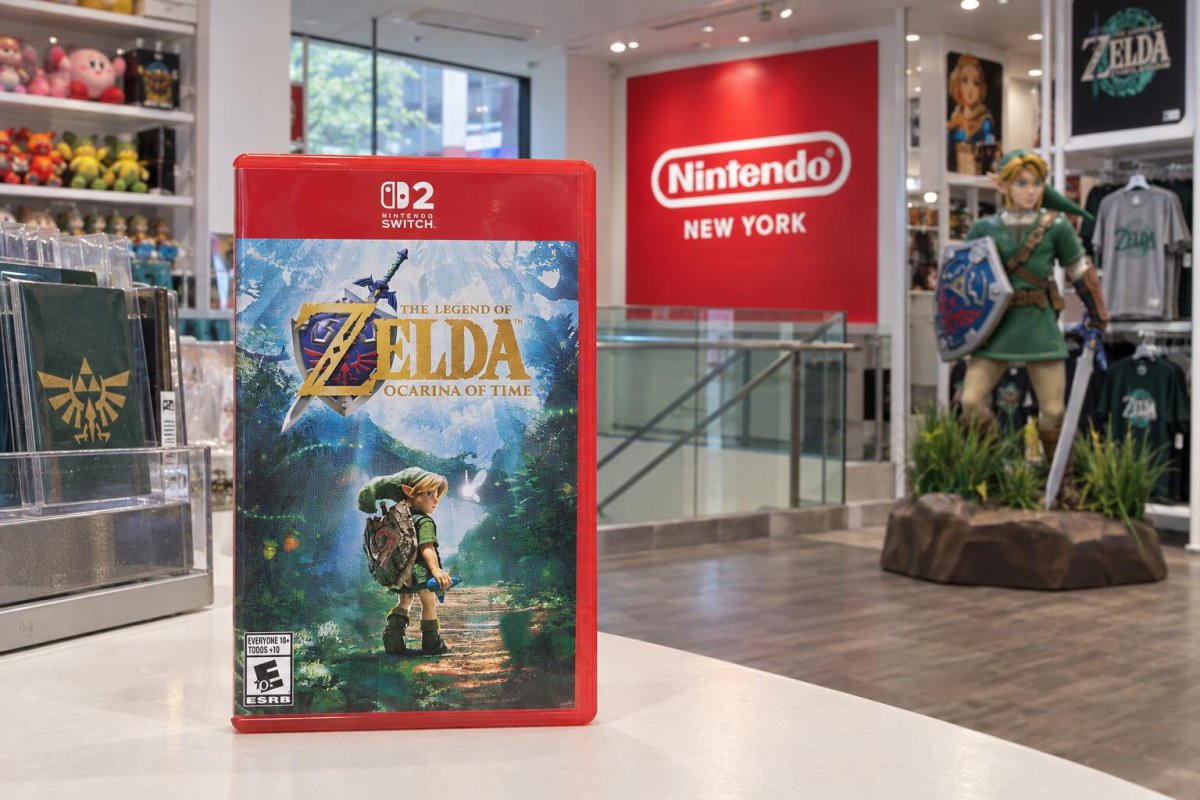
Nintendo's stock closed 3.99% lower at ¥8,401 in Tokyo on Wednesday, the first full trading session after the company announced a November 5 release date for The Legend of Zelda: Ocarina of Time and unveiled a themed Switch 2 console. While the reveal bolsters the company's holiday lineup, it does not, by itself, meet the high expectations embedded in a stock trading at roughly 31 times this year's forecast earnings.
The market's reaction was clear but not a definitive verdict on the game itself. Shares opened at ¥8,548, touched a low of ¥8,386, and finished down ¥349. Trading volume surged to 9.69 million shares from 6.87 million the prior day—a 41% increase—indicating that investors were actively repositioning. The stock closed before Nintendo's separate September 9 Direct presentation, which could broaden the release slate further.
What Nintendo Announced
The new Ocarina is not a simple port. Nintendo states it has rebuilt the 1998 classic for Switch 2 with overhauled visuals, voiced cutscenes, expanded dialogue, orchestral music, faster loading, and revised camera and movement controls. The official product page lists November 5 as the release date and confirms the game is a Switch 2 exclusive.
A Zelda-themed Switch 2 console arrives a week earlier, on October 29, alongside a Pro Controller and carrying case. In Japan, the domestic-language console is priced at ¥62,980 including tax, but notably, the game is not included. This creates two separate holiday purchases rather than using Ocarina as a bundled incentive.
The broader 40th-anniversary program extends the franchise across a 2027 concert tour, new amiibo figures, Nintendo Museum attractions, licensed products, and a live-action film scheduled for April 2027. For shareholders, however, the immediate test is whether a prestige remake can drive software and console sales during the fiscal year ending next March.
Why Software Matters More Than Hardware
Nintendo's latest quarterly results highlight the economic importance of software. Switch 2 hardware sales fell 34.4% from the launch-year quarter to 3.82 million units, while software sales rose 9.2% to 9.46 million units. Digital sales jumped 90% to ¥132.7 billion and accounted for 61.5% of dedicated-platform software revenue.
That richer mix helped operating profit rise 150.5% to ¥142.5 billion even as revenue fell 9.5% to ¥517.8 billion. The comparison also benefited from an approximately $300 million refund of U.S. tariffs previously recorded in cost of sales, so investors should not annualize the quarter's 27.5% operating margin. The mix improvement is repeatable; the refund is not.
Ocarina therefore has two jobs. The themed console can attract collectors and maintain attention before the holidays, but the game must deepen the software spend of the 23.68 million Switch 2 units installed by June 30. A full-price first-party title, sold separately and available digitally, is the part of the package most capable of supporting margins.
Valuation Leaves Little Room for Error
Nintendo still expects 16.5 million Switch 2 hardware sales and 60 million unbundled software units this fiscal year. After the first quarter, 12.68 million hardware units remain to reach the annual target. Holiday seasonality makes that target plausible, but it also concentrates execution risk into the next two quarters.
At ¥8,401, the shares trade at 31.2 times Nintendo's ¥268.90 forecast earnings per share. Management projects full-year operating profit of ¥370 billion, only 2.7% above last year, while absorbing roughly ¥100 billion of pressure from memory-component prices and tariffs. The unchanged outlook is a reminder that strong intellectual property does not eliminate hardware costs, foreign-exchange exposure, or the need to keep the release calendar full.
The bullish case is that Nintendo is monetizing Zelda in layers: software, collectible hardware, accessories, digital services, licensing, live events, and film. The bear case is that the biggest near-term release is a remake, the special console does not bundle the game, and Ocarina lands only two weeks before Grand Theft Auto VI competes for consumer time and wallets on rival platforms. That release spacing may help distinguish Switch 2, but it also raises the standard for marketing and supply execution.
What Would Change the Stock Debate
Three data points matter next: whether the themed hardware sells through rather than merely sells into retailers; whether Ocarina expands Switch 2 software sales beyond existing Zelda fans; and whether Nintendo can preserve its software-led margin improvement after the tariff refund drops out of the comparison.
Wednesday's 4% fall does not mean the Zelda reveal failed. It signals that investors want proof that nostalgia can move the fiscal-year numbers. The October 29 hardware launch and November 5 game release now provide unusually clear checkpoints for the market to evaluate.
