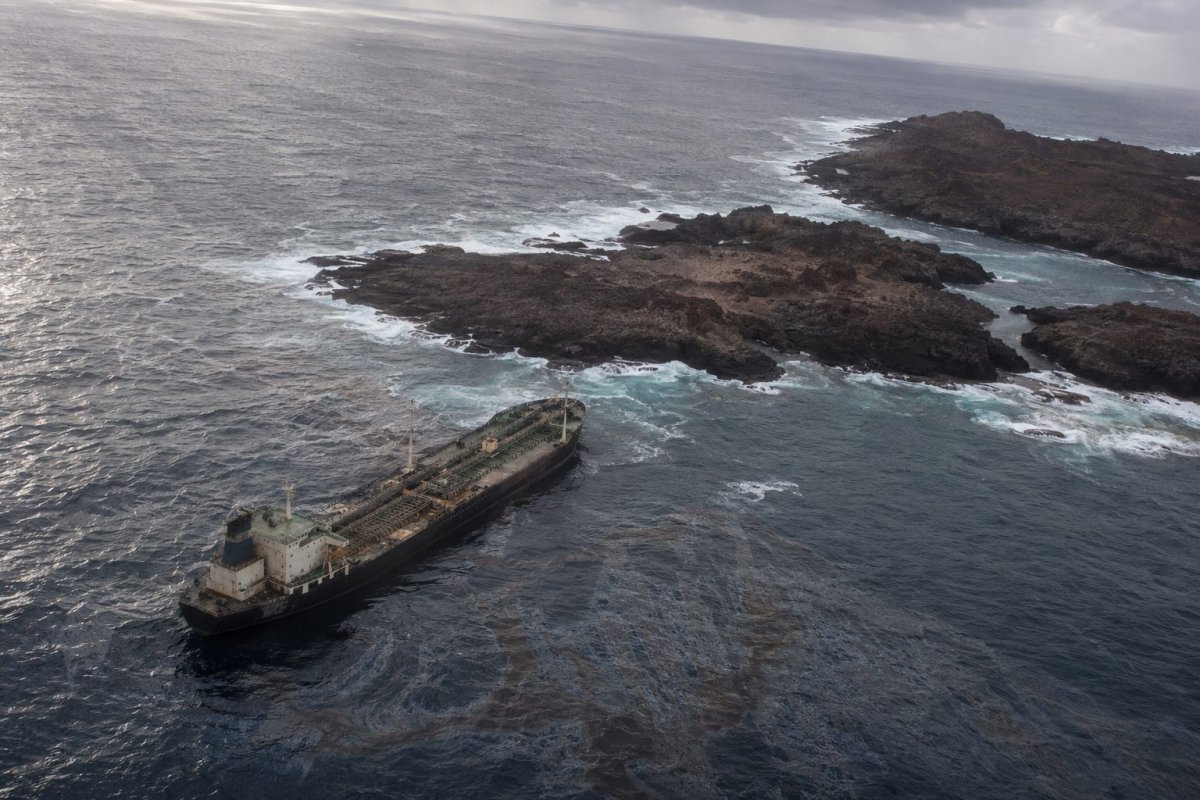
An oil spill off the coast of Oman, stemming from a shadow-fleet tanker, has raised environmental concerns but has yet to rattle crude markets. The stranded vessel, identified as the Caroline Bezengi, holds approximately 800,000 barrels of Russian crude valued at roughly $72 million based on Monday's Brent prices. Despite the incident, oil futures and energy equities have remained relatively stable, with investors focusing on broader geopolitical risks, particularly the Strait of Hormuz.
Spill Extent and Salvage Challenges
Oman's official estimate places the spill at 400 square kilometres, but external assessments have suggested the affected area could be as large as 2,000 square kilometres—a fivefold discrepancy. The tanker ran aground on June 30 and has been exposed to harsh monsoon conditions and hazardous rocky shallows, complicating salvage efforts. Mohammed bin Abdullah al-Rawahi, Oman's director general of maritime affairs, highlighted the "operational and navigational risks" posed by the situation, noting that the vessel has flooding on one side and continues to face difficult seasonal sea conditions.
Market Reaction: Limited Impact
Brent crude rose by $0.92, or 1.04%, to $89.44 per barrel, while West Texas Intermediate advanced 0.67% to $82.95. However, analysts attribute these gains primarily to stalled diplomatic efforts with Iran and reduced shipping through the Hormuz Strait, not the Oman spill. On Monday, premarket trading for major oil producers showed little movement: Exxon Mobil (NYSE: XOM) dipped 0.81%, Chevron (NYSE: CVX) fell 0.12%, and Occidental Petroleum (NYSE: OXY) remained flat. This contrasts with Friday's gains, suggesting the market is treating the spill as an isolated incident rather than a supply threat.
Hormuz Remains the Key Risk
Shipping data reveals a significant drop in vessel transits through the Strait of Hormuz, with only five commodity vessels passing on Saturday and none on Sunday—an 84% decrease compared to the previous weekend's 31. SEB Research analyst Bjarne Schieldrop noted that oil prices are unlikely to climb significantly unless residual crude shipments through Hormuz are halted or the Bab el-Mandeb strait is closed. This indicates that the market's primary concern remains the potential disruption of crude flows through the world's most important chokepoint, rather than the localized spill.
Environmental and Financial Risks
The spill has already made landfall near Ras Madrakah, encircling a protected marine site. The Caroline Bezengi, built in 2001, is part of the aging shadow fleet that lacks Western insurance, making cleanup and recovery funding more difficult to determine. The financial risk associated with the cargo is relatively small—just 5.7% of the 14 million barrels transacted in a recent ADNOC spot tender—but a hull breach could release additional oil, increasing cleanup costs significantly. Conversely, a full shutdown of Hormuz would have a far greater impact on global crude prices, potentially driving them sharply upward.
Analyst Outlook and Implications
For major oil companies, the spill has not altered analyst recommendations. Exxon Mobil holds a consensus target of $166.35, implying a 3.9% upside, with Barclays maintaining a Buy rating and a $177 price target. Chevron's consensus target is $216.00, suggesting an 8.0% upside, while Occidental's target of $65.67 implies a 12.5% increase. These recommendations are based on oil sensitivity, balance sheets, and assets, not spill liability—the Caroline Bezengi is independent of these producers and lacks Western coverage.
As the situation develops, the spill serves as a stark reminder of the risks associated with the shadow fleet. However, the market's focus remains firmly on Hormuz, where any significant disruption could send crude prices soaring. For now, the oil spill off Oman is an environmental burden that has yet to translate into a supply shock.