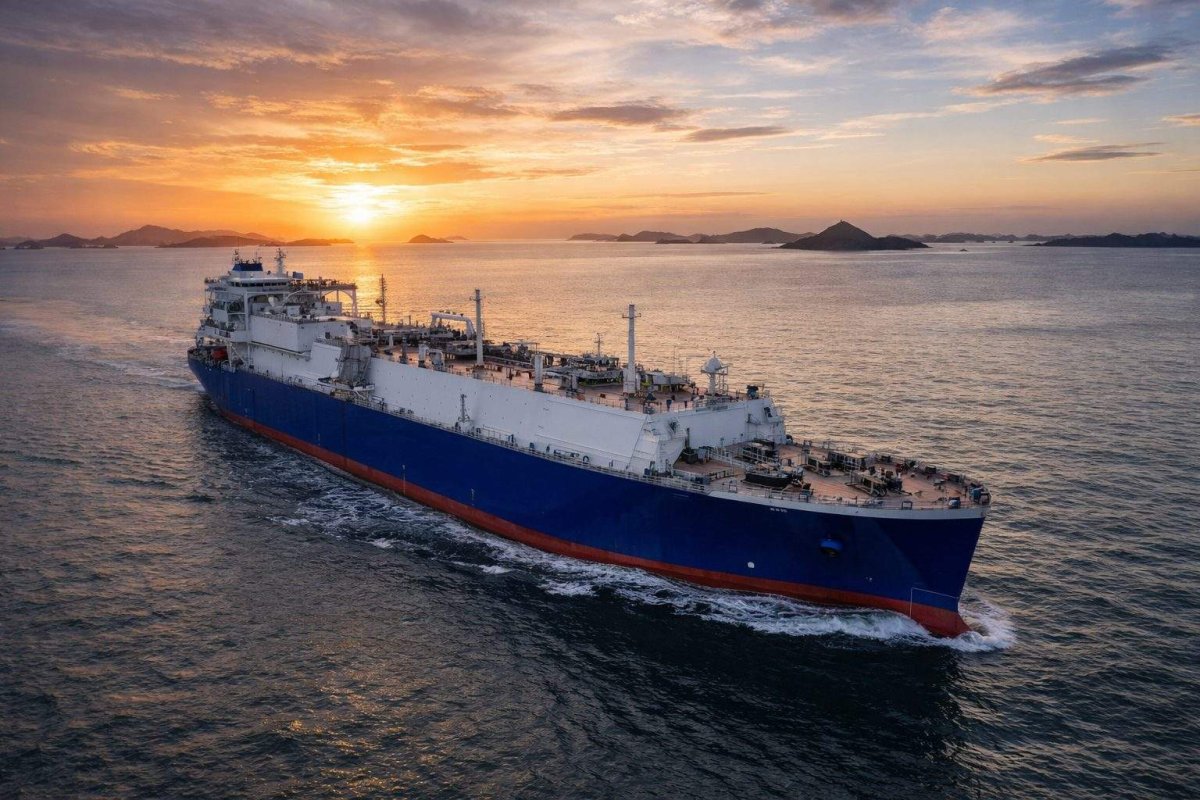
QatarEnergy, the world's largest liquefied natural gas exporter, has halted production at its Ras Laffan and Mesaieed facilities following drone attacks originating from Iran, according to company officials and Qatari authorities. The suspension immediately tightened global gas supplies, with European benchmark prices surging over 40% in response.
Immediate Market Impact
The Dutch day-ahead gas contract, a key European benchmark, jumped 41% to approximately 45 euros per megawatt hour. In the United Kingdom, day-ahead gas prices rose about 40% to 110 pence per therm. The timing is particularly sensitive as European Union storage levels currently sit 35% below the five-year average, according to Vortexa data.
Strait of Hormuz Gridlock
Approximately 150 commercial vessels are currently stranded near the Strait of Hormuz, the critical maritime chokepoint through which about 20% of global LNG supply and over 90% of Qatar's exports must pass. Marine war-risk specialist Munro Anderson described the situation as "a de facto close of the Strait of Hormuz." At least five tankers have sustained damage, with two fatalities reported.
Major marine insurers including Gard, Skuld, NorthStandard, the London P&I Club, and the American Club announced cancellation of war-risk coverage effective March 5, with notices posted on March 1. This has caused spot freight rates for very large crude carriers from the Middle East to China to surge to a minimum of $12 million, with LSEG's Emril Jamil noting rates were "rising exponentially" even before the attacks.
Shipping and Logistics Disruption
Shipping companies began halting transits even before Qatar's production shutdown. Hapag-Lloyd suspended all vessel passages through the strait, while CMA CGM instructed ships in the Gulf or en route to shelter in place. Kpler analyst Laura Page identified 14 LNG tankers that either slowed, changed course, or stopped operations in the area.
Broader Regional Energy Impact
The attacks represent a significant escalation for Gulf energy infrastructure. Saudi Aramco temporarily shut units at its 550,000-barrel-per-day Ras Tanura refinery following a separate drone incident. Israel's Leviathan and Tamar gas fields suspended operations, and producers in Iraqi Kurdistan also curtailed output. Torbjorn Soltvedt of Verisk Maplecroft characterized the Ras Tanura attack as "a significant escalation."
Analyst Projections and Market Implications
Analysts offered divergent oil price forecasts depending on the disruption's duration. Citi expects Brent crude to remain in the $80-$90 range over the coming week, but suggests a drop to $70 is possible if tensions ease. Conversely, Wood Mackenzie warned oil could break above $100 per barrel if shipments remain blocked. Macquarie's Vikas Dwivedi estimated the global market could withstand a one-to-two week closure, but cautioned that "fallout would escalate rapidly" if disruptions extend into a third week.
Qatar shipped 80.97 million metric tons of LNG in 2025 and aims to boost annual output to 142 million tons by 2030, up from current capacity of 77 million tons. Most of this volume is committed under long-term contracts, leaving minimal spare capacity for spot market relief during supply crises. Claire Jungman, Vortexa's director of maritime risk and intelligence, noted "there's no spare capacity in the LNG market, so the disruption could be immediate and immense."
Geopolitical and Regulatory Response
European officials are monitoring the situation closely, with the EU's gas coordination group scheduled to convene on Wednesday to assess the crisis. Stanford University energy expert Maksim Sonin suggested that while turbulence is expected, a repeat of Europe's 2022 gas crisis is unlikely unless infrastructure sustains further damage. The Qatari defense ministry reported drones struck a water tank at the Mesaieed Power Plant and a power facility in Ras Laffan Industrial City, with no human casualties confirmed and damage assessments ongoing.