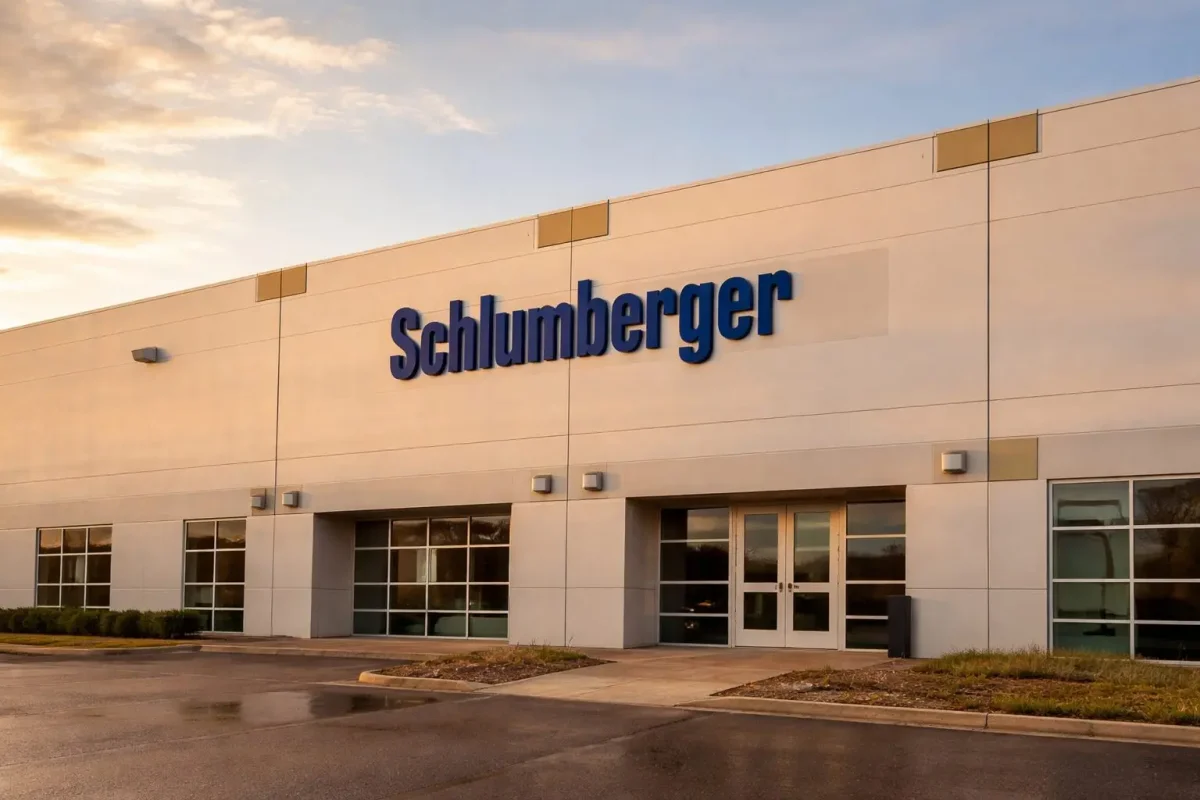
Energy Services Giant SLB Unmoved by Oil Price Spike
Shares of SLB Ltd., the world's largest oilfield services provider, exhibited remarkable stability in late Monday trading, closing nearly unchanged at $51.34. This performance came despite a significant surge in crude oil prices triggered by military strikes in the Middle East that disrupted regional shipping lanes. The stock traded within a narrow range between $50.94 and $51.63 throughout the session, highlighting a decoupling from the immediate volatility in commodity markets.
Geopolitical Tensions Fuel Crude Rally
Brent and West Texas Intermediate crude futures jumped sharply after reports from Reuters detailed Israeli and U.S. strikes targeting Iran, followed by counterattacks from Tehran. These events threw critical shipping channels into disarray and prompted selective shutdowns, injecting sudden uncertainty into the global supply picture. With more than one-fifth of the world's seaborne oil transiting through the nearby Strait of Hormuz, analysts immediately flagged sustained price risk. Citi projected Brent crude would trade between $80 and $90 per barrel this week. Macquarie Group's global energy strategist, Vikas Dwivedi, warned that any shutdown lasting beyond a couple of weeks would have an escalating and severe impact on oil prices.
In response to the market tightness, the OPEC+ alliance confirmed plans to increase production by 206,000 barrels per day in April. However, this incremental supply boost was largely overshadowed by the immediate geopolitical risk premium being priced into the market.
A Divergence in Energy Equities
The market reaction revealed a clear split within the energy sector. Major integrated oil producers Exxon Mobil and Chevron capitalized on the higher price environment, rising 1.2% and 1.5% respectively. In contrast, companies that provide services and equipment for drilling lagged behind. The VanEck Oil Services ETF declined 0.3%, while peers Halliburton finished flat and Baker Hughes shed 0.6%. This divergence underscores a key market dynamic: service companies like SLB are not direct proxies for oil prices. Their financial performance is ultimately governed by the capital expenditure decisions of their producer clients. Higher crude prices can encourage more spending on drilling and well completion, but they can also induce hesitation as companies assess the durability of the price spike before committing to new projects.
Market Context and SLB's Recent Performance
Broader U.S. equity markets managed to recover from earlier declines, with buyers returning despite elevated energy costs. Bill Smead, founder and chairman of Smead Capital Management, suggested that many participants viewed the oil shock as a temporary event. For SLB, the most recent major catalyst was its fourth-quarter earnings report in January, where it surpassed forecasts and outlined plans to return over $4 billion to shareholders in 2026 through dividends and share buybacks. However, CEO Olivier Le Peuch also noted a year-over-year decline in North American land activity, signaling near-term challenges in the vital U.S. onshore market.
Currently, the industry is navigating a lag effect. Service firms typically await clearer signals—such as rising rig counts, increased well completions, or new project awards—before experiencing a tangible recovery in orders. Sustained higher oil prices and subsequent budget increases from exploration and production companies are prerequisites for this turnaround.
Balanced Risks and Forward Outlook
The risk profile for SLB and its peers is two-sided. If geopolitical tensions ease and crude prices retreat, the recent "energy hedge" trade could unravel rapidly, removing the incentive for increased producer spending. Conversely, a prolonged conflict could lead businesses to delay major purchasing decisions due to mounting concerns over logistics, input costs, and contract stability, even as oil prices remain elevated.
Investors are advised to monitor headlines regarding tanker movements through key chokepoints and any early indications that the oil price shock is translating into increased upstream capital budgets. For SLB specifically, the next significant event is its first-quarter earnings report, scheduled for release around April 24. This update will provide critical insights into global demand trends, operational margins, and the company's progress on its capital return program.