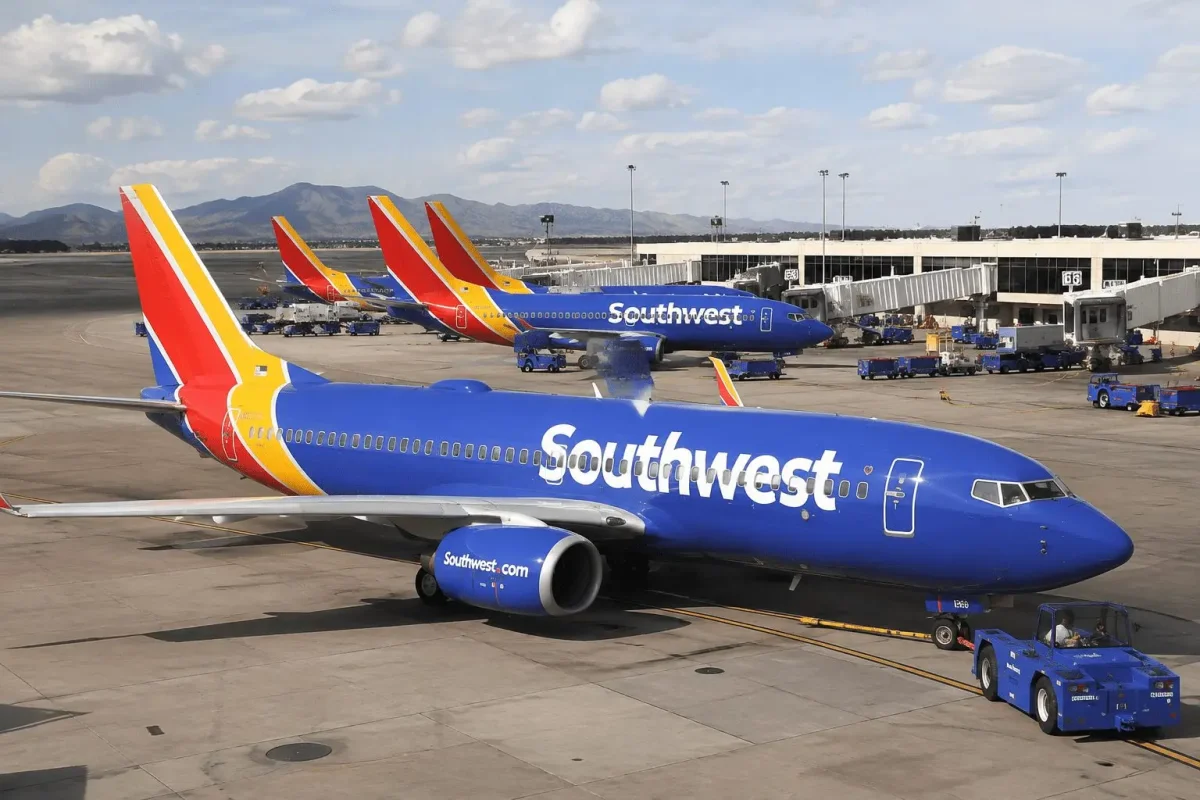
Southwest Airlines (NYSE:LUV) is navigating a complex operational landscape as its second-quarter results reveal a significant divergence between revenue growth and passenger volume. The carrier reported adjusted revenue up 20.3% year-over-year, driven primarily by higher fares rather than increased traffic, with revenue passenger miles declining 3.3%.
The airline has confirmed that its customer boarding window remains unchanged at 30 to 45 minutes prior to departure. This clarification comes after recent travel industry reports conflated a minor crew scheduling adjustment with a change in passenger boarding procedures. Effective August 1, select flight attendants on certain routes are reporting five minutes earlier to their shifts, a move aimed at increasing preparation time, but it does not affect the published flight schedule or boarding times for passengers.
Financial Performance and Operational Metrics
Southwest's second-quarter financial results underscore the company's ability to monetize its operations even as demand softens. Adjusted revenue increased 20.3% to $6.3 billion, while capacity grew only 0.2%. The average passenger fare jumped 20.9% to $225.61, contributing to a 20.1% rise in adjusted revenue per available seat mile (RASM) to 18.51 cents. The adjusted operating margin expanded to 6.7%, up 3.3 percentage points from the prior year.
CEO Bob Jordan attributed the performance to the "earnings power of our business," but the numbers also highlight potential vulnerabilities. Fuel costs surged by $889 million, and the airline's forward guidance suggests a similar trend in the third quarter, with unit revenue expected to grow between 17.5% and 19.5% year-over-year, while capacity is projected to decline 1% or remain flat.
Operational Adjustments and Investor Sentiment
The five-minute crew buffer is being viewed by some analysts as a form of "execution insurance," providing extra time for flight attendants to prepare without altering customer-facing schedules. However, Southwest has not disclosed any expected savings or improvements in on-time performance, leaving investors to question whether the operational changes are sufficient to handle the increased revenue per passenger.
Investor sentiment remained positive on Monday, with Southwest shares rising 4.7% to $47.07, in line with a broader rally in airline stocks. The sector benefited from a 5% drop in oil prices amid easing geopolitical tensions between the U.S. and Iran. The S&P 500 climbed 1.5%, reflecting a widespread market upswing.
Valuation and Peer Comparison
Southwest's trailing price-to-earnings ratio stood at 29.8 as of Monday's close, significantly higher than Delta Air Lines (NYSE:DAL) at 15.2 and United Airlines Holdings (NASDAQ:UAL) at 12.0. This premium valuation reduces the market's tolerance for any operational missteps, making execution reliability a critical factor for the stock's performance.
In addition to the crew scheduling update, Southwest recently revised its Customer of Size policy, which began in late May. The policy allows for complimentary neighboring seats when available, but passengers may be rebooked if seats are not open. The airline also updated its baggage fee structure, with first checked bags now costing $45 and second bags $55 on most mainland fares, while carry-on bags remain free.
Forward Outlook and Risks
Looking ahead, Southwest faces several headwinds. Non-fuel unit costs for the third quarter are projected to rise 3.5% to 4.0%, and adjusted EPS guidance for the full year has been lowered to $3.25-$4.25 from at least $4.00. Fluctuating fuel prices and potential customer pushback against higher fares could offset revenue gains.
The company has no investor events scheduled this week, with its next earnings call set for October 22. Short-term focus will remain on oil price movements, boarding consistency, and consumer demand trends. As Southwest continues to execute its commercial strategy, the balance between revenue growth and operational stability will be closely watched by investors.