Space Exploration Technologies Corp. (NASDAQ:SPCX) is set to undergo a critical market test on Thursday as its initial lockup period expires, potentially releasing up to 912 million shares held by employees and early investors. Based on Wednesday's closing price of $108.27, the newly unlocked shares carry an estimated value of approximately $98.7 billion, a figure that dwarfs the day's trading volume by 4.4 times. The event marks a significant moment for the company, which has seen its stock price struggle since its June IPO.
Shares of the space and satellite communications firm have been under pressure, closing Wednesday down 13.6% at $108.27, a level 19.8% below the IPO price of $135. Over the past five sessions, the stock has declined 3.8%, and it now sits 52.0% below its intraday peak of $225.64 reached in June. The lockup expiration could add further volatility, as the influx of shares has the potential to more than double the current public float, though not all eligible shares are expected to be sold immediately.
Q2 Earnings Show Robust Revenue Growth Amid Heavy AI Investment
The company's second-quarter results, released earlier this week, painted a mixed picture. Revenue surged 92% year-over-year to $7.81 billion, driven by strong performance across its segments. Adjusted EBITDA came in at $3.54 billion, but the company still reported a net loss of $541 million. Capital expenditures, however, were the standout figure, totaling $18.37 billion—an amount equivalent to 5.2 times adjusted EBITDA. Of that, a staggering $15.83 billion, or 86%, was allocated to AI infrastructure, reflecting SpaceX's aggressive push into artificial intelligence and cloud computing.
Chief Financial Officer Bret Johnsen highlighted that compute deployments have delivered a "less than one-year payback," and the company has secured an additional $6.7 billion in cloud contracts since the quarter's end. Management projects that compute capacity will exceed two gigawatts by year-end. However, the heavy upfront spending has raised concerns among analysts. Carolane de Palmas of ActivTrades warned of "significant volatility" in both valuation and cash outflow, as funds are spent before contracts convert to revenue.
Segment Performance: Starlink Remains the Anchor
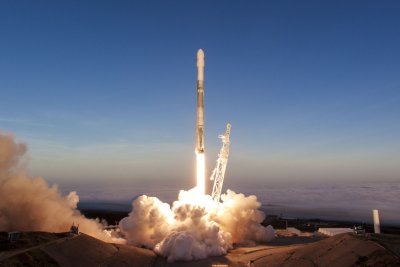
Starlink continues to be the stabilizing force for SpaceX. The subscriber base has grown to 12 million, though monthly average revenue per user (ARPU) declined 22% to $66. Connectivity activities generated $2.60 billion in adjusted EBITDA from capital expenditures of $1.37 billion. The segment's strong cash generation helps offset the massive AI spend. Additionally, Starlink now accounts for 79% of Falcon 9 launches, up from 54% in 2020, and the company has informed at least seven clients that no launch availability exists until 2028 or 2029, underscoring its dominant position in the launch market.
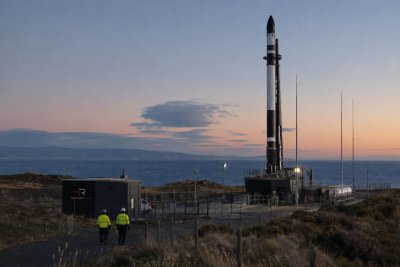
Rocket Lab USA (NASDAQ:RKLB) is the closest publicly traded competitor in terms of launch frequency, but it is still developing its larger Neutron rocket. SpaceX maintains a clear lead in reusability and launch cadence, which is a key competitive advantage.
Analyst Price Targets Suggest Significant Upside
Despite the recent stock decline, Wall Street analysts remain bullish. Post-earnings price targets from seven research firms average $235, implying a potential upside of 117% from Wednesday's close. The targets range from Morgan Stanley's $300 (Overweight) to Piper Sandler's $140 (Neutral). The wide dispersion reflects uncertainty about the sustainability of AI revenue growth and cash conversion. Morgan Stanley's optimistic scenario hinges on continued AI revenue gains and improved cash flow, while Piper's cautious stance offers little cushion against further declines.
Upcoming Catalysts: Launches and Starship Test
Over the next week, the lockup expiry will coincide with two Starlink launches. An August 10 mission from Florida aims to deploy 29 satellites, followed by an August 11 launch from California. These missions will test the company's operational cadence and the performance of its Falcon 9 refurbishment process. Later in August, SpaceX has provisionally scheduled Starship Flight 14, pending regulatory approval. That mission is planned to deploy V3 Starlink satellites and attempt the first upper-stage tower catch, a key milestone for the Starship program.
Investors should note that lockup expiration does not guarantee sales, and the quarterly reports have not been audited. Adjusted EBITDA is a non-GAAP metric, and launch schedules are subject to change due to weather, operational readiness, or regulatory reviews. AI contracts must also translate into reliable cash flows to justify the massive capital outlays.
Thursday's trading volume will be the clearest indicator of market sentiment. If the additional shares are absorbed without significant disruption, attention may shift back to the company's compute payback and Starlink margins. Conversely, heavy selling would keep supply concerns at the forefront, potentially overshadowing operational progress. As SpaceX navigates this pivotal moment, the balance between growth investments and shareholder returns will be closely watched.