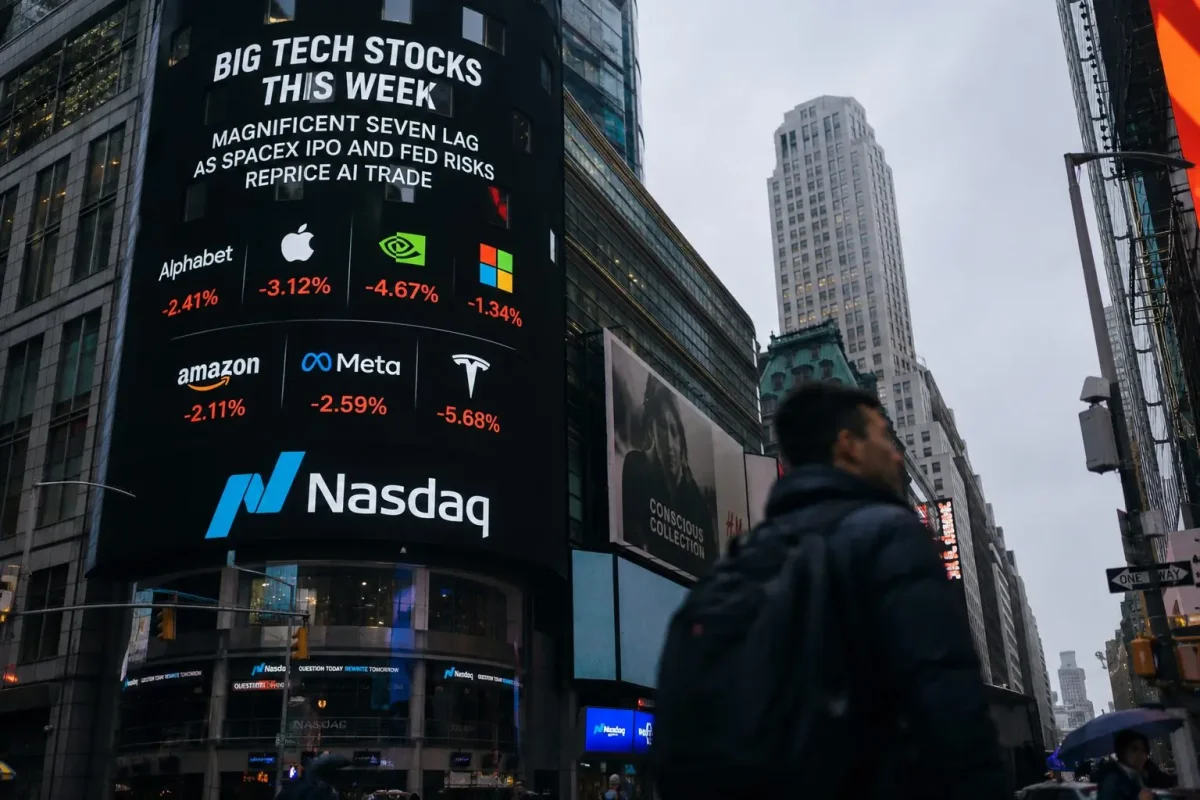
New York, June 13, 2026 – The Nasdaq Composite ended the week higher, but the so-called Magnificent Seven stocks lagged as hedge funds reduced their holdings ahead of SpaceX's highly anticipated market debut. The Roundhill Magnificent Seven ETF, which tracks Apple, Amazon, Alphabet, Meta, Microsoft, Nvidia, and Tesla, fell more than 2.4% since June 5, even as the broader tech-heavy index posted gains for the week.
Hedge Fund Positioning Weighs on Megacaps
According to a JPMorgan note cited by Reuters, hedge funds aggressively sold the largest U.S. technology stocks and increased short bets before SpaceX's IPO. This selling pressure, rather than any company-specific negative news, dragged down the group. On Friday, Tesla rose 1.8%, while Alphabet and Nvidia posted modest gains. However, Amazon, Apple, and Meta ended the day lower. The S&P 500 gained 0.5% on Friday, up 0.6% for the week, while the Nasdaq added 0.3% for the day and 0.7% for the week, according to Associated Press data.
AI Spending and Rate Concerns Fuel Volatility
Midweek, a sharp selloff hit semiconductor stocks as investors worried that AI-related names had become overvalued. The Philadelphia semiconductor index slumped 3.6% on Wednesday, with Nvidia and Broadcom weighing heavily on the S&P 500. The S&P 500 technology sector closed 11% below its June 2 record, meeting the technical definition of a correction. Strong economic data and persistent inflation have raised the risk of higher interest rates, which compress the present value of future profits for growth stocks.
However, the chip sector rebounded strongly on Thursday, with the PHLX Semiconductor index surging 7.9%—its best one-day gain since April 2025—after fears of a U.S.-Iran conflict eased. "Just as we had gone up too far, too fast, we came down too far, too fast," Robert Phipps, director at Per Stirling Capital Management, told Reuters. On Friday, a 3.4% drop in Brent crude oil prices provided additional support, as cheaper oil can alleviate inflationary pressures and reduce the need for aggressive central bank tightening.
Oracle's Warning and AI Spending Debate
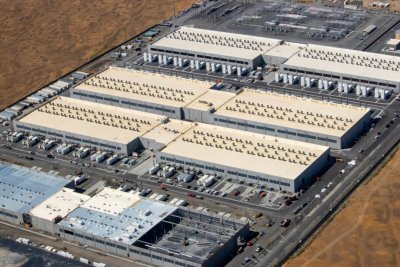
Oracle, though not part of the Magnificent Seven, sent a cautionary signal to the group on Thursday with a 12% drop. The company is reportedly planning about $70 billion in net capital expenditure this fiscal year and intends to tap debt and equity markets again. Bears argue that while AI demand remains robust, the heavy spending on data centers could strain free cash flow and margins for Microsoft, Amazon, Alphabet, and Meta.
SpaceX IPO Reshapes Market Leadership
SpaceX's record-breaking IPO, which pushed its valuation past $2 trillion, has shifted the narrative on Big Tech leadership. SpaceX now tops both Tesla and Meta in market value, both original members of the Magnificent Seven. "It becomes very hard to keep using Mag 7 as the clean shorthand for market leadership because one of the most important companies in the world would immediately be outside the label," said Shay Boloor, chief market strategist at Futurum Equities, to Reuters. The key question is whether new AI and space companies will draw capital away from the old megacap leaders or simply add to overall demand for high-growth tech stocks.
Valuation Risks and Fed Focus
The Magnificent Seven as a group no longer trades at bargain valuations. Tesla's price-to-earnings ratio exceeds 370, Apple trades at about 35 times earnings, Nvidia near 31, and Alphabet close to 27. This leaves little room for error if growth disappoints. Bulls point to continued inflows into technology funds, which attracted $4.39 billion last week, marking ten consecutive weeks of inflows even as U.S. equity funds saw $12.57 billion in net outflows. All eyes now turn to the Federal Reserve's June 16-17 meeting, where updated rate projections will be closely watched. A Reuters poll shows no economists expect a rate cut in June, with nearly 70% forecasting rates between 3.50% and 3.75% for the remainder of 2026.