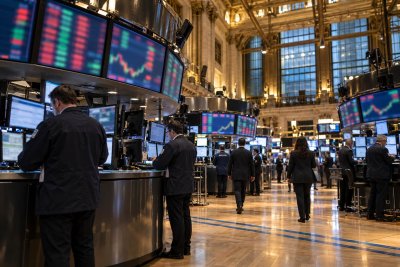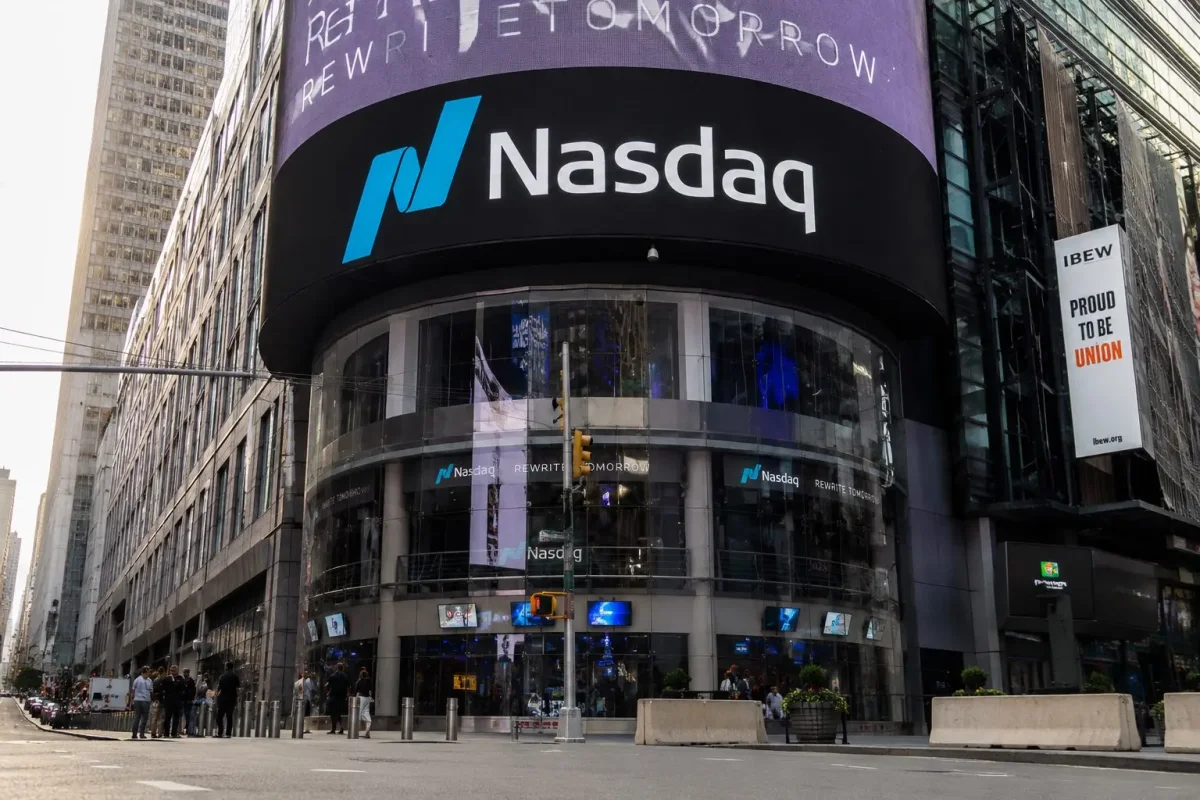
U.S. equity futures moved lower in after-hours trading Tuesday, while crude oil prices climbed as the U.S. launched military strikes against targets in Iran, reinforcing a risk-off mood that had already pushed the Nasdaq lower during the regular session.
The Nasdaq Composite fell 0.97% on Tuesday to close at 25,678.82, while the S&P 500 slipped 0.26% to 7,386.65. The Dow Jones Industrial Average bucked the trend, edging up 86.10 points, or 0.17%, to 50,872.11.
The selling was concentrated in technology stocks, with the S&P 500 technology index ending the day down 1.8%, after at one point losing more than 4%. The Philadelphia semiconductor index declined 1.9%. Among individual names, Broadcom shed 1.1%, Nvidia slipped 0.2%, and Marvell Technology tumbled 7.6%. "The tape came for sale" after an early rally faded, said Michael O'Rourke, chief market strategist at JonesTrading.
Investors rotated out of growth names and into defensive sectors such as real estate, utilities, and healthcare. "Tech names were out as buyers shifted into defensive areas," said Sahak Manuelian, managing director for global equities trading at Wedbush Securities. He described any rally attempts as "very, very short-lived."
The military action, which U.S. Central Command said were "self-defense strikes" carried out at 5 p.m. Washington time, came after President Donald Trump pledged a response to a U.S. Apache helicopter being shot down. The geopolitical jolt added to existing market anxiety ahead of Wednesday's consumer price index report, a key measure of household inflation. "Traders are holding back on risk as they wait for what could be another hot inflation print," said Gene Goldman, chief investment officer at Cetera, adding that the Federal Reserve remains a "headline risk." After last week's stronger-than-expected jobs data, traders are pricing in a higher probability of a Fed rate hike this year.
New stock supply is also weighing on sentiment. SpaceX is preparing for what is expected to be one of the largest initial public offerings in history when it debuts on Friday. Some investors worry it could divert capital away from other growth stocks. "The IPO is massive," said Jed Ellerbroek, portfolio manager at Argent Capital Management, warning that Friday could see "big volatility."
Oil prices, which had risen on the Iran strikes, later retreated. Brent crude settled at $91.45 a barrel, down 3.0%, and West Texas Intermediate fell 3.4% to $88.20, after both Iran and Israel said they had stopped attacks against each other. Analysts at Ritterbusch and Associates noted the oil market was "drafting lower" on hopes for a ceasefire and after Trump suggested a potential deal soon.
Despite the macro headwinds, some company-specific news provided bright spots. J.M. Smucker jumped nearly 10% on strong earnings. Nuvalent shares rallied after GSK announced a $10.6 billion acquisition of the biotech firm. GSK CEO Luke Miels described two of Nuvalent's drugs as "potential best-in-class assets."
Looking ahead, traders are bracing for potential volatility from a stronger CPI print, further escalation with Iran, or rising crude prices, all of which could push yields higher and pressure long-duration growth stocks. The upcoming SpaceX IPO could also exacerbate selling in AI and semiconductor names. While the market appears firmer beneath the surface—more stocks rose than fell on both the NYSE and Nasdaq—the action remains choppy. The Cboe Volatility Index hit its highest level since April before retreating. "The tape isn't broken—it's choppy," one trader noted.