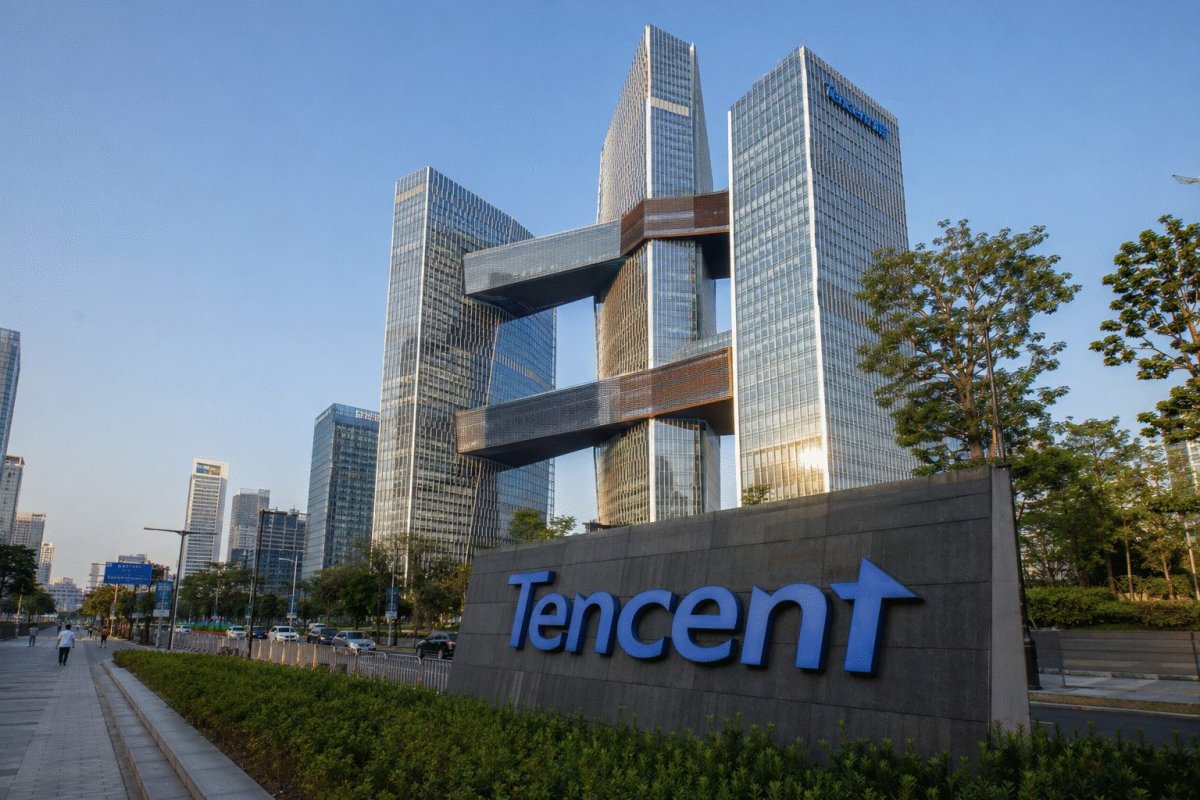
Tencent Holdings Limited (HKEX:0700) saw its shares advance 1.08% on Wednesday, closing at HK$447.20, according to TradingView data. The modest gain came despite a substantial increase in capital expenditure tied to artificial intelligence, which has become a central focus for investors evaluating the company's growth trajectory.
The company's market capitalization now stands at approximately $508.6 billion, trailing the recently listed memory chip maker CXMT by $77.8 billion. This gap underscores the market's evolving perception of Tencent's position within the broader technology landscape, where AI-related investments are increasingly scrutinized.
Capital Expenditure Surge and Cash Flow Concerns
Tencent's capital expenditure for the second quarter of 2026 surged 176% year-over-year to RMB52.8 billion, up from RMB19.1 billion in the same period last year. This aggressive spending, primarily directed toward AI infrastructure, pushed reported free cash flow to negative RMB13.8 billion, a stark contrast to the positive RMB43.0 billion recorded in Q2 2025.
However, when excluding compute prepayments, free cash flow remained positive at RMB37.6 billion, indicating that core operations still generate healthy cash. The company's net cash position declined to RMB58.2 billion from RMB146.9 billion as of March 31, reflecting the scale of its AI investment program.
Revenue Growth Across Segments
Despite the heavy spending, Tencent delivered solid top-line growth. Revenue increased 11% year-over-year to RMB204.8 billion, driven by robust performance in advertising and domestic gaming. Marketing-services revenue jumped 22% to RMB43.6 billion, with management attributing the gains to AI-enhanced ad recommendations and pricing within the Weixin ecosystem.
Domestic games revenue rose 17% to RMB47.3 billion, while international games revenue edged down 0.8% in reported currency. Fintech and business services revenue climbed 9% to RMB60.3 billion. Adjusted profit attributable to shareholders advanced 9% to RMB68.4 billion, though reported profit grew only 0.7% to RMB56.0 billion, reflecting higher depreciation and other costs associated with the AI buildout.
Management's Stance and Analyst Sentiment
President Martin Lau expressed confidence in the company's AI strategy, stating that Tencent feels "comfortable in making significant investments in AI," while acknowledging both potential upside and downside protection. He also noted that renting out surplus compute capacity could become a profit source, providing a potential buffer against the high costs of developing advanced models.
The analyst community remains largely bullish. A survey of 45 analysts shows a consensus rating of Strong Buy, with 42 Buy recommendations, 2 Holds, and 1 Sell. The average 12-month price target is HK$692.92, representing a 55% premium to Wednesday's closing price. However, recent target revisions reveal significant divergence: JPMorgan maintained its Overweight rating with a HK$690 target, while Benchmark cut its target to HK$625 from HK$700, and Morgan Stanley reduced its target to HK$550 from HK$650.
Market Context and Upcoming Catalysts
The wide range of price targets highlights uncertainty over how long the AI spending cycle will last. Investors are closely watching whether Tencent can maintain support at the HK$440 level following its post-earnings decline. Additionally, Alibaba Group Holding Limited (HKEX:9988) is scheduled to report earnings next week, offering a direct comparison on capital intensity in China's AI sector.
Key risks include continued elevated compute expenses that could further pressure free cash flow, weaker-than-expected advertising growth, delays in game approvals, export restrictions, or ineffective monetization of AI investments. Conversely, faster cloud demand growth or reduced infrastructure costs could accelerate improvements in cash conversion.
For now, Tencent's strong gaming and advertising revenues provide a financial cushion, but the market's patience will be tested as the company balances aggressive AI investment with the need to demonstrate tangible returns. The next few quarters will be critical in determining whether the bullish thesis holds or whether the spending spree undermines shareholder value.