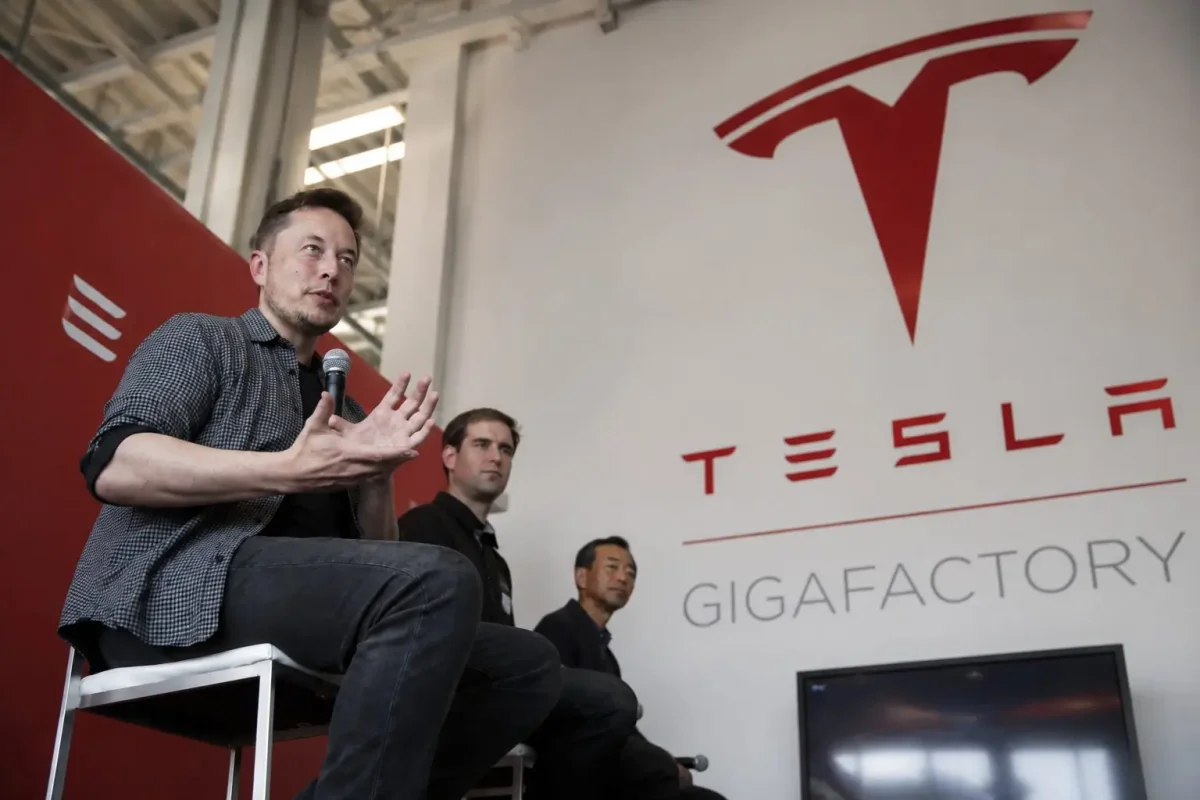
NEW YORK, July 24, 2026 – Tesla Inc. (NASDAQ:TSLA) suffered a historic sell-off this week, with shares tumbling nearly 19% and erasing approximately $214.5 billion in market capitalization during Thursday's trading session alone. The decline marks the steepest weekly drop for the electric vehicle maker since March 2020, as investors reacted to a sharp deterioration in the company's cash conversion metrics.
The second-quarter financial results, released earlier this week, revealed that capital expenditures consumed 123% of operating cash flow, up sharply from 94% in the same period a year ago. This translated into negative free cash flow of $1.09 billion—Tesla's first quarterly cash outflow in over two years. The company allocated $5.79 billion to capital spending in the quarter, a 142% increase year-over-year, while operating cash flow rose 85% to $4.70 billion.
Despite a 26% increase in revenue to $28.24 billion, operating margins contracted significantly, falling to 1.4% from 4.1% a year earlier. Adjusted earnings per share came in at $0.33, well below the consensus estimate of $0.51 from analysts polled by Reuters. Key vehicle margins also weakened, with average revenue per vehicle declining to $42,730 from $45,345, while revenue from regulatory credits dropped nearly two-thirds to $146 million.
CEO Elon Musk described 2026 as a “massive capex year,” with the company targeting capital spending above $25 billion for the full year. The heavy investment is directed toward robotaxi development, artificial intelligence infrastructure, and humanoid robotics. On a positive note, subscriptions for Active Full Self-Driving increased by 56% to reach 1.48 million, though the path to monetization remains uncertain.
“Monetization is still the main issue after the earnings shortfall,” said Ryan Lee, an analyst at Direxion. “It remains to be seen how soon those investments will help drive the valuation.”
The magnitude of Tesla's market value loss underscores its outsized position relative to competitors. On Friday, the combined market capitalization of Lucid Group (NASDAQ:LCID) and Rivian Automotive (NASDAQ:RIVN) stood at roughly $25 billion—less than one-eighth of what Tesla shed in a single session. Shares of all three companies declined again on Friday, with Rivian falling nearly 4%, while Tesla and Lucid each slipped about 3%. Over the past month, however, Lucid shares have risen 21% and Rivian has gained 9%, while Tesla is down approximately 18%.
Lucid's recent gains follow a sharp drop of up to 57% earlier in July after a false bankruptcy report, which the company described as “completely false,” stating its liquidity would last well into next year.
Looking ahead, the focus shifts to upcoming earnings reports from major technology companies. Meta Platforms (NASDAQ:META) and Microsoft (NASDAQ:MSFT) are scheduled to report on Wednesday, July 29, followed by Apple (NASDAQ:AAPL), Amazon.com (NASDAQ:AMZN), and Rivian on Thursday, July 30. These results will be closely watched to assess whether cash flow can keep pace with AI-related spending, particularly as the Magnificent Seven now represent over 30% of the S&P 500.
Risks to Tesla's outlook include its $43.5 billion cash and short-term investment cushion, which could be bolstered by accelerated software income or reduced capital expenditures. However, additional price cuts or any delay in the robotaxi launch would further pressure finances.