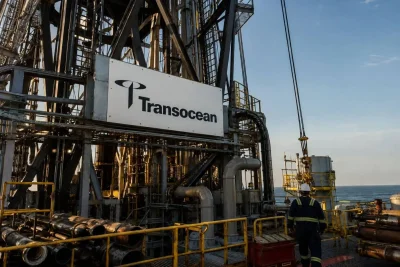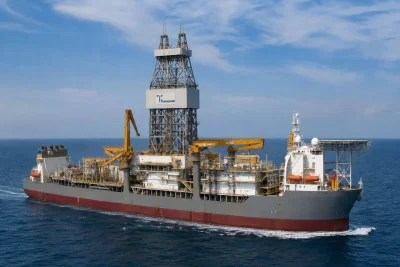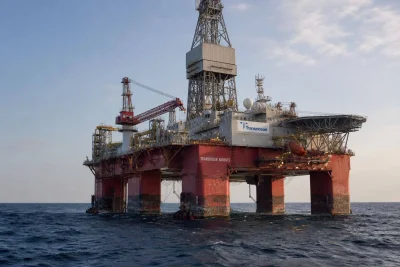
Transocean Ltd. (NYSE: RIG) shares experienced minimal movement on Tuesday, closing nearly flat after the offshore driller announced a new contract for operations off the coast of Australia. The stock ended the trading session at $6.25, down 0.08%, after fluctuating between $6.23 and $6.43 during the day. Volume exceeded 35 million shares, reflecting ongoing investor interest in the company's strategic developments.
New Australian Drilling Contract
Carnarvon Energy has contracted the Transocean Equinox, a semisubmersible rig, for a multi-well drilling program in the Bedout Sub-basin, located off Western Australia. The contract is scheduled to commence in April 2027 and includes one firm well with an option for a second. Potential drilling targets include the Ara, Yuma, Goats Eye, and Hutton prospects. Carnarvon CEO Philip Huizenga described the signing as a significant milestone, noting that the company expects to drill at least one, and possibly two, high-impact wells over the next year. Carnarvon estimates its total outlay for both wells at approximately A$20 million, supported by a cash balance of A$98 million as of March 31.
Backlog Growth Remains Key
While the Australian contract adds to Transocean's backlog, it is relatively minor compared to the company's recent wins in Brazil and Norway. In April, Transocean secured roughly $1.0 billion in additional firm backlog from Vår Energi in Norway and Petrobras extensions in Brazil, including a 1,095-day contract for the Transocean Barents at a dayrate of $450,000. As of last month, the company's total backlog stood at $7.1 billion, following approximately $1.6 billion in new contracts with an average dayrate near $410,000. Investors continue to focus on whether Transocean can sustain this backlog growth to support debt reduction, rather than any single contract win.
Valaris Merger and Antitrust Review
The primary overhang for Transocean shares remains the proposed $5.8 billion all-stock acquisition of Valaris. The merger, which would create a combined company with 73 rigs and an enterprise value near $17 billion, has been delayed by a U.S. Department of Justice antitrust review. On May 4, the DOJ requested additional information, extending the waiting period by at least 30 days after both companies respond. CEO Keelan Adamson has stated that the transaction is designed to address Transocean's debt levels, which negatively impact equity value. Valaris shares slipped 0.7% on Tuesday, while peer companies Noble and Seadrill saw little change.
Oil Prices Provide Support
Higher oil prices offered some support to the offshore drilling sector. Brent crude closed at $96 per barrel, and U.S. West Texas Intermediate ended at $93.76, as traders monitored U.S.-Iran negotiations and ongoing supply concerns. While elevated oil prices could eventually drive offshore drilling demand, producers typically set rig budgets well in advance of actual drilling activity.
Risks and Outlook
Key risks for Transocean include a potential drop in oil prices, customer delays in awarding contracts, and prolonged antitrust review of the Valaris merger. The Carnarvon contract, covering only one firm well in 2027, provides no near-term cash flow relief. Transocean's filings also cite oil and gas price volatility, customer activity levels, and the Valaris process as risk factors. For now, the stock appears to view the Australian contract as a confirmation of steady market conditions rather than a catalyst for a rally. The critical question remains whether additional contracts at attractive dayrates will emerge, enabling the company to convert its backlog into cash before debt and merger uncertainties weigh further on investor sentiment.