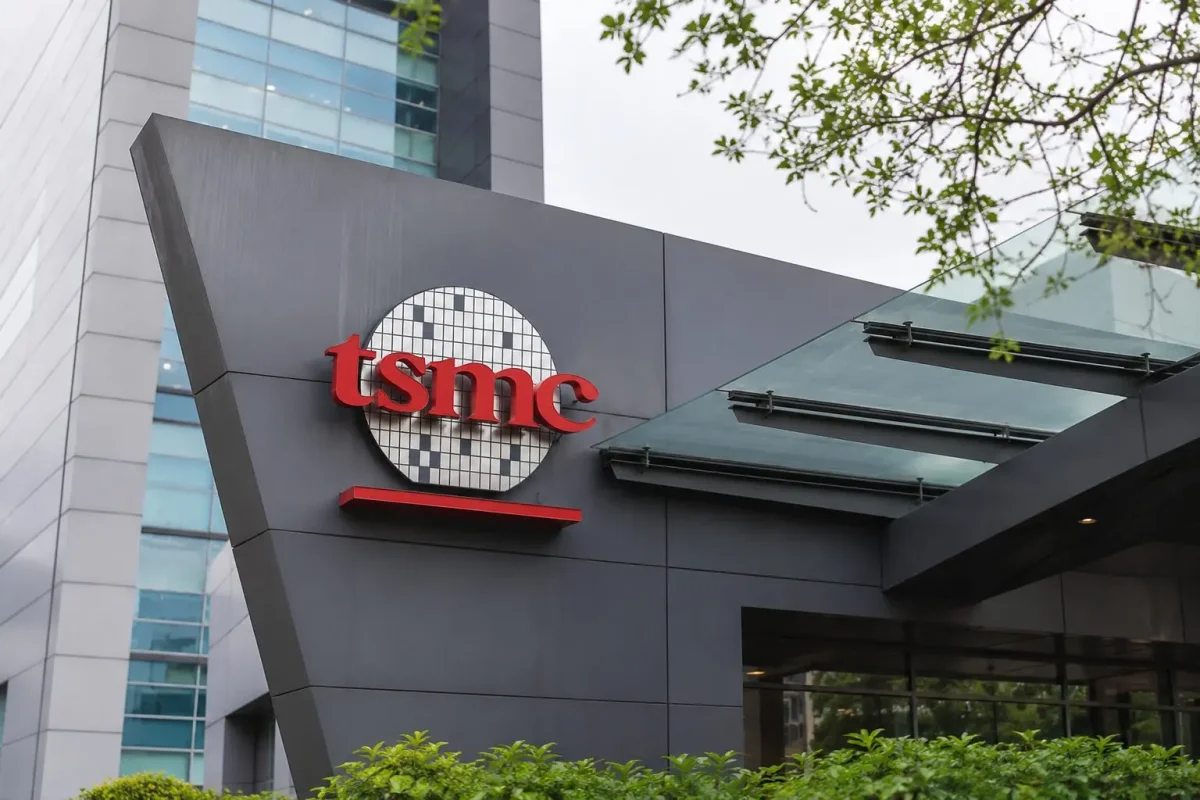
Taipei, June 9, 2026 – TSMC’s ongoing production constraints are reshaping the semiconductor landscape, with major tech giants seeking alternative suppliers to mitigate risks. Reports indicate that Google has selected Intel for its next generation of in-house AI chips, while Nvidia is evaluating Intel’s manufacturing capabilities for a separate advanced chip design. This shift underscores a broader industry trend to reduce reliance on TSMC, which currently dominates advanced chip production.
“AI’s biggest players are racing to diversify a supply chain still heavily concentrated in TSMC,” noted Jacob Bourne, an analyst at eMarketer. The move comes as TSMC’s CEO, C.C. Wei, warned shareholders that global chip supply would fall short of AI-driven demand for years, even as the company forecasts over 30% sales growth in 2025. TSMC’s U.S.-listed shares rose 3.8% to $431.12 on Monday, while Intel surged 12.6% to $111.65 following the Google report.
Market Concentration and Risks
TSMC’s market influence is significant, representing 41.5% of Taiwan’s TAIEX index. Together with Samsung Electronics and SK Hynix, these three firms account for nearly a third of MSCI’s Asia Pacific ex-Japan index. HSBC’s Herald Van der Linde described this concentration as “structural challenges” for the market. The heavy weighting creates vulnerabilities, as any disruption at TSMC could ripple across global indices.
Wei’s comments to shareholders last week remain a focal point. He emphasized that TSMC is not just a beneficiary of the AI boom but a key determinant of the pace at which cloud companies can expand computing capacity. “It will be a long time before we can meet customer demand,” Wei stated, reiterating guidance for more than 30% sales growth this year. Despite new fabrication plants in the U.S., the supply-demand imbalance is expected to persist.
Financial Performance and Investor Sentiment
TSMC continues to deliver strong financial results. In 2025, the company posted consolidated revenue of NT$3.809 trillion and net income of NT$1.718 trillion, with diluted earnings per share of NT$66.25. For the first four months of 2026, revenue reached NT$1.545 trillion, a 29.9% year-over-year increase. April alone contributed approximately NT$410.73 billion, up 17.5% from the prior year.
Despite these robust numbers, investor caution is warranted. Catie Hogan of Motley Fool noted that TSMC shares have risen over 45% this year and are trading near their 52-week high. She also highlighted customer concentration risk, with Nvidia and Apple accounting for roughly 40% of TSMC’s revenue. Any shift in orders from these key clients could impact TSMC’s growth trajectory.
Geopolitical and Technological Factors
Geopolitical tensions add another layer of uncertainty. Taiwan’s defense ministry reported 79 Chinese military aircraft near the island during last week’s Computex event in Taipei. Hudson Institute senior fellow David Feith warned that markets and governments may be underestimating the risk of conflict. Such tensions could disrupt TSMC’s operations and global chip supply.
On the technology front, Wei addressed questions about next-generation manufacturing, specifically High-NA EUV lithography tools from ASML. While TSMC has acquired these machines for research, they are not yet in high-volume production due to economic considerations. This cautious approach contrasts with competitors’ more aggressive adoption, but Wei maintains that TSMC has not slipped in manufacturing leadership.
As the AI race intensifies, TSMC faces the delicate balance of meeting insatiable demand while managing pricing and customer relationships. Wei indicated that TSMC would “like” to raise prices but does not plan rapid increases like those seen in the memory-chip market. The company’s ability to maintain its competitive edge without alienating customers will be critical in the years ahead.