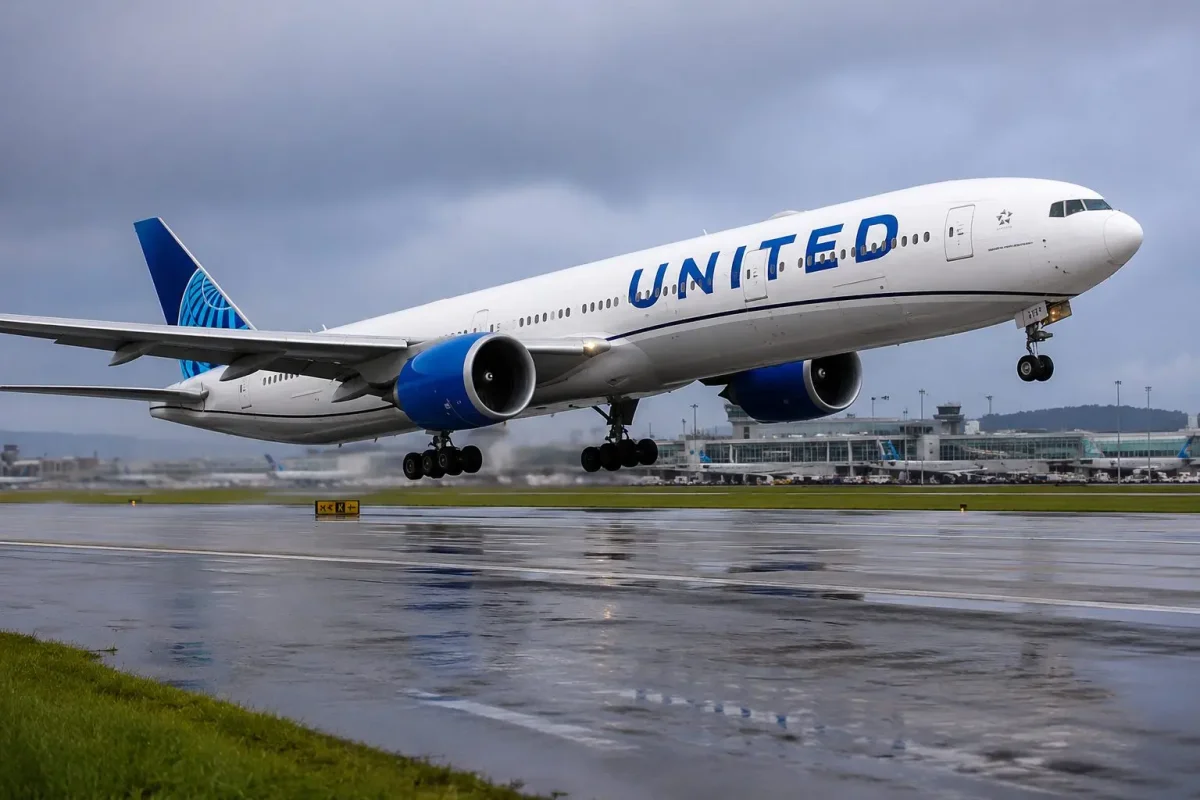
United Airlines (NASDAQ:UAL) is pressing forward with an ambitious expansion of its Chicago network, introducing 12 new domestic routes this quarter even as federal regulators impose stricter limits on flight operations at O'Hare International Airport. The carrier is simultaneously deferring 10 other planned regional routes, a move that underscores the growing importance of slot management in the airline's strategy.
The Federal Aviation Administration (FAA) has capped daily aircraft movements at O'Hare to 2,708, a figure that is at least 12.1% below the airport's published peak capacity plans. This cap, which counts every takeoff and landing regardless of aircraft size, has forced United to rethink its schedule. A regional jet consumes the same movement slot as a larger narrowbody, making aircraft size a critical factor in maximizing revenue per slot.
United had initially scheduled 780 daily departures from O'Hare but has cut that number to approximately 650, a reduction of 16.7%. The FAA's order, which was set to expire on October 24, 2026, has been extended to October 30, 2027, adding another summer of constrained operations.
Route Portfolio Adjustments
The new route additions include daily services to Santa Barbara, Eugene, Monterey, and St. George, alongside lower-frequency seasonal offerings. However, the deferral of 10 regional markets—such as Tri-Cities, Erie, Marquette, Rochester, and Wausau—highlights the trade-offs inherent in a capped environment.
Omar Idris, United's vice president for O'Hare, noted that the revised plan would fly "13% more seats year over year," even with fewer departures. The math implies an 11% increase in departures and a 1.8% rise in seats per flight, indicating a strategic shift toward larger aircraft to optimize the scarce movement slots.
Slot Economics and Investor Implications
The frequency mix is a key signal for investors. A triple-daily route consumes the movement budget of three daily routes, while a Saturday-only route uses just 0.14 times that budget over a quarter. This calculus is central to United's scheduling decisions.
For example, the planned triple-daily service to Tri-Cities, originally set to begin June 8, has been delayed until at least October 2027. Meanwhile, daily services to Santa Barbara, Eugene, and Paducah each use one slot per day, and Saturday-only flights to Monterey and St. George use significantly fewer.
The airline's reliance on larger aircraft is a direct response to the FAA cap. Gate access, which once drove expansion plans, has been superseded by the movement ceiling. Patrick Quayle, United's network planning chief, had previously cited five added gates as unlocking new opportunities, but the FAA's intervention made aircraft movements the binding constraint.
Market Context and Peer Comparison
American Airlines (NASDAQ:AAL) remains a key competitor at O'Hare. Before the FAA's intervention, United planned 780 daily departures versus American's 526, making United's schedule about 48% larger. The revised numbers will likely narrow that gap.
In premarket trading on Monday, United shares were indicated 2.7% higher at $124.65, following a 2.6% gain last week. American also rose 2.2% premarket to $15.60, after a 5.5% weekly advance. These moves come amid broader market optimism, partly fueled by falling oil prices.
Looking ahead, investors will focus on fuel costs and further schedule adjustments. United guides to adjusted third-quarter earnings of $2.50–$3.50 per share, assuming a fuel price of $3.69 per gallon. Risks include weather disruptions, weaker demand, fuel price volatility, and additional FAA changes. Further route deferrals could also weaken feed into United's long-haul network.
Ultimately, the headline of route additions overstates unconstrained growth. The more meaningful metric is revenue and passengers carried per scarce O'Hare movement, a measure that will define United's performance in this constrained environment.