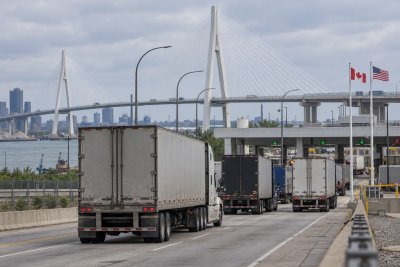
The Canada-U.S. trade conflict has entered a new phase, extending beyond border tariffs to the procurement practices of the American federal government. A White House memorandum, signed on September 16, instructs federal agencies to identify Canadian-origin goods used in civilian procurement and to take measures to exclude them or render them unavailable for purchase. This directive, while significant, does not constitute an immediate ban on all Canadian suppliers. It assigns responsibilities to the Office of Management and Budget, the U.S. Trade Representative, and the Federal Acquisition Regulatory Council, without specifying a product list, an implementation date, or a dollar threshold.
The order specifically targets Canadian-origin items in federal civilian procurement, not every service provided by a company headquartered in Canada. This distinction is crucial for investors trying to gauge the impact on individual firms. On Thursday afternoon, markets showed little sign of a broad sell-off in Canadian stocks. Shares of BRP Inc. (TSE: DOO) rose 0.4% to C$81.98 in Toronto, while Saputo Inc. (TSE: SAP) gained 0.3% to C$40.05. The Canadian dollar remained nearly flat, trading near C$1.399 per U.S. dollar. These modest moves suggest that investors are awaiting more concrete details before pricing in earnings risk.
Two Trade Actions, Two Different Timelines
The procurement memorandum is separate from an import restriction announced earlier in September. Under that presidential proclamation, specific Canadian products—including certain alcoholic beverages, whey products, and large motorcycles—will be excluded from U.S. importation starting at 12:01 a.m. Eastern time on September 29. Canada has already retaliated with counter-tariffs of 15%, 25%, or 50% on U.S. goods, effective September 8, matching C$27.6 billion of Canadian products impacted by American measures. Companies must now navigate three layers of trade policy: ordinary border duties, the September 29 product exclusions, and the new federal procurement process.
BRP’s Headquarters Do Not Determine Customs Origin
BRP serves as a useful case study in this complex environment. The Quebec-based manufacturer produces Ski-Doo snowmobiles and Can-Am Spyder and Canyon three-wheel vehicles at its Valcourt, Canada, facility. However, its electric Can-Am motorcycles are made in Querétaro, Mexico, and the company operates four additional plants in Mexico and two in the United States, according to its March 2026 annual information form. This diversified footprint prevents a blanket conclusion about BRP’s exposure. A Canadian-origin model that falls within the customs codes in the proclamation faces a direct problem on September 29. In contrast, vehicles made in Mexico or assembled in the U.S. may not be affected. Parts origin, product classification, and any future agency waivers will be more important than the location of the corporate headquarters. BRP had already suspended its fiscal 2027 guidance in April due to the evolving U.S. tariff environment, signaling that the earnings outlook remains uncertain.
Saputo’s Whey Exposure on Both Sides of the Border
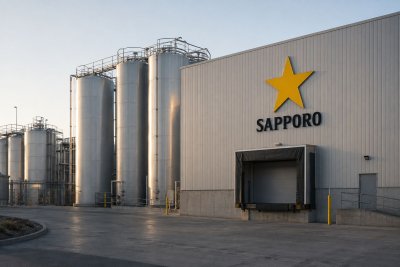
Saputo’s Canadian division produces whey powder, whey protein concentrate, and lactose for domestic and international markets, as confirmed in its business description. The company’s U.S. division also manufactures whey products within the United States, meaning that an exclusion of Canadian-origin whey would not block Saputo’s entire American dairy operation. The key question for investors is where each affected product is manufactured and which legal entity sells it into the U.S. A Canadian whey shipment could lose access while a similar product from a Saputo U.S. plant remains available. However, Saputo does not disclose product-level trade flows in its public overview, making it difficult to calculate the exact revenue at risk from the proclamation.
What Would Turn the Memorandum into an Earnings Event
The strongest counterargument is that the procurement order may be narrower than its headline suggests. Existing Buy American rules already restrict foreign goods in federal procurement, agencies may seek exceptions where domestic supply is insufficient, and the memorandum still requires implementing steps. A negotiated resolution could also emerge before procurement officers alter contracts. Three documents will be pivotal: the Federal Acquisition Regulation changes that define covered purchases, the customs guidance for the September 29 exclusions, and company disclosures that quantify Canadian-origin U.S. sales. Until these are published, the market’s restrained reaction appears appropriate. The signed orders create risk, but product origin and contract language will ultimately determine which Canadian earnings lines absorb the impact.