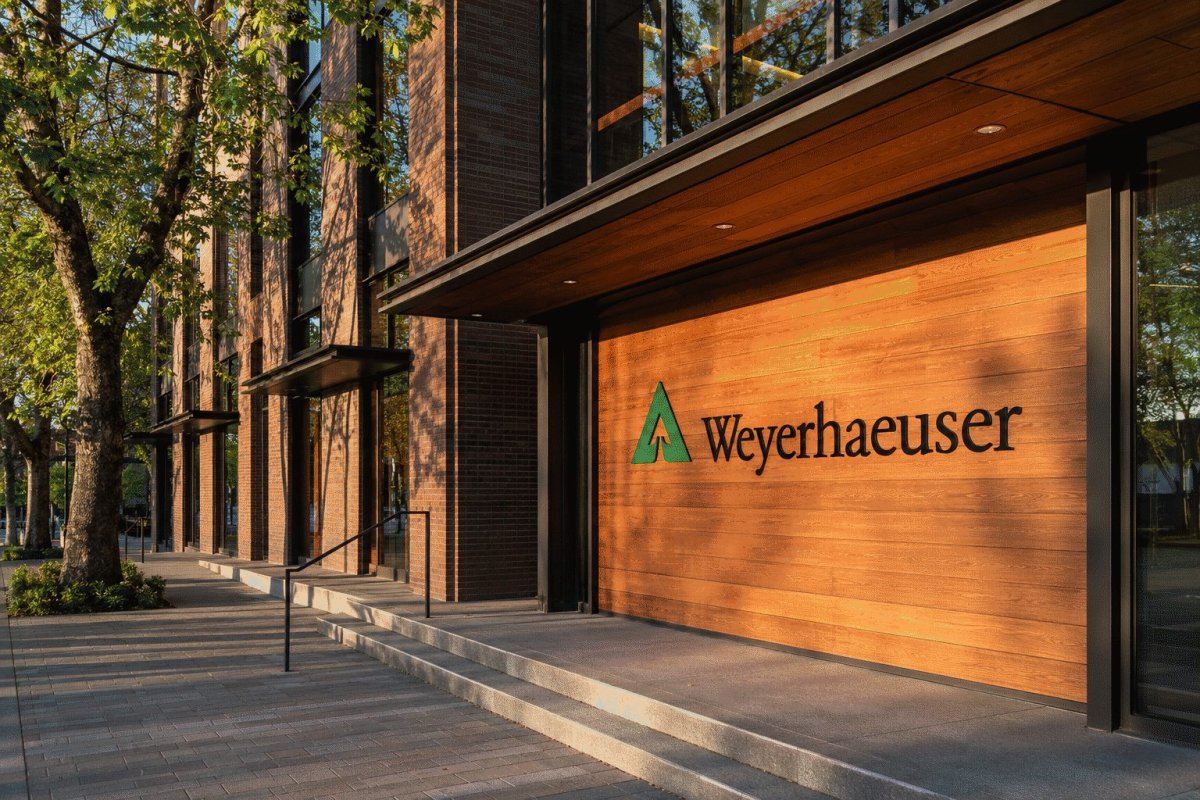
Shares of Weyerhaeuser Co. (NYSE: WY) declined 2% on Tuesday, closing at $23.61, as investors weighed the potential long-term impact of a federal proposal that could significantly increase the supply of timber in the U.S. market. The move came amid broader market weakness, with the S&P 500 slipping 0.69% to 7,691.76.
Federal Plan Could Expand Timber Supply
The Trump administration has advanced plans to roll back nationwide restrictions on road construction and timber harvesting across nearly 44.7 million acres of federal forest land. That area is more than four times the size of Weyerhaeuser's U.S. timberland base, which totals over 10 million acres.
While the policy does not directly affect Weyerhaeuser's land ownership or existing contracts, analysts say the potential increase in federal timber availability could reshape regional log markets. A larger supply of logs may lower fiber costs for mills, but it could also pressure prices that private landowners like Weyerhaeuser receive for their timber.
Scope of the Proposal
The federal plan targets roadless areas that have been protected under a 2001 policy. The nearly 59 million acres currently restricted under that policy could see a significant portion opened to logging, though the exact number of acres that would actually be harvested remains uncertain.
Agriculture Secretary Brooke Rollins said the proposal aims to give local forest managers more decision-making power, arguing that local oversight could improve forest health and reduce wildfire risks. Environmental groups, however, contend that more roads in backcountry areas would increase ignition sources and exacerbate fire dangers.
The public comment period runs until September 21, and the timeline for implementation and potential timber output is still unclear. Legal challenges are likely, which could delay any actual changes.
Market Reaction and Context
Weyerhaeuser's stock decline on Tuesday marked its third consecutive session of losses. The company traded below its 50-day average volume, with 5.2 million shares changing hands. International Paper (NYSE: IP), a comparable wood-products company, fell only 0.52% to $40.05, suggesting some of Weyerhaeuser's drop was tied to the timber-specific news.
Analysts note that the stock's movement alone doesn't confirm that investors have fully priced in the forest proposal, but the policy adds a new layer of uncertainty for the timber giant.
Financial Performance and Hedging
Weyerhaeuser's second-quarter results highlighted the importance of log pricing. Adjusted EBITDA for Wood Products surged to $129 million from $71 million in the first quarter, driven by a 15% increase in lumber realizations. Timberlands delivered $123 million, up from $120 million, with stronger Western log prices partially offset by higher fuel and freight costs.
The company's Western third-party log volume rose to 1.49 million tons in Q2, with average realizations climbing to $115.27 per ton from $106.76. This mix of mills and timberlands provides a hedge, but increased federal supply could hurt both segments if it drives down log prices.
Analyst Sentiment and Risks
Wall Street remains largely bullish on Weyerhaeuser, with seven buy or strong-buy ratings and four holds, according to MarketBeat. The consensus price target is $29, implying about 22.8% upside from Tuesday's close, though those targets were set before the latest policy news.
Recent analyst actions include Citigroup's Anthony Pettinari lowering his price target to $29 from $30, while Truist's Michael Roxland raised his to $28 from $27. RBC Capital and Raymond James maintain outperform and strong-buy ratings, respectively.
Key short-term risks include housing demand, lumber prices, wildfire damage, and interest rates. The federal timber proposal could be revised after public feedback or struck down in court, and any actual harvest increases would depend on budgets, permits, and local approvals.
Investors should watch Western log market performance, mill fiber costs, and any updated federal timber-sale objectives through the fall for signs of how the policy might unfold.