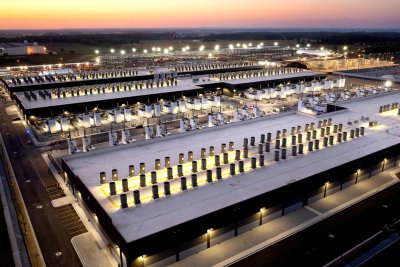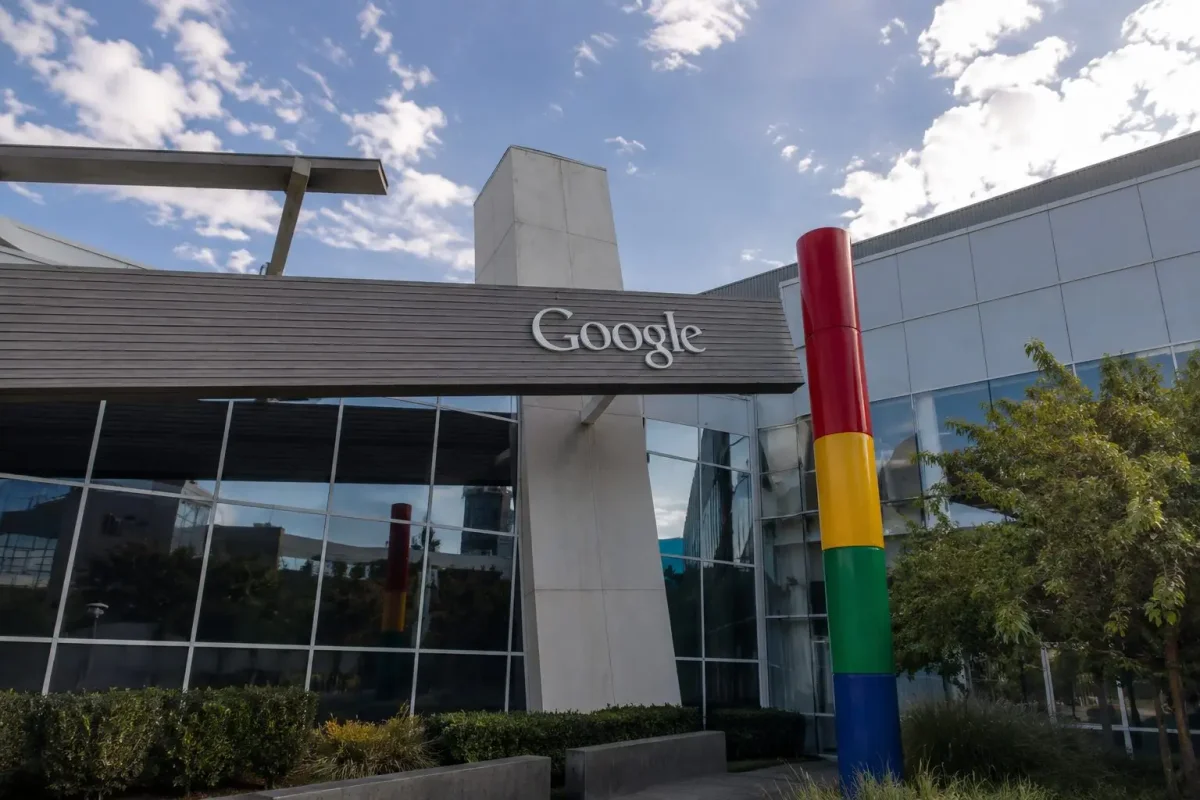
Alphabet Inc. (NASDAQ: GOOGL) is capitalizing on its robust balance sheet to secure significantly cheaper financing for artificial intelligence infrastructure, according to a Financial Times analysis. Data centers backed by Google borrowed at a median interest rate of 7.1%, while projects utilizing Nvidia Corp. (NASDAQ: NVDA) chips faced a steeper 9.3% rate. This 220-basis-point differential underscores Alphabet's strategic advantage in the fiercely competitive AI hardware market.
The company's maximum credit exposure tied to these arrangements reached $43.8 billion as of June 30, 2026, a 571% surge from $6.5 billion in September 2025. Despite the ballooning notional, Alphabet's booked liability remains modest at $815 million, representing just 1.9% of the peak figure. The company emphasizes that the notional amount reflects the worst-case scenario if certain counterparties default, with some agreements extending up to 15 years.
This financing edge could accelerate external sales of Google's tensor processing units (TPUs). By leveraging its balance sheet, Alphabet can offer more attractive terms to data center operators, potentially drawing customers away from Nvidia-based solutions. The strategy is particularly potent given that over $150 billion of the approximately $200 billion in associated agreements are tied to TPUs designated for Anthropic, the AI startup backed by Google.
Financial Metrics and Market Reaction
Alphabet's stock traded at $373.51 in premarket activity, up 4.9% from the previous close, as investors digested the implications of this financing strategy. The company's second-quarter capital expenditure hit $44.9 billion, nearly matching the $43.8 billion credit exposure, while cash and liquid assets stood at $242.5 billion, covering the exposure 5.5 times over. Total long-term liabilities of $98.2 billion represent 45% of the notional.
Despite a negative free cash flow of $5.9 billion for the quarter, Chief Financial Officer Anat Ashkenazi noted that "demand still outpaces that investment." The company raised its 2026 capital spending outlook to a range of $195 billion to $205 billion, signaling continued aggressive investment in AI infrastructure.
Strategic Implications and Supply Chain
The financing advantage is strategically crucial as third-party capacity is set to increase in the third quarter, which management expects will create slight near-term pressure on cloud margins. By externalizing funding, Google can boost TPU shipments while investors cover hardware and building expenses, effectively transferring some financial risk.
Broadcom Inc. (NASDAQ: AVGO) plays a pivotal role in the supply chain, reporting $128.1 billion in binding purchase obligations, with the majority due in fiscal 2027 ($55.2 billion) and 2028 ($72.9 billion). The relationship between Broadcom, Google, and Anthropic is deeply intertwined, with the startup expected to utilize approximately 3.5 gigawatts of computing capacity starting in 2027, contingent on maintaining commercial viability.
Growth and Risks
Google Cloud revenue surged 82% to $24.8 billion in the second quarter, with backlog expanding to $514 billion. The majority of revenue tied to current TPU-system contracts is projected for 2027, indicating strong forward demand. However, risks loom. A slowdown at Anthropic could result in surplus capacity or trigger more claims on the credit backstops. Jefferies Financial Group (NYSE: JEF) analyst Jonathan Petersen identified declining buyer demand as "the big macro risk," while delays in power supply and rising interest rates could erode Google's funding advantage.
Additional financial guarantees bring $7.6 billion in extra exposure, with Alphabet projecting $24.1 billion more in potential future backstops. The combined gross sum across these instruments totals $75.5 billion, equal to 31% of liquidity as of June. This comprehensive financial engineering underscores Alphabet's commitment to dominating the AI infrastructure race, but it also concentrates risk on the success of key partners like Anthropic.