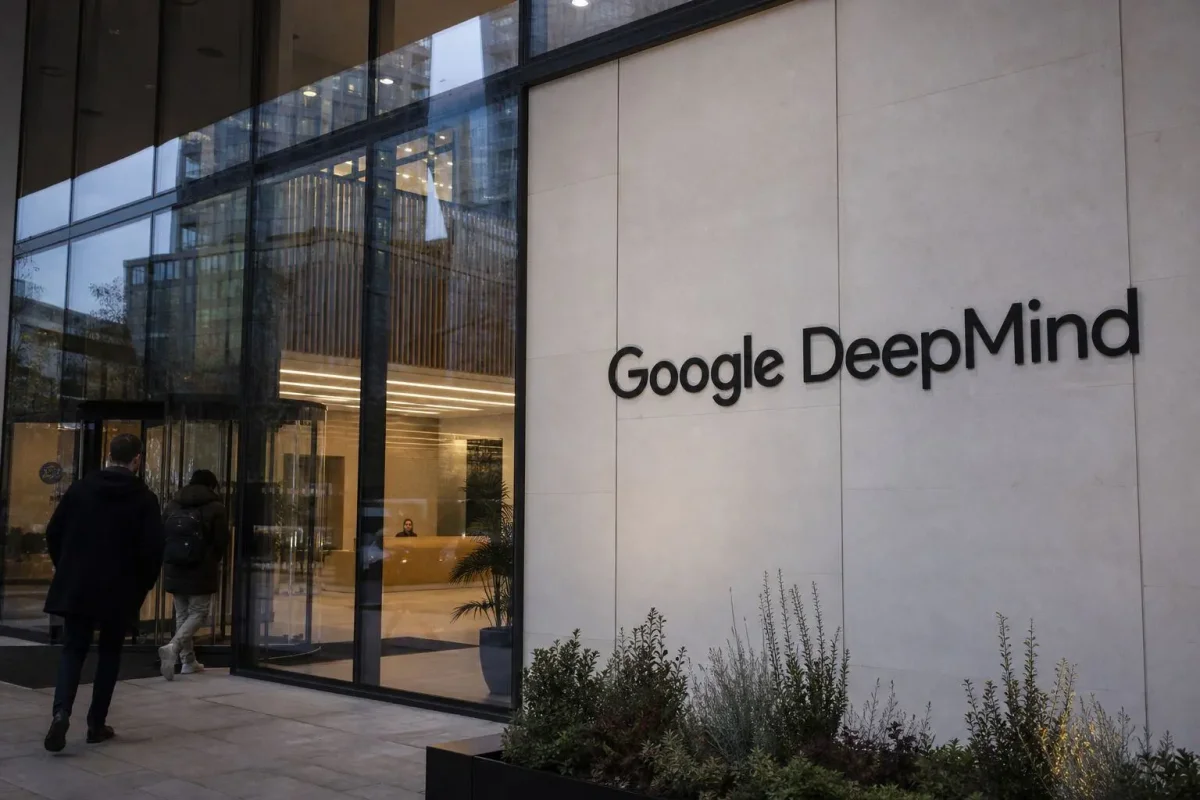
Alphabet Inc. (NASDAQ: GOOGL) is facing a widening gap between its stock performance and the broader market, as the tech giant grapples with a costly and high-stakes challenge: retaining its top artificial intelligence talent. The company's Class C shares closed up 0.5% at $333.78 on Wednesday, but over the past month they have declined approximately 6%, while the S&P 500 has gained about 3%. This nine-point underperformance has put a spotlight on the company's $44.9 billion capital expenditure and the strategic difficulties of attracting and keeping AI experts.
The financial strain is evident in Alphabet's latest quarterly results. The company reported $44.9 billion in property and equipment expenses, alongside a negative free cash flow of $5.9 billion. While computing power can be purchased, the expertise and research leadership in AI models cannot be easily replaced. This logic underscores the urgency of the talent retention issue, as the company invests heavily in infrastructure while facing a brain drain at its highest levels.
Leadership Shake-Up and Brain Drain
Concerns escalated in August when Demis Hassabis transitioned from his role as CEO of DeepMind to become chairman and chief scientist at Alphabet. Shortly after, Jeff Dean, a 27-year veteran, departed to launch a new venture with colleagues. These moves have intensified worries about the stability of Alphabet's AI leadership. Goldman Sachs analyst Eric Sheridan highlighted two key issues weighing on the stock: Search growth falling short of expectations and, more significantly, a "brain drain." In an interview with Yahoo Finance, Sheridan noted that talent departures have become a major drag on the shares.
The competition for AI talent extends beyond senior leadership. Current and former employees report that Meta Platforms Inc. (NASDAQ: META) and Microsoft Corp. (NASDAQ: MSFT) are luring researchers with competitive compensation packages. Private companies like OpenAI and Anthropic are also attractive due to the potential upside from private-company equity, as reported by Fortune. This three-step repricing of AI talent began in June with the departure of frontier researchers like Noam Shazeer and John Jumper, continued with the leadership reset in August, and has now reached a valuation debate in September.
Cloud Growth and AI Monetization
Despite the talent challenges, Alphabet's cloud division posted impressive numbers. Google Cloud's second-quarter revenue surged 82% year-over-year to $24.8 billion, with operating income rising more than threefold to $8.8 billion. CEO Sundar Pichai emphasized that AI investments are "redefining what's possible across every part of our business." The company's Gemini models processed 22 billion API tokens per minute, and the Gemini app reached 950 million monthly users. These figures highlight the potential for AI-driven growth, but they also underscore the importance of retaining the researchers who drive such innovation.
The cost of talent is reflected in Alphabet's research and development expenses, which rose by $4.4 billion to $18.2 billion. Of that increase, $2.9 billion was linked to employee compensation. To fund these investments, Alphabet raised $49.6 billion through issuances of common stock and mandatory convertible preferred stock, and notably, the company did not repurchase any shares during the quarter. This shift in funding approach signals a focus on investing in talent and infrastructure rather than returning capital to shareholders.
Market Implications and Outlook
The execution of Alphabet's AI strategy is now central to its valuation. Strong cloud earnings provide the capital needed to attract top researchers, but any delays or repeated departures could make each infrastructure dollar appear less productive. The risk of further departures could lead to higher compensation costs or delays in model rollouts, while faster monetization of cloud services might offset the performance gap. Profit growth remains primarily driven by the ongoing expansion of Search, but the AI talent issue is a critical wildcard.
Alphabet will pay a common dividend of $0.22 per share to shareholders of record as of September 7, with payment scheduled for September 14. As the company navigates this challenging landscape, investors will be watching closely to see if it can stem the talent exodus and translate its massive AI investments into sustained growth. The nine-point lag against the S&P 500 serves as a stark reminder of the stakes involved in the battle for AI supremacy.