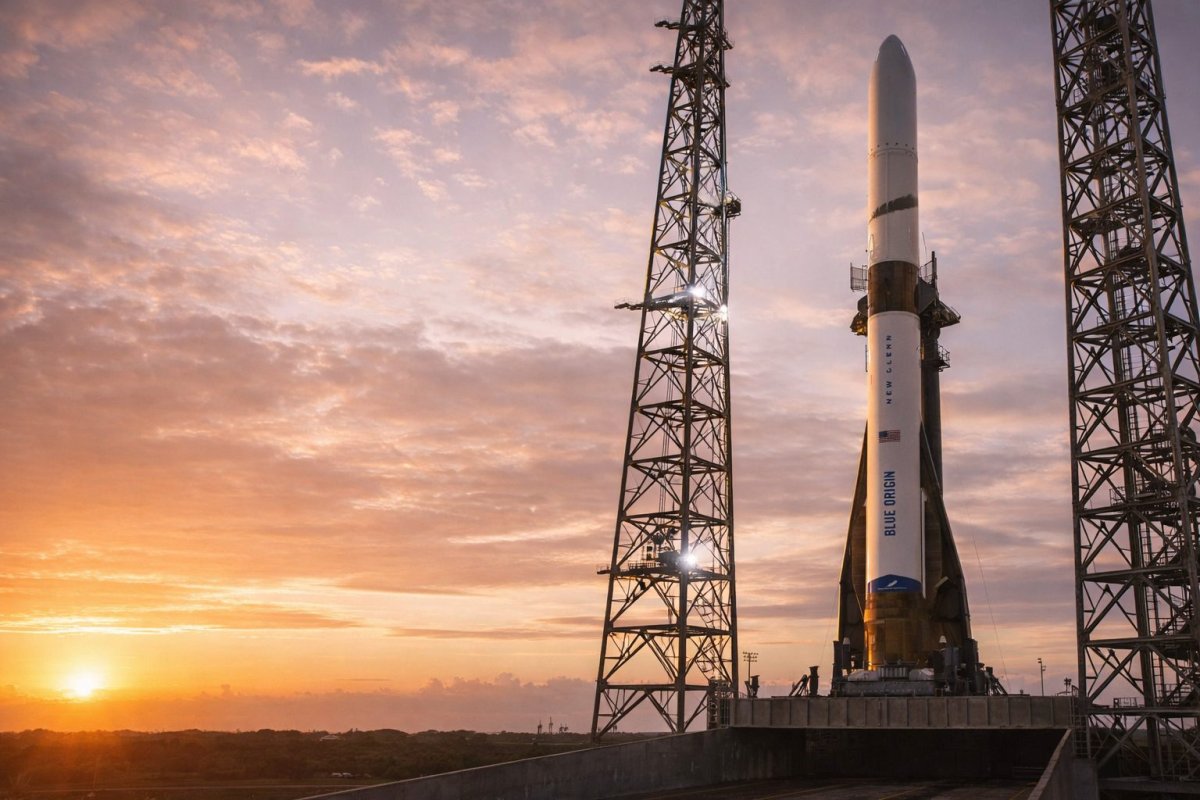
Blue Origin, the aerospace company founded by Jeff Bezos, achieved a significant milestone in reusable rocket technology on Sunday, April 19, 2026. The company successfully launched its New Glenn heavy-lift rocket from Cape Canaveral, Florida, at 7:25 a.m. EDT and later recovered the booster after it completed its second flight. This mission, designated NG-3, represents the first time Blue Origin has landed a New Glenn booster following a second launch, a critical step toward operational reusability.
Mission Details and Recovery
The primary payload for the flight was AST SpaceMobile's BlueBird 7 satellite, which was deployed into low-Earth orbit. The satellite is part of AST SpaceMobile's ambitious project to create a space-based cellular broadband network capable of connecting directly to standard smartphones, bypassing the need for specialized satellite devices. The booster, named "Never Tell Me The Odds," had previously flown on the NG-2 mission in November 2025. Approximately ten minutes after liftoff, the first stage separated and performed an autonomous descent, landing on the Atlantic sea platform named Jacklyn.
According to Blue Origin's mission plan, the second stage continued into space to deploy the satellite. The company noted that the upper stage would later be disposed of via a controlled re-entry into the ocean. Ahead of the launch, Blue Origin CEO Dave Limp detailed that the team had replaced all seven engines on the refurbished booster and tested enhancements, including new thermal shielding for a nozzle. Limp indicated that the engines flown on the NG-2 mission are intended for use on future flights.
Strategic Implications for the Launch Market
This successful recovery challenges the long-standing dominance of SpaceX in the reusable orbital rocket segment. For nearly nine years, SpaceX has been the sole operator capable of regularly recovering and reusing rocket boosters with its Falcon 9 fleet. Industry analysts, such as Micah Walter-Range of Caelus Partners, noted prior to the launch that a successful New Glenn reuse mission would end SpaceX's monopoly in this critical market niche.
The core economic driver behind reusability is reducing launch costs and increasing flight frequency. By recovering and refurbishing the most expensive part of the rocket—the first-stage booster—companies aim to make space access more affordable and routine. This strategy has been central to SpaceX's rise as the leader in commercial orbital launches.
Competitive Landscape in Satellite Broadband
The launch also highlights the intensifying competition in the satellite-based direct-to-device communications market. AST SpaceMobile's BlueBird satellites feature large phased-array antennas spanning nearly 2,400 square feet, designed to deliver 4G and 5G broadband services. The company's network will operate in low-Earth orbit, a region already crowded with projects like SpaceX's Starlink and Amazon's Project Kuiper, all vying to provide enhanced communications bandwidth from space.
Blue Origin is marketing New Glenn's capabilities, particularly its seven-meter payload fairing, as an advantage for launching larger satellites or conducting rideshare missions with multiple payloads. This positions the company to capture a share of the growing demand for launch services from constellation operators.
Path Forward and Remaining Challenges
While landing a reused booster is a major technical achievement, the real test for Blue Origin will be demonstrating rapid turnaround, reusing flight-proven engines multiple times, and establishing a frequent, reliable launch cadence. SpaceX currently maintains a lead not just in hardware but in operational execution, with a proven track record of rapid re-flights.
This mission was the third overall flight for the New Glenn rocket. Its debut launch in January 2025 reached orbit, but the booster was not recovered. The second launch in November 2025, carrying NASA's ESCAPADE mission to Mars, achieved the rocket's first successful booster recovery. The NG-3 mission builds on that by proving the booster can be flown a second time.
The successful recovery of the New Glenn booster marks a pivotal moment for Blue Origin as it seeks to become a formidable competitor in the commercial launch industry. However, consistent execution and cost-effective operations will determine whether it can truly rival SpaceX's established reusability program.