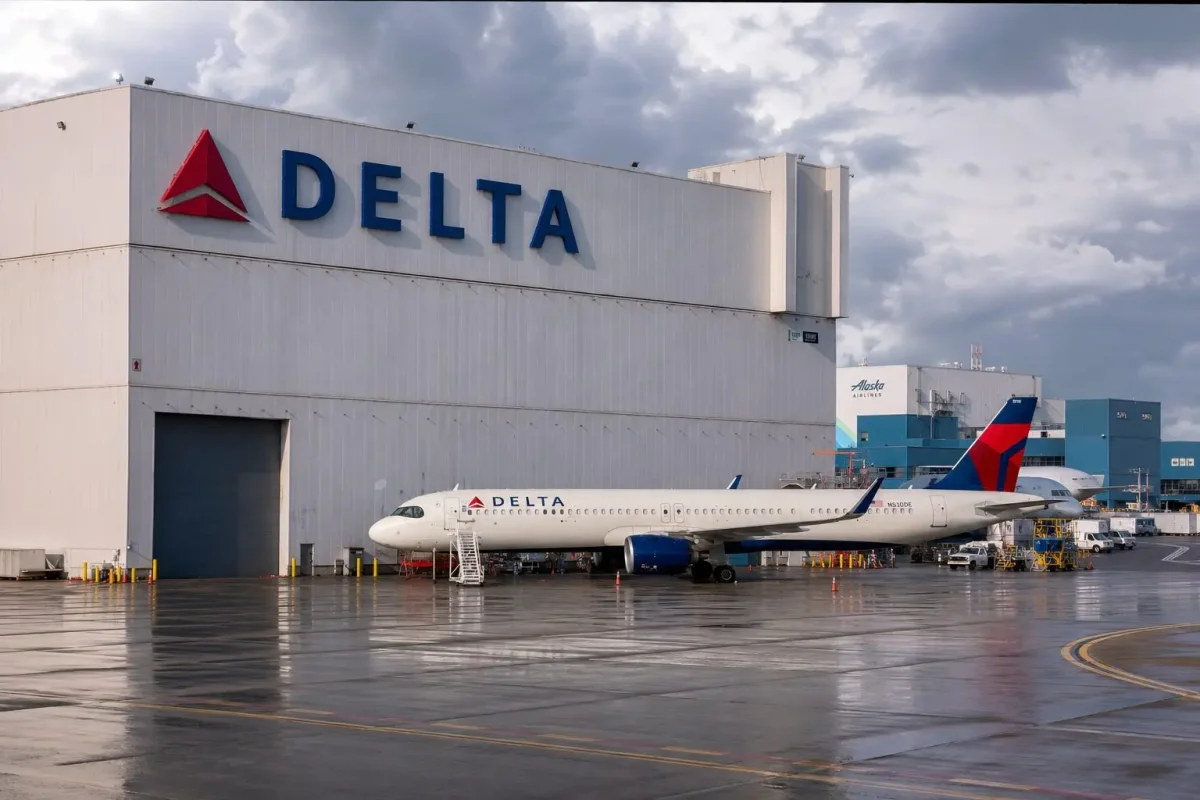
Delta Air Lines (NYSE: DAL) CEO Ed Bastian stated Tuesday that the recent decline in jet fuel prices is unlikely to translate into lower airfares unless U.S. airlines can expand their seat supply. Bastian emphasized that the industry is currently 'logjammed' and that fare reductions depend on adding more flights, not just cheaper fuel.
According to the Bureau of Transportation Statistics, U.S. scheduled airlines spent $6.47 billion on fuel in April, a staggering 78% increase compared to the same month last year. Despite fuel consumption remaining nearly flat at 1.573 billion gallons, the average cost per gallon rose to $4.11, up from $2.31 a year earlier. If the June 17 spot jet-fuel price of $2.85 per gallon had applied, the same April fuel usage would have cost approximately $4.48 billion, representing a potential monthly swing of nearly $2.0 billion.
However, Bastian noted that lower fuel costs do not immediately benefit the bottom line due to hedging and contract agreements. 'Oil prices have come down now,' he told Fox Business, but added that the system remains constrained. The capacity outlook is particularly tight: U.S. domestic airline seats are projected to increase only 0.4% year-over-year in the third quarter, sharply lower than the 4.6% growth forecast earlier this year. J.P. Morgan analysts attribute this to slow aircraft deliveries and capacity cuts by budget carriers, which should help prevent significant capacity creep that could weigh on fares.
Airlines are under pressure to maintain pricing power. According to Raymond James data cited by Reuters, average domestic fares booked a week before departure were up 34.1% from the same period last year as of June 8. United Airlines CEO Scott Kirby told Reuters that the industry is on a path to recovering 100% of fuel-cost increases through pricing by year-end. Meanwhile, Southwest Airlines COO Andrew Watterson questioned when fuel prices would decline, reflecting the industry's focus on margin recovery.
Delta shares closed at $86.72, up 81 cents on the day, placing the airline's market capitalization near $57.0 billion. The broader airline sector has been closely watching fuel costs, which remain a key driver of profitability. Jefferies analysts estimate that if their 2027 fuel price forecast of $3 per gallon drops by 5%, earnings per share could jump 10% to 15% for Delta, United, and Southwest, while American Airlines could see a potential 50% boost.
Bastian also highlighted the importance of air traffic control modernization. The FAA hired 2,029 controller trainees in fiscal 2025, targets 2,200 for fiscal 2026, and plans for 2,300 in fiscal 2027. The agency's budget includes $4.0 billion for facilities and equipment, with a $12.5 billion investment already allocated for modernization in 2025. These upgrades are critical to easing capacity constraints and enabling airlines to add more flights.
The demand environment remains mixed, with Bastian describing a 'K-shaped economy' where higher-income households continue to spend on travel while lower-income households have fallen behind. This bifurcation supports premium travel demand but puts pressure on budget carriers. Goodbody's Dudley Shanley told Reuters that fare relief ultimately depends on customer demand, and any significant pullback in spending could force airlines to cut prices before lower fuel costs fully materialize in profits.
Overall, while falling jet fuel prices offer a potential tailwind for airline margins, the industry's ability to translate this into lower fares is constrained by limited capacity growth and persistent demand strength. Investors will be watching closely to see if carriers can maintain pricing discipline as fuel costs ease.