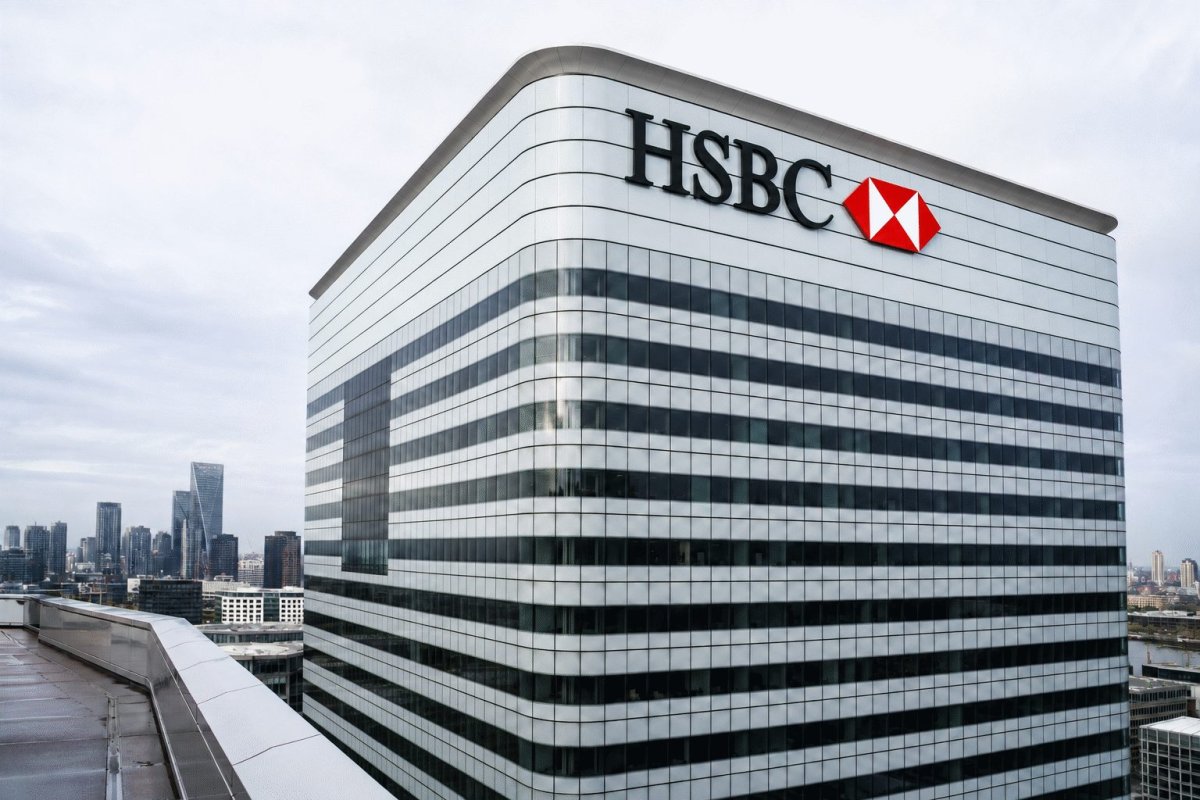
HSBC Holdings (LON:HSBA) saw its shares retreat 1.15% to close at 1,497.2 pence on Wednesday, August 19, as investors weighed a modest share repurchase program against a tightening capital position. The London-listed banking giant announced a $1 billion buyback, a move that represents just 0.28% of its $352.08 billion market capitalization, underscoring the limited scale of the capital return relative to the bank's overall size.
The buyback, which marks a resumption of repurchases following the recent privatisation of Hang Seng Bank, is being interpreted by analysts more as a signal of confidence than a substantial support for the share price. The bank's CET1 ratio, a key measure of financial strength, stood at 14.1% at the end of the first half of 2026, leaving only 0.1 percentage point of headroom above the bottom of its 14.0% to 14.5% target range.
This thin capital buffer has injected a note of caution into an otherwise strong earnings narrative. HSBC reported a 23% rise in reported profit before tax to $19.5 billion for the first half, while adjusted profit before tax climbed 6% at constant currencies to $20.4 billion. Revenue also grew, with reported revenue up 11% to $37.7 billion, driven by higher net interest income and fees. Banking net interest income rose by $1.6 billion to $22.9 billion, reflecting continued rate support.
Chief Executive Georges Elhedery struck an optimistic tone, stating, “HSBC is becoming the stronger bank we set out to build.” Management has reiterated its target of achieving a return on tangible equity (RoTE) of at least 17% through 2028. The annualised RoTE for the first half came in at 18.2%, or 19.1% excluding notable items, comfortably above that target.
However, capital constraints remain a focal point for investors. The CET1 ratio fell by 0.8 percentage points during the period, and the bank's dividend payout target of 50% for 2026-2028, excluding material notable items, may limit the scope for further buybacks. The bank also raised its 2026 banking net interest income outlook to at least $46 billion, but its credit-cost outlook of around 45 basis points remains above the medium-term range of 30-40 basis points.
Analysts are divided on HSBC's prospects. The 17-analyst consensus target price is 1,485.6 pence, slightly below Wednesday's closing price, implying a neutral stance. Goldman Sachs is the most bullish, with a buy rating and a target of 1,860 pence, while JPMorgan holds a more cautious view with a target of 1,450 pence. Other notable ratings include Bank of America (buy, 1,720p), Morgan Stanley (hold, 1,674p), and UBS (hold, 1,620p).
HSBC's valuation metrics present a mixed picture relative to European peers. The bank trades at a trailing price-to-earnings ratio of 14.38x, higher than Banco Santander (11.31x) and BBVA (12.74x), but lower than UBS (18.41x). Its dividend yield of 3.71% is attractive compared to Santander's 1.56% and UBS's 1.99%, though BBVA offers a higher yield of 2.38%.
Investors will closely monitor the execution of the buyback and movements in UK yields in the coming days. Hong Kong credit indicators, particularly exposure to the property sector, remain a key risk that could impact credit costs. A stable CET1 ratio would bolster confidence in the bank's ability to sustain capital returns, but the current thin headroom suggests that earnings growth will be the primary driver of shareholder value.
As HSBC navigates a complex operating environment, the modest scale of its buyback relative to market capitalization serves as a reminder that capital discipline remains a priority. The bank's strong earnings performance provides a solid foundation, but the constrained capital position may limit the pace of future returns until the buffer is rebuilt.