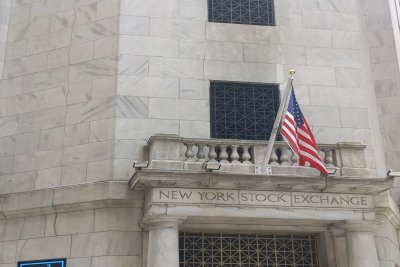
Shares of Meta Platforms Inc. staged a notable recovery during Monday's trading session, ultimately hovering around the $648 mark after initially falling as much as 2.1% at the open. The early decline reflected a broader market retreat as investors grappled with renewed geopolitical instability in the Middle East over the weekend, which immediately triggered a risk-off sentiment across equity markets.
The escalating tensions sent shockwaves through commodity markets, with crude oil prices surging approximately 8% at the open. Concurrently, the CBOE Volatility Index (VIX), a key gauge of market fear, spiked to its highest level in three months. Major Wall Street indices opened lower as the conflict raised dual concerns over potential disruptions to global shipping lanes and the subsequent risk of reigniting inflationary pressures, which could complicate the Federal Reserve's policy path.
Market strategists offered contrasting views on the initial reaction. "The market is taking it relatively well," observed Adam Turnquist, chief technical strategist at LPL Financial. However, a more cautious note was struck by Wells Fargo's Ohsung Kwon, who warned of a potential "worst-case scenario" where crude oil sustaining levels above $100 per barrel could precipitate a significant correction, potentially driving the S&P 500 down toward the 6,000 level.
Beyond immediate geopolitical risks, investors also contended with ongoing uncertainty surrounding the economic impact of artificial intelligence. The rapid adoption of AI continues to create ambiguity regarding which sectors and white-collar job markets might face disruption. "There is very little definitive right now," remarked Kristina Hooper, chief market strategist at Man Group, highlighting the lack of clear consensus on AI's broader implications.
Meta's stock often serves as a dual proxy in such environments. Its core advertising business is highly sensitive to shifts in corporate marketing budgets, which typically contract during periods of economic uncertainty. Simultaneously, as a mega-cap technology leader, the stock frequently acts as a liquidity vehicle for investors looking to quickly adjust their exposure to broad tech sector risk.
The company itself is navigating this volatile backdrop while aggressively investing in its future. Meta has projected capital expenditures between $115 billion and $135 billion for 2026, a staggering sum driven largely by CEO Mark Zuckerberg's ambitious vision for achieving advanced artificial intelligence, which he has termed "personal superintelligence." This massive spending plan arrives at a time when prolonged high oil prices and delayed interest rate cuts could pressure the high valuation multiples of tech stocks and simultaneously squeeze the very ad budgets Meta relies upon.
Looking ahead, traders are closely monitoring two key dates. First, Meta is scheduled to present at the Morgan Stanley Technology, Media & Telecom Conference on March 4 at 11:30 a.m. PST. More significantly, the market's primary focus will be the U.S. Bureau of Labor Statistics' February jobs report, due Friday, March 6, at 8:30 a.m. ET. This data is expected to be a critical input for shaping expectations around the timing and pace of potential Federal Reserve rate cuts this year.
The market's whipsaw action on Monday—characterized by an early sell-off followed by a sharp rebound—illustrates the classic mechanics of traders digesting high-impact headlines in real time. The path forward for Meta and the broader tech sector remains highly contingent on the evolution of both geopolitical events and domestic economic data. A rapid de-escalation of tensions could quickly reverse flows back into growth stocks, while a protracted period of uncertainty and sticky inflation would likely sustain pressure on the group.