Rocket Lab Corporation (RKLB) experienced a sharp decline on Friday, with shares falling 10.79% to $102.39, despite the announcement that the company will be added to the Nasdaq-100 Index. The move comes as investors booked profits following a broader selloff in space-related equities, exacerbated by the market debut of SpaceX.
Nasdaq confirmed that Rocket Lab, along with Astera Labs, CoreWeave, Nebius, and Teradyne, will join the Nasdaq-100 before the market open on June 22. They will replace Charter Communications, Cognizant, Insmed, Verisk Analytics, and Zscaler. The Nasdaq-100 tracks the 100 largest non-financial companies on the exchange, and with over $800 billion in assets tied to products tracking the index, fund rebalancing is expected to drive significant demand.
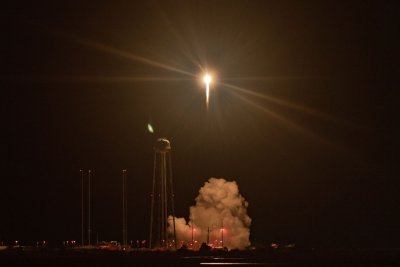
Rocket Lab CEO Sir Peter Beck hailed the inclusion as a landmark achievement, stating, "This is a landmark moment for Rocket Lab," and emphasizing the company's evolution from a small startup to a global space leader. The company has completed more than 80 launches and deployed over 250 satellites, with the new Neutron medium-class rocket under development for constellation missions.
However, the positive index news was insufficient to offset negative sentiment in the space sector. According to Reuters, U.S. space shares dropped broadly on Friday as traders took profits following SpaceX's initial public offering. Rocket Lab and Planet Labs each lost about 8% in the selloff. Chris Beauchamp, chief market analyst at IG Group, noted, "The hype can’t quite live up to expectations," adding that this poses a challenge for Rocket Lab, as bullish investors are betting on future growth rather than current profitability.
Bullish investors point to Rocket Lab's expanding business beyond small launches. The company reported record first-quarter revenue of $200.3 million, up 63.5% year-over-year, with GAAP gross margin reaching a record 38.2%. Backlog, representing contracted work not yet recognized as revenue, stood at $2.2 billion, signaling strong future business. Rocket Lab expects second-quarter revenue between $225 million and $240 million, with the Neutron debut launch still on track for later this year.
On the bearish side, valuation and execution risks are prominent concerns. Reuters highlighted that Rocket Lab's market capitalization was approximately $66 billion at Friday's close, against annual revenue of about $600 million, resulting in a steep price-to-sales ratio. The company continues to operate at a loss, reporting a net loss of $45.0 million in Q1 and projecting an adjusted EBITDA loss of $20 million to $26 million for Q2. Adjusted EBITDA excludes interest, taxes, depreciation, amortization, and other items.
The immediate catalyst for RKLB is the June 22 Nasdaq-100 inclusion, after which attention will shift to the company's Q2 financial results. Investors will be watching for revenue to meet guidance, narrowing losses, and the conversion of backlog into cash-generating operations. The Neutron rocket timeline remains critical, as any delays or cost overruns could further pressure the valuation.
Analyst sentiment remains largely positive, with MarketBeat reporting a "Moderate Buy" consensus from 21 analysts. However, their average 12-month price target of $99.24 is slightly below Friday's close of $102.39, suggesting the stock is trading in line with Wall Street expectations. Investors must now weigh growth prospects, Neutron progress, and space systems gains against a valuation that leaves little margin for error.