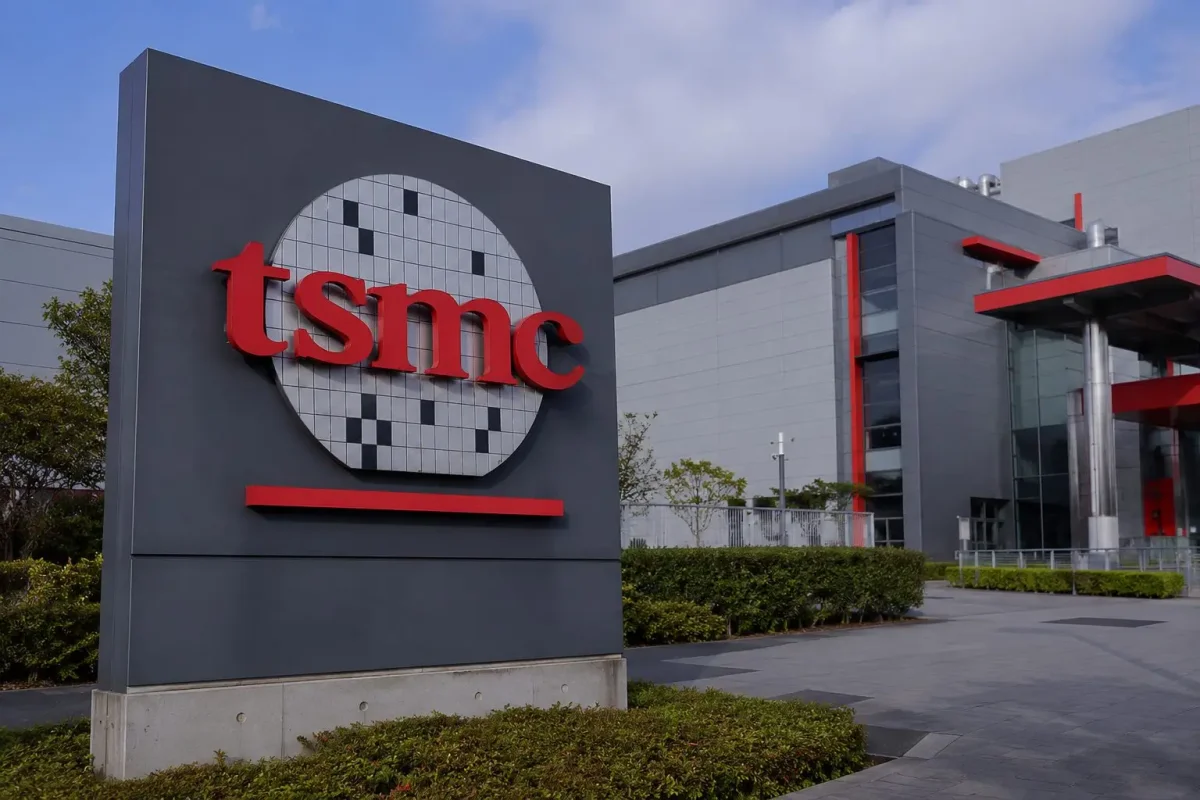
Taipei, July 20, 2026 – Taiwan Semiconductor Manufacturing Co. (TPE:2330; NYSE:TSM) posted its highest-ever quarterly profit in the second quarter, but a sharp rise in capital expenditures tied to its sprawling Arizona expansion squeezed free cash flow, raising investor scrutiny over the pace of spending.
Shares of the world's largest contract chipmaker recovered 1.3% on Monday, paring some of Friday's 7.3% plunge in Taipei trading. The broader Philadelphia Semiconductor Index fell roughly 10% last week amid growing concerns about the sustainability of artificial intelligence-related capital outlays.
Cash Flow Squeeze Deepens
Free cash flow in the April-June period declined 17.5% from the first quarter to NT$287.36 billion (US$8.9 billion), even as net income surged 23.4% to a record NT$706.56 billion. The culprit: capital expenditure jumped 41.4% quarter-on-quarter to NT$496.00 billion, far outpacing the 12.1% increase in operating cash flow.
The free-cash-flow conversion ratio—free cash flow as a percentage of net income—fell to 40.7% from 60.8% in the prior quarter, underscoring how quickly cash is being consumed by expansion plans. TSMC raised its full-year 2026 capital expenditure guidance to a range of US$60 billion to US$64 billion, with the midpoint of US$62 billion representing a 14.8% increase from the previous midpoint.
Arizona: A 5 Billion Commitment
The company's Arizona complex, now budgeted at US$265 billion, looms large over the financials. That sum is roughly 4.3 times TSMC's annual capex budget and 1.6 times the one-year midpoint. Equipment is already arriving at the second fab, construction is underway on a third, and initial work has begun on a fourth fabrication plant plus the first packaging facility. The site is ultimately planned to host 12 fabs along with packaging and R&D operations.
“The cash-flow figures reveal how quickly that pressure begins,” said William Li, analyst at Counterpoint Research. He described the expansion as “essential to support its long-term growth.”
Demand Remains Robust
Despite the financial strain, demand signals remain strong. TSMC raised its 2026 revenue growth forecast to just over 40%, and second-quarter revenue was bolstered by high-performance computing, which accounted for 66% of total revenue and grew 20% sequentially. Two-nanometer chips contributed 3% of wafer revenue. The company guided third-quarter revenue in the range of US$44.6 billion to US$45.8 billion.
Chief Financial Officer Wendell Huang noted that customers are expressing “strong demand—multi-year structural demand.” The first Arizona fab has achieved yields comparable to TSMC's flagship Taiwan facilities, easing a key production risk, according to Reuters.
Margin Pressures Loom
The spending spree is already weighing on margins. TSMC forecast third-quarter gross margin of 66%, down 1.7 percentage points from the prior quarter. Management expects the ramp-up of N2 (2-nanometer) technology to reduce second-half margins by 3–4 percentage points, while overseas fabs could initially drag margins by 2–3 points, potentially widening to 3–4 points.
“Execution challenges persist,” the company acknowledged. Arizona continues to face shortages of construction workers and infrastructure, while a potential slowdown in cloud spending could reduce utilization rates. International expansions are set to maintain pressure on margins.
Market Context
Investor sentiment was rattled last week, with the stock dropping 7.3% on Friday and the SOX index sliding roughly 10%. Toni Meadows of BRI Wealth Management attributed the selloff to “rising scrutiny of AI capex sustainability.”
With Taiwan's regular session closed, attention now shifts to U.S. corporate earnings. Alphabet (NASDAQ:GOOGL) and Intel (NASDAQ:INTC) are due to report this week. Alphabet's investment strategy will serve as a gauge of customer demand, while Intel's update on its foundry business will test competitive dynamics in the industry.
For TSMC, the key question moving forward is whether operating cash flow can outpace the relentless growth in capital spending. Investors are now looking for clear evidence of that balance.