Uber Technologies (NYSE: UBER) saw its shares advance 1.3% on Thursday, trading at $72.04 by 2:30 p.m. ET, according to delayed NYSE data. Despite the intraday bounce, the stock remains 4.9% below its September 4 close, reflecting lingering investor concerns about the company's competitive position as autonomous vehicle (AV) partners diversify their distribution channels.
The immediate financial picture remains robust. In the June quarter, Uber reported adjusted EBITDA of $2.82 billion, a 33% year-over-year increase. Gross bookings surged 24% to $58.0 billion, while trips rose 18% to 3.87 billion. The adjusted EBITDA margin stood at 4.9% of bookings, up from 4.5% a year earlier. Management projects third-quarter adjusted EBITDA between $2.86 billion and $2.96 billion, with bookings in the range of $58.25 billion to $60.25 billion. At the midpoint, the implied margin remains roughly 4.9%, indicating stability but not a significant sequential acceleration.
The more strategic challenge lies ahead. Waymo, the Alphabet subsidiary, has expanded its robotaxi service to Nashville through a partnership with Lyft, beginning Wednesday. Lyft riders can now be matched with a Waymo vehicle, while Lyft's Flexdrive unit handles fleet management. Waymo's own app remains available in the city, giving it direct consumer access alongside the Lyft channel. This multi-channel approach contrasts with Austin and Atlanta, where Waymo rides are exclusively offered through Uber's app. Reports suggest the Uber-Waymo relationship is under strain as both companies pursue competing ambitions, though no termination has been announced.
The core issue is bargaining power. If AV developers can own the rider relationship, distribute through a rival, and hire a separate fleet operator, Uber must prove that its platform's demand generation, routing efficiency, payments processing, and customer support justify its share of each fare. If AV operators still need Uber to fill cars efficiently across many cities and times of day, its marketplace remains valuable even as the driver shifts from human to software.
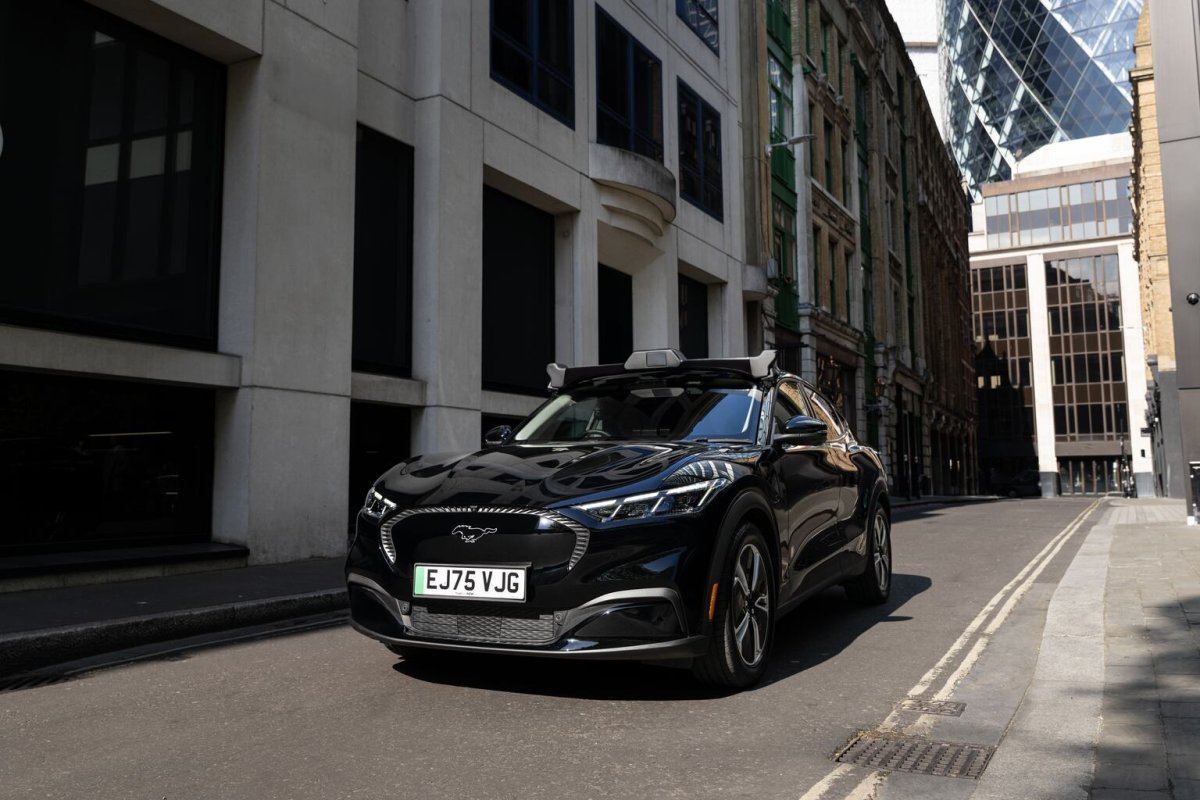
Uber's defense is scale and diversification. The company states that more than 30 autonomous partners already use its network. This month, Uber launched supervised Wayve rides in London with a small fleet of Ford Mustang Mach-E vehicles equipped with sensors. More than 140,000 Londoners had opted in before launch. While these trips still require a licensed safety driver, the service is integrated into the familiar Uber app, allowing riders to accept or decline AV matches. Uber says partners across Mobility, Delivery, and Freight are completing millions of autonomous trips annually on its platform, with AV service targeted in up to 15 cities by year-end.
The underlying business segments continue to show leverage. Mobility segment operating income grew 28% to $2.22 billion on bookings of $28.99 billion, a 22% increase. Delivery operating income rose 38% to $1.06 billion. Corporate overhead and platform research and development increased 18% to $1.10 billion, though Uber does not disclose the portion dedicated specifically to autonomy.
Uber generated $2.79 billion of free cash flow in the second quarter, up 13%, with trailing-twelve-month free cash flow exceeding $10 billion. The bullish case does not require Uber to build the winning driverless system; it requires the platform to remain the cheapest and fastest way for multiple AV fleets to find riders while total bookings and free cash flow keep growing.
The bear case is disintermediation. Waymo can acquire riders directly, Lyft can run fleets, and vehicle operators may eventually treat ride-hailing apps as interchangeable distribution. If Uber must subsidize AV supply or invest heavily in depots and vehicles to preserve access, the 4.9% margin becomes harder to expand. Investors need disclosure on autonomous trip volume, partner economics, and whether Mobility margin continues to improve as robotaxi availability broadens. Until then, Waymo's Lyft expansion serves as a warning about future bargaining power—not proof that Uber's current earnings engine has stalled.