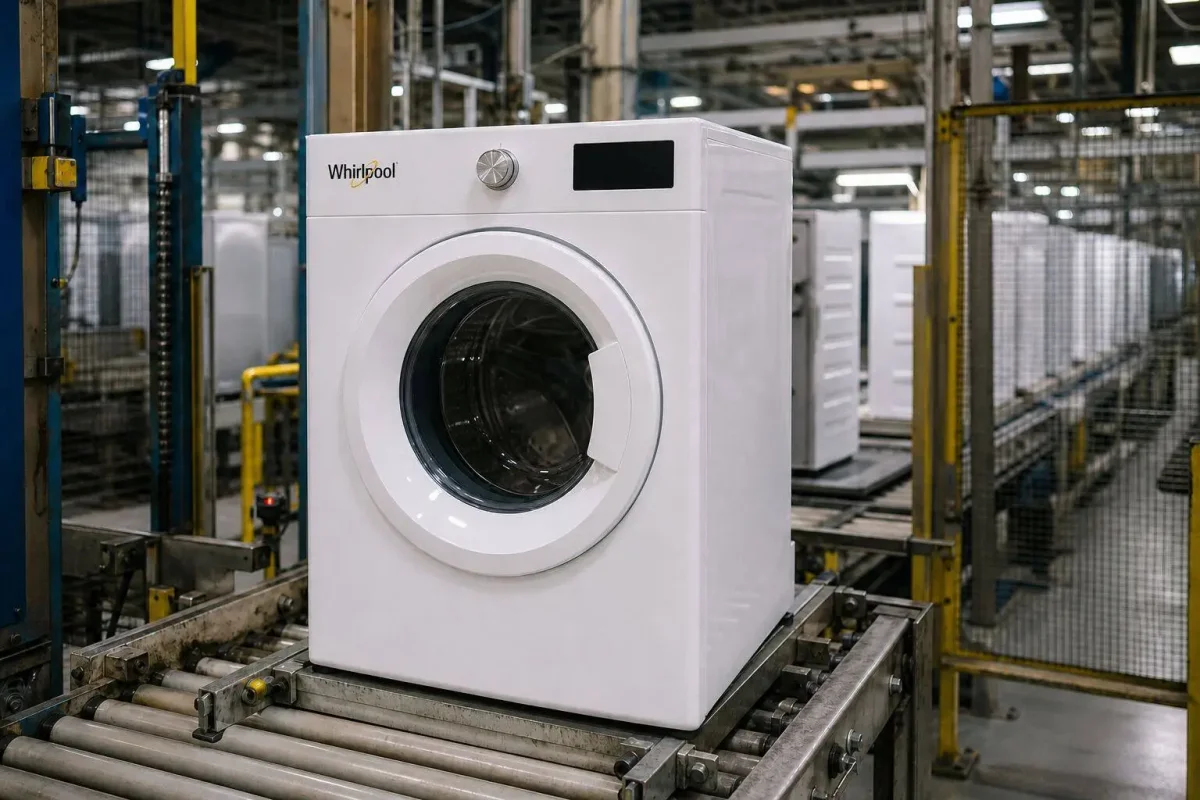
Shares of Whirlpool Corporation (NYSE: WHR) experienced a sharp decline on Tuesday, falling 7.85% to $37.635 by 14:50 EDT. The drop, which erased approximately $208 million in implied equity value, came as investors weighed the company's substantial debt load against a deteriorating housing market.
The appliance manufacturer's debt stood at $7.07 billion as of June, nearly triple its current implied equity value of $2.45 billion. This leverage has become a focal point for market participants, especially as rising borrowing costs threaten to further dampen demand for big-ticket items like refrigerators and washing machines.
Housing Market Headwinds Intensify
The pressure on Whirlpool is part of a broader trend affecting the housing and home-related sectors. The 10-year Treasury yield reached 4.792% on Tuesday, contributing to higher mortgage rates that are cooling the housing market. Freddie Mac reported that the average 30-year fixed-rate mortgage stood at 6.66% as of August 27, up from 6.56% a year earlier.
New home sales in July fell 10.5% month-over-month to an annualized pace of 607,000, according to the U.S. Census Bureau. This slowdown in housing activity directly impacts demand for appliances, as fewer new homes mean fewer opportunities for appliance sales.
Broader Sector Sell-Off
Whirlpool was not alone in its decline. SharkNinja, Inc. (NYSE: SN) saw its shares plummet 8.99%, while Fortune Brands Innovations, Inc. (NYSE: FBIN) and Mohawk Industries, Inc. (NYSE: MHK) fell 4.38% and 2.68%, respectively. The S&P 500 index was down 0.89% at the same time.
This sector-wide weakness underscores the challenges facing companies tied to the housing market, as higher interest rates and economic uncertainty weigh on consumer spending.
Financial Performance and Outlook
Whirlpool reported a 6.8% decline in second-quarter sales, with revenue totaling $3.52 billion. Organic sales slipped 1.7%, reflecting softer demand. The company's ongoing EBIT margin contracted to 1.8% from 5.3% in the prior year, and North American margins dropped to 2.7% despite price increases and new product launches.
CEO Marc Bitzer expressed cautious optimism, noting the company was "encouraged by the sequential margin expansion achieved in Q2." However, tariffs, raw material costs, and fuel prices continue to pressure profitability.
Debt and Liquidity Concerns
Whirlpool's gross debt of $7.07 billion compares to an implied equity value of just $2.45 billion, resulting in a debt-to-equity ratio of approximately 2.9 times. Net debt, after subtracting $1.239 billion in cash, stands at $5.83 billion.
To address its near-term obligations, Whirlpool raised $2 billion through secured bonds and established a $2 billion asset-based lending facility, covering all upcoming debt maturities through 2028. Management continues to guide for 2026 free cash flow exceeding $300 million, implying a yield of over 12% based on current equity value. However, this projection is not guaranteed, as annual interest costs are expected to approach $350 million, which exceeds the minimum free cash flow guidance.
Risks and Potential Catalysts
The company's ability to regain its targeted 4% margin will depend on accelerated cost reductions and improved pricing. However, ongoing tariffs, soft demand, and elevated interest rates could hinder this recovery.
Investors will be watching closely for any signs of stabilization in the housing market or changes in consumer spending patterns that could alleviate pressure on Whirlpool and its peers.