Alphabet Inc. (NASDAQ:GOOGL) shares edged higher in early trading Monday, rising 0.5% to $361.79 as the Nasdaq Composite gained 0.9%. The stock remains about 11.5% below its 52-week high of $408.61, with a 52-week range spanning $172.77 to $408.61. While the broader market showed modest gains, investor attention is firmly fixed on the company's cloud business and its massive capital expenditure plans.
Cloud Backlog Outpaces Revenue Run-Rate
Alphabet's cloud backlog has ballooned to over $460 billion, representing roughly 5.7 times the annualized first-quarter cloud revenue of $80.1 billion. The company reported Google Cloud revenue of $20.03 billion for Q1, up 63% year-over-year, contributing to total revenue of $109.9 billion, which grew 22%.
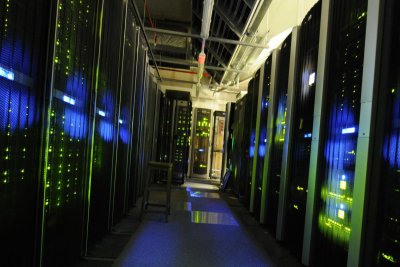
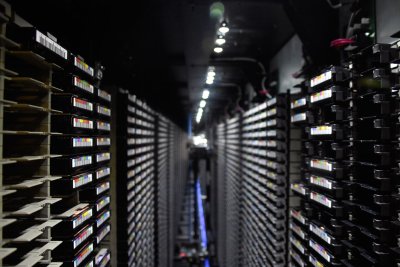
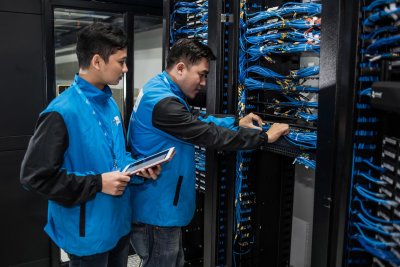
This backlog growth underscores strong demand for cloud services, but it also raises questions about Alphabet's ability to convert this pipeline into revenue efficiently. The company's 2026 capital expenditure guidance midpoint of $185 billion is approximately 2.3 times the annualized cloud run-rate, signaling aggressive investment in infrastructure.
Capex Conversion Under the Microscope
Alphabet's 2025 capital spending totaled $91.4 billion, primarily directed at technical infrastructure. The midpoint for 2026 capex implies roughly 102% growth year-over-year. In Q1 alone, the company spent $35.7 billion on property and equipment while generating free cash flow of $10.12 billion, which represents 9.2% of quarterly revenue.
CEO Sundar Pichai highlighted during the earnings call that Alphabet's "AI investments and full stack approach" are driving business momentum. CFO Anat Ashkenazi noted "unprecedented internal and external demand" for AI compute, and projected that 2027 capex would "significantly increase" over 2026 levels.
Bull vs. Bear Debate Intensifies
Optimists argue that robust cloud demand and tight supply conditions will enable Alphabet to turn its heavy spending into revenue growth. They point to the company's custom tensor processing units (TPUs) and full-stack AI capabilities as key differentiators that can accelerate returns on investment.
However, bears caution that the costs associated with depreciation, energy, and data center operations could weigh on margins before the anticipated cloud and TPU revenue materializes. Jefferies strategist Chris Wood warned that U.S. hyperscalers could face "massive capital destruction" from AI spending, describing it as "malinvestment" that is "increasingly" reliant on borrowed money, as reported by The Economic Times.
Market Sentiment and Forecasts
David Morrison, senior market analyst at Trade Nation, told Reuters that this earnings season is critical for the "Magnificent 7" tech giants, which have faced recent headwinds. He noted that "even a little bit of good news" could reignite the group's rally.
Analyst price targets for Alphabet vary widely. According to MarketBeat, the average target from 54 analysts is $413.54, with a low of $220 and a high of $515. StockAnalysis and S&P Global poll of 64 analysts yields an average of $432.29, while TipRanks reports an average of $428.12 from 33 analysts in the last three months. Technical analysis suggests downside risk to $341.80 if support at $355.50 fails.
Shares are up 15.0% year-to-date and 100.5% over the past 12 months, but have declined 2.3% in the last month. This recent pullback reflects investor caution as they reassess the sustainability of Alphabet's AI-driven capex cycle.